
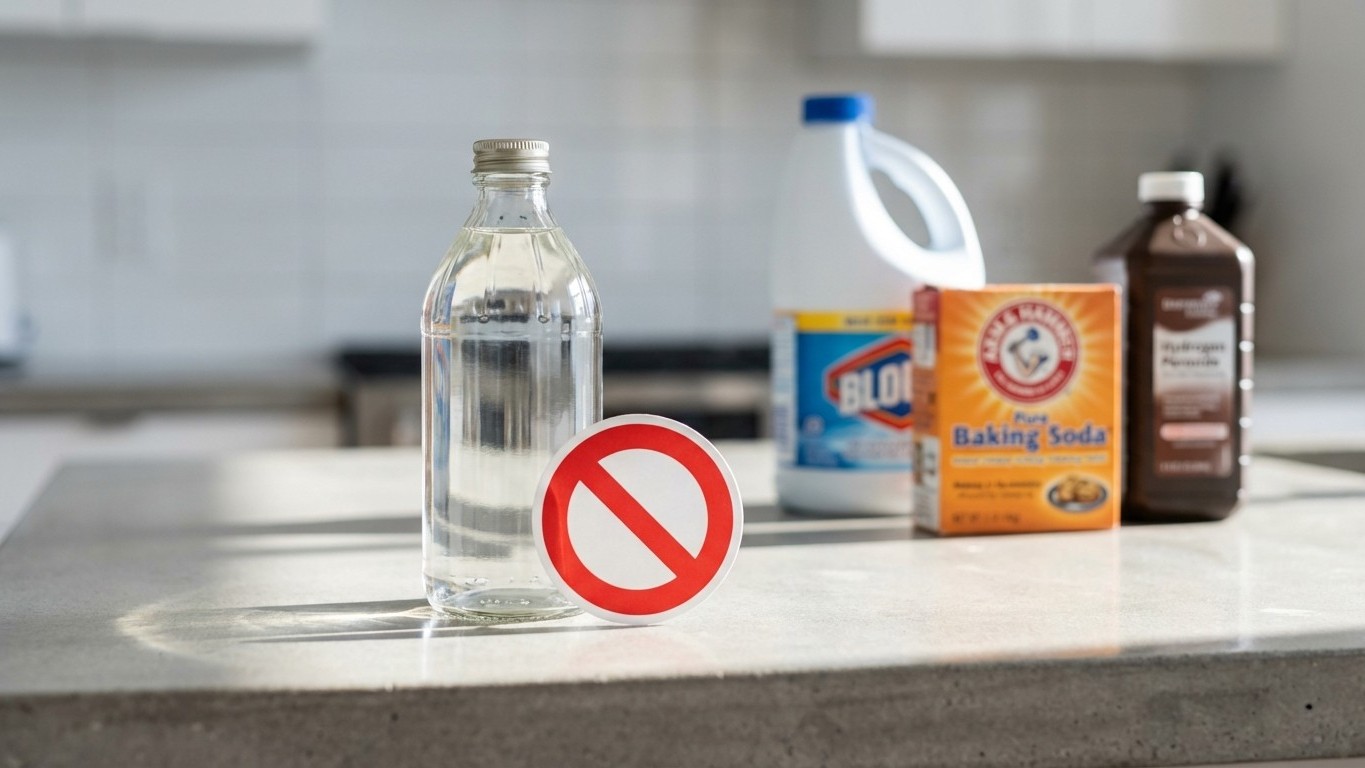
White vinegar sits in most British kitchen cupboards like a trusty old friend, ready to tackle limescale, grease, and grime without costing a fortune. It’s natural, cheap, and genuinely effective on a surprising range of household messes. But that same acidity that makes vinegar so useful can turn into a liability the moment you pair it with the wrong companion. Some combinations simply cancel each other out. Others create genuinely toxic fumes in your kitchen or bathroom. Knowing what not to mix vinegar with when cleaning is not just a matter of chemistry, it’s a matter of keeping your family safe.
Why Vinegar Has Become Everyone’s Favourite Cleaner
There’s a reason the humble bottle of white vinegar has had such a resurgence in British homes over the past decade or so. As more of us have stepped back from heavily fragranced, chemical-heavy commercial cleaners, vinegar has emerged as the sensible, frugal alternative. A litre costs less than a pound in most supermarkets, it leaves no chemical residue, and its acetic acid content (typically around 5% in standard household white vinegar) makes short work of mineral deposits, mild mould, and bacteria on hard surfaces.
The appeal is real and well-founded. But somewhere along the way, the internet convinced a great many people that vinegar becomes even more powerful when you add something else to it, bicarbonate of soda, bleach, hydrogen peroxide. The fizzing and foaming looks spectacular. It feels like chemistry in action. Unfortunately, what’s actually happening in several of these cases is either a harmless neutralisation reaction that destroys both ingredients’ cleaning properties, or something considerably more alarming.
The Chemistry Behind Vinegar (Without the Headache)
Vinegar is a dilute acid. Its active ingredient, acetic acid, works by breaking down alkaline deposits like limescale and cutting through grease. That acidic character is the whole point. The moment you introduce a substance that reacts with acids, an alkali, an oxidising agent, or certain compounds found in commercial cleaners — you either neutralise that acidity entirely or trigger a chemical reaction that produces new, potentially harmful substances.
You don’t need a chemistry degree to follow the logic. Think of it like this: if vinegar’s power comes from being acidic, mixing it with something alkaline is a bit like pressing the accelerator and the brake simultaneously. The two forces cancel out, and you’re left with something that does very little cleaning at all. That’s the best-case outcome. In other pairings, the reaction produces chlorine gas, peracetic acid, or releases ammonia vapours, none of which belong in your bathroom at ten o’clock on a Saturday morning.
What Not to Mix Vinegar With: The Full Picture
Vinegar and Bicarbonate of Soda: Spectacular but Mostly Pointless
This is the combination that appears in more cleaning tutorials than any other, and the fizzing reaction does look deeply satisfying. Acetic acid meets sodium bicarbonate (an alkali), and the result is carbon dioxide bubbles, water, and sodium acetate, a salt. The reaction is vigorous, visible, and almost entirely self-defeating. By the time the fizzing subsides, you have a weak saline solution with negligible cleaning power from either ingredient.
There are a small handful of situations where you might use them sequentially (baking soda first to absorb and lift, vinegar after to rinse), but mixed together? The science simply doesn’t support the hype. For a deeper look at where this combination genuinely helps and where it falls flat, the guide on cleaning with vinegar and baking soda hacks covers the specific dosages and honest use cases rather well.
Vinegar and Bleach: A Genuinely Dangerous Combination
This one is not about ineffectiveness. Mixing vinegar with bleach (sodium hypochlorite) produces chlorine gas. Even at low concentrations, chlorine gas irritates the eyes, nose, throat, and lungs. At higher concentrations, which can be reached surprisingly quickly in a poorly ventilated bathroom — it causes coughing, difficulty breathing, chest tightness, and in serious cases, fluid in the lungs. This is the combination that ends up in accident reports.
People assume that if bleach kills bacteria and vinegar kills bacteria, mixing them makes an extra-powerful disinfectant. The opposite is true. The acid in vinegar destabilises the bleach, releasing chlorine before it can do any useful disinfecting work, and creating a toxic atmosphere in the process. Never use these two in the same session without thoroughly rinsing surfaces in between, and ideally, simply choose one or the other for any given task.
Vinegar and Hydrogen Peroxide: Handle With Care
Hydrogen peroxide on its own is a genuinely useful mild disinfectant, sold in pharmacies across the UK at 3% concentration for first aid use. Mixed with vinegar, it forms peracetic acid (also called peroxyacetic acid). This compound is, in fact, used as an industrial disinfectant, but at controlled concentrations and with appropriate safety precautions. In the home environment, it can irritate skin, eyes, and the respiratory tract, and there’s no benefit to making it accidentally in your spray bottle.
If you want to use both for cleaning, apply one, allow it to dry or rinse thoroughly, then apply the other as a separate step. Sequential use is considered safe; simultaneous mixing is not.
Vinegar and Castile Soap or Natural Liquid Soaps
This combination won’t harm your health, but it will waste your money and your effort. Castile soap is alkaline (pH around 8-9), and vinegar is acidic. When you mix them, the acid breaks down the soap’s alkaline structure, causing it to “unsaponify”, essentially, it separates into its component oils and becomes a cloudy, curdled mess that leaves a greasy film rather than cleaning anything. The cleaning with vinegar and baking soda hacks guide goes into more detail about pairing natural ingredients effectively for different surfaces.
If you love both vinegar and Castile soap in your cleaning routine (and they both have their merits), use them on different surfaces, at different times, and rinse in between.
Vinegar and Ammonia or Ammonia-Based Products
Some commercial glass cleaners contain ammonia. Mixing these with vinegar doesn’t produce the dramatic reaction of bleach, but it does create a solution that significantly diminishes the effectiveness of both. The acid and base neutralise each other, and you end up with something that may actually leave more streaks on glass than either product used alone. In enclosed spaces, the combined fumes can also cause headaches and eye irritation.
Vinegar and Commercial Multi-Surface Cleaners
This is the category people think about least. Many commercial cleaners contain a blend of ingredients, surfactants, pH buffers, fragrances, preservatives, and sometimes low levels of bleach or hydrogen peroxide. Pouring vinegar into the mix can trigger reactions that are difficult to predict, release fumes, or simply render the whole thing useless. When in doubt, don’t mix a commercial product with anything homemade. Use one or the other, with a good rinse in between if you’re switching.
Health Risks: What These Fumes Actually Do
The symptoms of exposure to cleaning-related fumes are often dismissed as a headache or “feeling a bit off”, understandable, since the concentrations produced in a home bathroom are rarely immediately life-threatening. But repeated low-level exposure to chlorine gas or ammonia vapours can cause chronic respiratory sensitivity, and people with asthma or other lung conditions are particularly vulnerable. Children and elderly family members in the home are also at greater risk.
Skin contact with reactive mixtures (particularly anything involving bleach) can cause irritation or chemical burns if contact is prolonged. Eyes are especially sensitive. Good ventilation, opening windows and doors, running an extractor fan, is a basic but often overlooked precaution whenever you’re cleaning with any strong substance, natural or otherwise.
What to Do in Case of Accidental Exposure
If you’ve accidentally mixed vinegar with bleach and notice a sharp, pungent smell or feel your eyes starting to water, leave the room immediately and get to fresh air. Don’t try to clean it up before ventilating the space thoroughly. If someone has inhaled significant fumes and is coughing, struggling to breathe, or feeling chest tightness, call 111 or 999 depending on severity. The NHS Poison Information Service (0344 892 0111) can advise on next steps for less urgent exposures.
For skin contact with a reactive mixture, rinse with cool running water for at least ten minutes. For eye contact, the same applies, rinse gently but thoroughly, and seek medical advice if irritation persists.
How to Use Vinegar Safely and Effectively
Used on its own, diluted white vinegar is one of the safest household cleaners available. A solution of one part vinegar to one part water works well for glass, tiles, and many hard surfaces. For stubborn limescale on taps and showerheads, undiluted vinegar left to soak for thirty minutes does a fine job, and for more targeted limescale applications, the tips in this guide on cleaning hacks with lemon for limescale offer some useful comparisons with citric acid approaches.
What vinegar should not be used on, regardless of mixing: natural stone surfaces like marble and granite (it etches the surface), cast iron, aluminium cookware, and waxed wooden floors. These surfaces don’t react well to acid, full stop.
Safe Alternatives and Sensible Combinations
The good news is that vinegar, used correctly on its own or with water, covers a wide range of cleaning tasks without needing any additions. For tougher jobs, there are safe combinations worth knowing. Vinegar and water with a few drops of tea tree or lavender essential oil gives a pleasant-smelling surface cleaner with mild antimicrobial properties. Bicarbonate of soda used as a scrubbing paste (with a little water, not vinegar) tackles grout and oven grime effectively, and then vinegar can be used separately afterwards as a rinse to neutralise any residue.
The broader world of natural cleaning is genuinely rich with options that don’t require improvised chemistry. The collection of natural cleaning hacks covering forty different recipes and techniques is worth a look if you want to build a complete natural cleaning kit without the guesswork.
Common Questions and Persistent Myths
Does mixing vinegar and baking soda make a stronger cleaner? No. The fizzing is a neutralisation reaction that depletes both ingredients. What’s left is a mild salt solution. Use them separately for best results.
Can you make a disinfectant spray from vinegar and hydrogen peroxide combined? The mixture forms peracetic acid, which is irritating and unpredictable at home concentrations. Use them as separate sequential steps if you need both properties, with drying time in between.
Is it safe to add a few drops of washing-up liquid to a vinegar spray? Washing-up liquid is usually near-neutral in pH, so a small amount won’t cause the dramatic curdling you get with Castile soap. That said, it can reduce the acidity of your vinegar solution somewhat, so its effectiveness on limescale will be slightly diminished. For cleaning glass and tiles, plain diluted vinegar tends to work better anyway.
Does vinegar kill all household bacteria? White vinegar at 5% acidity does have antimicrobial properties, but it is not a registered disinfectant and should not be relied upon to eliminate pathogens like salmonella or norovirus on food preparation surfaces. For those tasks, a purpose-made disinfectant or dilute bleach solution (used alone, without vinegar anywhere near it) remains the appropriate choice.
The gap between what the internet claims about vinegar and what the chemistry actually supports is, frankly, quite large. The fizzing, bubbling reactions look like something powerful is happening, but appearances can be deceiving. The most effective and safest approach is often the simplest one: vinegar, water, and a clean cloth. No drama required.