
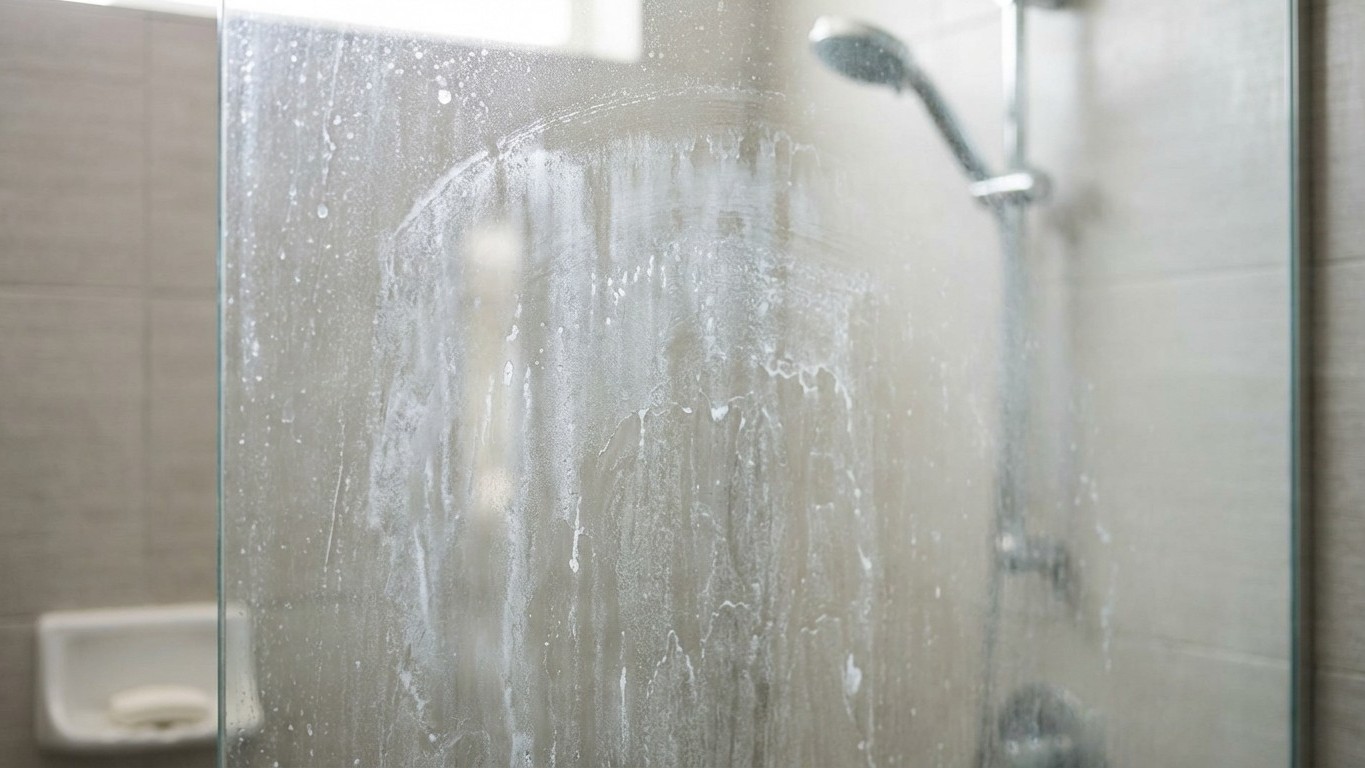
That milky white film creeping across your shower glass is one of the most stubborn problems in the bathroom, and it almost always catches people off guard. You cleaned last week. The glass looked perfectly clear. Then, just a few days later, there it is again: that dull, hazy veil that makes even a freshly scrubbed shower look grimy. The good news is that a handful of natural ingredients sitting in your kitchen cupboard right now can tackle it completely, without a single harsh chemical in sight.
Why Soap Scum and White Film Build Up on Shower Glass
What is that white veil, exactly?
The technical name is soap scum, but understanding what it actually is makes a real difference to how you clean it. When the fatty acids in bar soap (or even liquid body wash) meet the calcium and magnesium minerals dissolved in hard water, they form a new compound: an insoluble, sticky residue that clings to glass with remarkable determination. Every shower adds another thin layer. Over weeks and months, those layers build up into the white, almost waxy film that refuses to budge with a simple wipe.
British homes are particularly prone to this because a large portion of England, especially the South East and East Anglia, sits over chalk and limestone geology. The water that comes out of your taps carries those dissolved minerals along for the ride. Add a generous squeeze of shower gel or a bar of soap, and the chemistry practically does the work of creating that veil for you.
Soap scum, limescale and mould: not the same thing
These three bathroom nuisances are often lumped together, but they respond quite differently to treatment. Limescale is purely mineral: calcium carbonate deposited when hard water evaporates. It tends to be hard, crusty, and white or off-white. Soap scum is a combination of minerals and organic fatty compounds, which gives it that slightly greasy, almost translucent appearance. Mould, by contrast, is biological: the black or pink spots that appear in grout lines and silicone seals, thriving in damp conditions.
On shower glass, what you usually see is a mixture of soap scum and limescale sitting together, which is why a treatment that works on one may only partially address the other. For a complete bathroom strategy that covers limescale on fixtures and mould in the joints, the natural bathroom cleaning hacks guide goes into each problem in depth. Here, though, we are focusing squarely on the glass.
The Best Natural Ingredients for Shower Glass Soap Scum
White vinegar, bicarbonate of soda, lemon and Castile soap
White vinegar is the workhorse of natural cleaning, and for good reason. Its acetic acid content (typically around 5% in standard household vinegar) dissolves both the mineral component of soap scum and the fatty acids simultaneously. A bottle costs well under a pound at most supermarkets and does the job of several expensive sprays. Bicarbonate of soda brings mild abrasion to the equation: it is alkaline, so it cuts through greasy soap residue, and its fine crystalline texture provides gentle scrubbing power without scratching glass. Fresh lemon juice behaves similarly to vinegar, offering citric acid with a rather more pleasant scent, though it works out more expensive for large areas.
Castile soap deserves a special mention because it is made from plant oils rather than animal fats or synthetic detergents. It rinses off cleanly, leaves far less residue than conventional body washes, and makes an excellent preventive wash for glass surfaces. If your household switched to Castile soap for bathing, you would likely notice the glass staying clearer for longer between cleans. A small amount diluted in water also works as a gentle cleaning solution in its own right.
Matching your approach to the type of surface
Tempered glass, the standard in most modern shower enclosures, handles all of these natural ingredients without complaint. Acrylic or plastic shower screens are a different matter: they scratch more easily, so scrubbing pads are out, and undiluted vinegar applied for long periods can cause slight surface dulling over time. Always dilute your vinegar spray to at least 50/50 with water for acrylic, and use a soft microfibre cloth rather than anything abrasive.
Some shower glass is sold with a factory-applied anti-limescale coating. If yours has this (check your enclosure’s paperwork or manufacturer website), avoid prolonged contact with acidic solutions and stick to the Castile soap method instead. The acid can degrade the protective layer. When in doubt, test any solution on a small, inconspicuous corner first and wait five minutes before proceeding.
Step-by-Step Natural Cleaning Methods for Shower Glass
Method 1: White Vinegar Spray
Fill a clean spray bottle with equal parts white vinegar and warm water. For particularly stubborn build-up, you can go up to two-thirds vinegar, one-third water. Spray the entire glass surface generously, making sure the solution reaches the lower corners where residue tends to pool. Leave it for five to ten minutes on normal build-up, or up to twenty minutes on a really neglected pane. You will sometimes see the film begin to shift and streak downward, which is a satisfying sign it is working.
Wipe with a damp microfibre cloth using circular motions, then rinse with clean warm water. Finish by running a squeegee from top to bottom in overlapping strokes. The squeegee step is not optional if you want a streak-free result: it removes the dissolved residue rather than spreading it around. If the smell of vinegar is off-putting, a few drops of eucalyptus or tea tree essential oil added to the spray bottle mask it almost entirely and add a light antimicrobial effect.
Method 2: Bicarbonate of Soda and Lemon for Stubborn Deposits
When the vinegar spray is not quite enough, this combination adds physical and chemical power. Sprinkle a small amount of bicarbonate of soda onto a damp microfibre cloth or a soft sponge. Squeeze half a lemon directly over the cloth so the juice soaks into the powder and starts fizzing. Apply this paste to the glass in gentle circular motions, focusing on the most heavily coated areas. The fizzing reaction is just carbon dioxide being released: harmless, but quite satisfying to watch.
Leave the paste on the surface for two to three minutes, then wipe away and rinse thoroughly. This method is particularly effective on the lower third of a shower panel, which accumulates the heaviest deposits. Repeat once a fortnight on problem areas rather than weekly, as the mild abrasion is something to use purposefully rather than routinely.
Method 3: Castile Soap Wash for Gentle Maintenance
This one is more of a weekly maintenance wash than a deep treatment. Dilute a teaspoon of liquid Castile soap in about 500ml of warm water in a spray bottle or a small bowl. Apply to the glass with a soft cloth, work it across the surface for a minute or two, then rinse well. The key with Castile soap is thorough rinsing: any residue left behind can itself create a thin film over time, particularly in hard water areas. A final squeegee pass ensures a genuinely clean finish.
For the tools themselves, a good quality microfibre cloth is worth every penny. The fine fibres lift and trap residue rather than simply moving it around, which is why it outperforms cotton cloths or old sponges for glass work. Replace them when they stop feeling soft and slightly grippy. On very flat glass panels, a window squeegee with a rubber blade is your best friend: the remove limescale naturally from taps and shower guide touches on squeegee technique for fixtures too.
Prevention: Keeping the White Veil Away for Longer
Daily habits that make a real difference
A ten-second habit after every shower prevents days of cleaning effort. Keep a small squeegee hanging inside the enclosure and run it down the glass before you step out. This removes the bulk of the water droplets that carry dissolved soap and minerals. Open the bathroom window or run the extractor fan for at least ten minutes after showering to reduce humidity, which slows both soap scum formation and mould growth.
Switching from bar soap to a liquid gel or, better still, a Castile-based wash reduces the fatty acid content of the water that hits the glass. Bar soaps, particularly traditional formulations made with tallow or palm oil, leave significantly more scum residue than synthetic detergent-based gels. It is one of those small swaps with a disproportionately large effect on bathroom maintenance.
Protective treatments and preventive routines
A light application of baby oil or a few drops of lemon oil on a dry cloth, buffed onto clean glass and then wiped off, leaves a very thin hydrophobic layer that causes water to bead rather than spread. The sheet of water rolls off more cleanly, carrying soap residue with it instead of depositing it. This treatment lasts roughly two to four weeks before needing to be renewed, and costs almost nothing. Some people use a tiny amount of car wax on shower glass for the same effect, though any residue needs to be completely removed before applying it to avoid a greasy finish.
For a fortnightly preventive spray, mix one part white vinegar with three parts water in your spray bottle and apply after your regular squeegee routine. You do not even need to rinse this off: the dilution is mild enough to evaporate cleanly. Over time, this keeps the mineral deposits from getting any foothold between deep cleans. These kinds of layered routines are explored more broadly in the natural cleaning hacks guide for every room in the home.
Frequently Asked Questions About Natural Shower Glass Cleaning
Can very old, ingrained marks really be removed naturally?
Yes, though they require patience rather than just a spray-and-wipe. For deposits that have been building up for months or years, soak a cloth or a few sheets of kitchen paper in undiluted white vinegar and press them flat against the glass. Hold the cloth in place for thirty to sixty minutes (a little masking tape helps keep it against a vertical surface). The prolonged contact time allows the acid to work through the layers that a quick spray never reaches. Follow with the bicarbonate and lemon scrub described above. You may need two or three sessions over consecutive days for particularly severe cases, but the glass will come back. If some faint etching remains even after the deposits are gone, that is physical damage to the glass surface rather than residue, and no amount of cleaning will resolve it.
Does vinegar actually damage glass?
Standard household white vinegar at 5% acidity does not damage tempered or standard float glass. The concern sometimes comes from industrial-strength vinegar or prolonged use on glass with a special coating, as mentioned earlier. For the overwhelming majority of shower enclosures in British homes, regular white vinegar is perfectly safe. If your shower glass is more than fifteen or twenty years old and has visible surface clouding that does not shift after cleaning, that is likely etching from years of harsh chemical cleaners rather than anything vinegar has caused.
How do you maintain a truly sparkling finish without adding a greasy film?
The combination of squeegee after every shower, a weekly Castile soap wash, and a fortnightly light vinegar spray covers most situations. The greasy film people sometimes notice after trying “natural” treatments usually comes from using too much oil, not rinsing Castile soap thoroughly, or leaving bicarbonate of soda residue in the corners. Rinse more thoroughly than you think necessary, and always finish with the squeegee. A pristine shower glass is not about scrubbing harder: it is about removing the water before it dries.
If you are building a full natural cleaning routine for your bathroom, pairing these glass methods with guidance on natural way to clean toilet bowl surfaces and grout care makes the whole room feel genuinely transformed with surprisingly little expense or effort. The bathroom is one of those spaces where consistency matters far more than occasional intensive sessions. Ten seconds with a squeegee today saves thirty minutes with a cleaning cloth next month.