
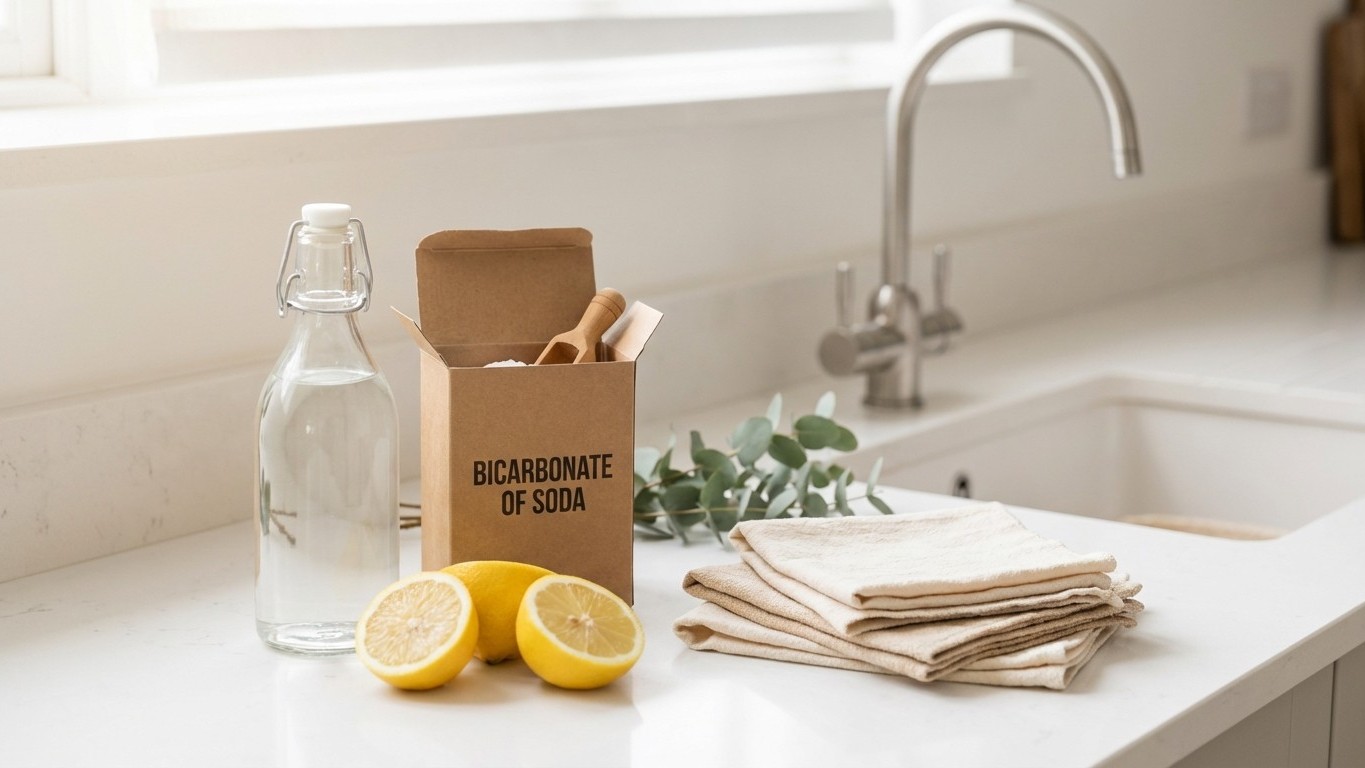
Switching to eco-friendly cleaning at home doesn’t require a complete lifestyle overhaul, a chemistry degree, or a particularly large budget. Most of what you need is already sitting in your kitchen cupboard: white vinegar, bicarbonate of soda, a lemon that’s past its best, and a few old cotton cloths. The 25 practical hacks below cover every room in the house, from greasy hob to limescale-covered taps, and they work, reliably, affordably, and without filling your home with synthetic fragrances or harsh chemicals.
Why bother with eco-friendly cleaning at home?
The environmental and health case
Conventional cleaning products are among the most routinely overlooked sources of indoor air pollution. Many contain volatile organic compounds (VOCs) that linger long after the smell has faded, and they rinse straight into the water supply with each use. A UK household goes through dozens of single-use plastic bottles every year, largely for products that could be replaced with three or four natural ingredients. Children and pets, who spend more time near floor level where residues accumulate, are disproportionately affected by these chemical traces.
The encouraging news is that the switch genuinely makes a measurable difference. White vinegar, bicarbonate of soda, and citric acid are all biodegradable. They don’t accumulate in ecosystems. They come in bulk packaging, which slashes plastic waste considerably. And unlike many antibacterial sprays, they don’t contribute to the growing problem of antimicrobial resistance, an issue researchers are watching with real concern.
The financial argument (which tends to win people over)
A large bottle of white vinegar costs a fraction of a branded multi-surface spray and does roughly the same job on grease and bacteria. Bicarbonate of soda bought in a 1kg bag works out far cheaper per use than any specialist scrubbing product. Over the course of a year, a family that makes the switch typically halves their cleaning budget, sometimes more. The savings stack up faster than most people expect.
The foundations: ingredients and equipment worth knowing
Your natural cleaning starter kit
You don’t need much. White wine vinegar (or distilled white vinegar) is the workhorse, antibacterial, antifungal, and brilliant at dissolving mineral deposits. Bicarbonate of soda (baking soda) provides gentle abrasion and neutralises odours without masking them. Citric acid powder tackles limescale more aggressively when vinegar alone isn’t enough. A few drops of tea tree essential oil add genuine antifungal properties. Washing soda (sodium carbonate, different from bicarbonate) cuts through grease on heavily soiled surfaces. Castile soap rounds out the kit as a gentle, plant-based surfactant.
For a deeper look at building your first batch of homemade cleaners, the natural cleaning hacks guide walks through the basics in detail, including which combinations to avoid (vinegar and bicarbonate together, for instance, largely cancel each other out).
Equipment that reduces waste
Reusable microfibre cloths replace dozens of rolls of kitchen paper. Old cotton T-shirts cut into squares work beautifully for polishing glass. A set of glass spray bottles lets you make up solutions in advance. Silicone scrubbing pads outlast plastic sponges by months. None of this requires a major investment, most households already own much of it.
25 eco friendly cleaning hacks for home, room by room
Kitchen: tackling grease and odours naturally
1. Spray a diluted solution of white vinegar and water (roughly 1:1) onto hob rings and leave for ten minutes before wiping. Grease dissolves without scrubbing.
2. For baked-on residue inside the oven, make a thick paste of bicarbonate of soda and water, spread it generously, and leave overnight. It lifts remarkably well with a damp cloth the next morning.
3. Deodorise the fridge by placing a small open dish of bicarbonate in the back. Replace it monthly.
4. A halved lemon rubbed across a chopping board removes both stains and the lingering smell of onion or garlic. Follow with a rinse and allow to air dry.
5. Descale your kettle by filling it with a solution of citric acid powder dissolved in water (about one tablespoon per litre), bringing it to the boil, and leaving for thirty minutes. Rinse thoroughly twice before use.
6. Unblock a slow kitchen drain by pouring in a generous handful of bicarbonate of soda followed by half a cup of white vinegar. Allow it to fizz for fifteen minutes, then flush with very hot water.
7. Clean the inside of your microwave by heating a bowl of water with a few tablespoons of white vinegar for five minutes. The steam loosens everything; wipe clean with a cloth.
Bathroom: limescale and mould without harsh chemicals
8. Soak a cloth in undiluted white vinegar, wrap it around taps and showerheads, and leave for an hour. Limescale crumbles away. The homemade natural cleaning spray vinegar and water guide covers dilution ratios and surface compatibility in useful detail.
9. Prevent grout going dark by wiping tiles with a diluted tea tree solution (ten drops in 500ml water) after showering. It inhibits mould growth without bleach.
10. For existing mould on grout or sealant, apply a paste of bicarbonate and a few drops of tea tree oil, leave for twenty minutes, and scrub with an old toothbrush.
11. Keep glass shower screens streak-free by finishing with a squeegee and a light spray of diluted vinegar after your daily rinse. Takes under a minute and makes a real difference over time.
Floors and carpets: stains, freshness, and daily upkeep
12. Sprinkle bicarbonate of soda generously over a carpet, leave for at least thirty minutes (overnight is better), and vacuum up. Odours disappear completely rather than being covered up.
13. Treat a fresh carpet stain immediately with cold water and a little castile soap, blotting rather than rubbing. For older stains, a paste of bicarbonate and water applied for an hour often works wonders.
14. Add a splash of white vinegar to the mop bucket when washing hard floors. It cuts through grime and dries without residue, and yes, the smell dissipates as it dries.
15. Restore shine to wooden floors by mopping with a very diluted solution of water and a few drops of castile soap. Avoid soaking the wood; a well-wrung mop is key.
Windows and mirrors: streak-free without chemical sprays
16. Mix equal parts water and white vinegar in a spray bottle, apply to glass, and buff dry with a screwed-up sheet of old newspaper or a lint-free cloth. Streak-free results, every time.
17. For heavily soiled windows, add a small squirt of castile soap to the vinegar-water solution. Rinse with plain water and buff dry before the soap dries on the glass.
Laundry and textiles: whiten, soften, and lift stains
18. Add half a cup of white vinegar to the fabric softener compartment of your washing machine. It softens clothes, reduces static, and leaves absolutely no vinegar scent on the fabric once dry.
19. Treat stubborn stains on white cotton by soaking in a solution of washing soda and hot water for two hours before washing as normal.
20. For yellow underarm stains, apply a paste of bicarbonate and a little water directly to the fabric, leave for thirty minutes, then wash at the usual temperature.
High-touch surfaces: disinfecting without industrial products
21. A spray made with water and a few drops of tea tree essential oil is a legitimate disinfectant for door handles, light switches, and remote controls. Allow it to remain on the surface for sixty seconds before wiping, contact time matters.
22. For a reliable all-purpose solution that handles both cleaning and light disinfection, the DIY all purpose natural cleaner recipe is a particularly handy reference, with precise quantities and shelf-life guidance.
Freshening the air naturally
23. Simmer a pan of water with a cinnamon stick, a few cloves, and the peel of an orange. The kitchen and adjacent rooms will smell beautifully warm within minutes, genuinely better than any synthetic spray.
24. Place a small bowl of bicarbonate of soda in musty rooms or wardrobes. It absorbs rather than masks odours.
25. A cotton wool ball with a few drops of lavender essential oil tucked inside a vacuum cleaner bag or filter spreads a light fragrance through the house as you hoover.
Making it stick: organisation and avoiding common mistakes
Setting yourself up for success
The main reason people revert to conventional products is inconvenience. If your homemade sprays aren’t ready and labelled on the shelf when you need them, old habits win. Spending twenty minutes once a week preparing your solutions in advance, and storing them in clearly labelled glass bottles at eye level — removes the friction completely. Most natural cleaners keep well for several weeks.
Batch-making also makes the economics more compelling. The natural cleaning hacks collection offers a comprehensive overview of forty proven techniques organised by room, which is useful if you’re building a full cleaning routine rather than adopting individual tips piecemeal.
Mistakes worth knowing about in advance
Vinegar should never be used on natural stone surfaces like marble or granite, it etches the material permanently. Bicarbonate is too abrasive for some polished surfaces and can leave a white residue if not rinsed thoroughly. Tea tree oil is toxic to cats and should be kept well away if you share your home with one. And always make up small batches of citrus-based cleaners, as they degrade quickly once mixed.
Frequently asked questions
Can I really disinfect effectively without industrial chemicals? Yes, with realistic expectations. White vinegar and tea tree oil have demonstrated antibacterial properties in studies, and they handle the everyday bacterial load of a family home perfectly well. For situations requiring clinical-level disinfection (caring for someone immunocompromised, for example), specialist products may still be appropriate.
How do I start without feeling overwhelmed? Pick one room, master two or three hacks there, and only expand once those feel automatic. The bathroom or kitchen is usually the best starting point because the results are visible quickly.
Are homemade cleaners safe for children? The ingredients listed here are substantially safer than most conventional products, but they’re not harmless if swallowed. Store them out of reach, just as you would any cleaning product, and label everything clearly.
What everyday habits make the biggest difference to environmental impact? Using cloths instead of paper towels, making cleaners in reusable bottles, and buying natural ingredients in bulk packaging. These three changes alone reduce both plastic waste and chemical load considerably, even before you start worrying about precise recipes.
The real pleasure of this kind of cleaning, if you’ll allow me to say so after many years of testing these methods, is discovering how little you actually need. A home that smells of nothing in particular, just clean, turns out to be far more inviting than one that smells of synthetic lemon or pine. And there’s something quietly satisfying about knowing exactly what you’ve put on your kitchen counter. For anyone curious to go further with natural approaches throughout the house, exploring natural cleaning hacks for every room is a very good next step.