
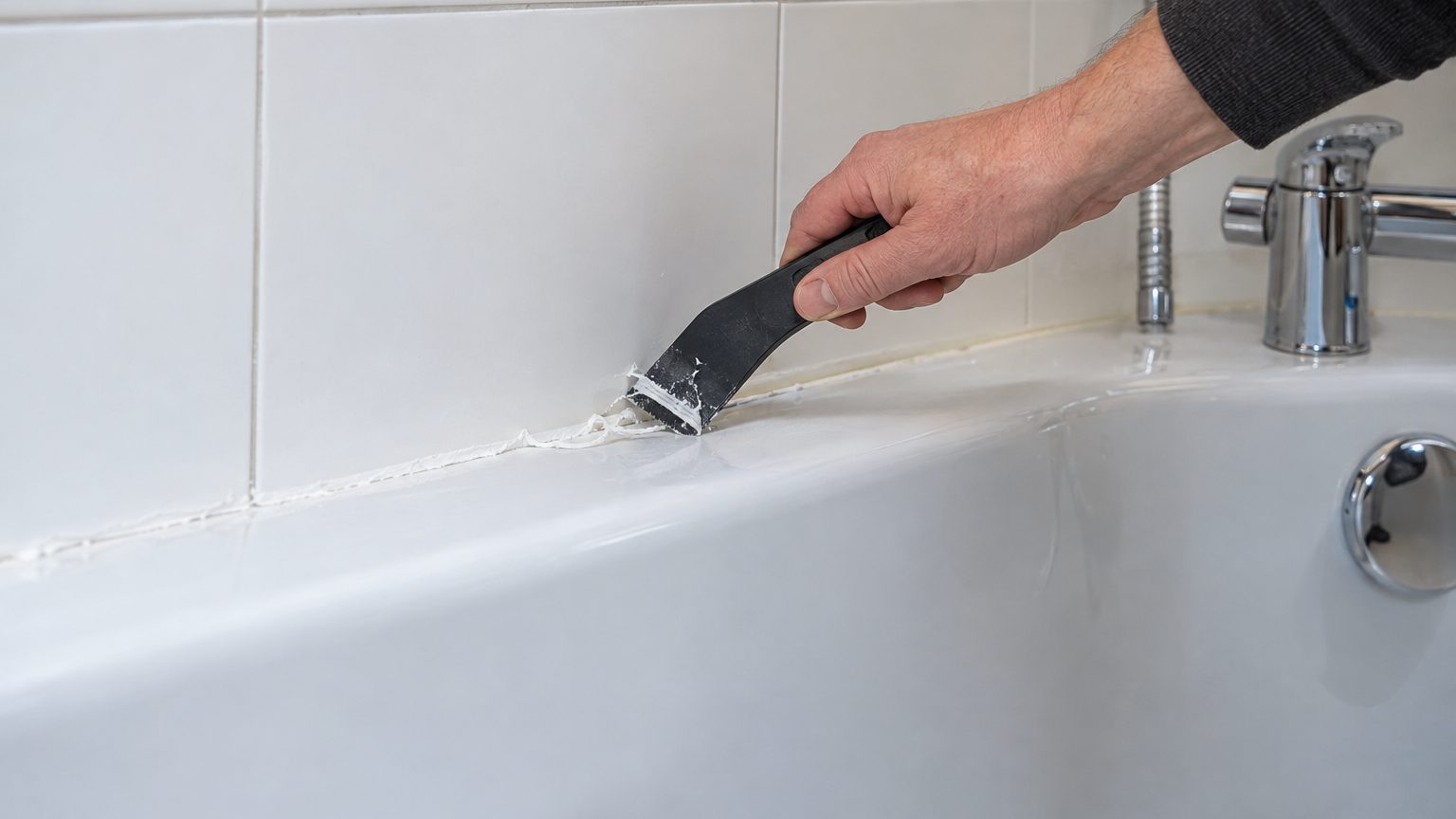
Old silicone comes off in two stages, and the second is the one most people skip. Cut away the bulk with a blade, then dissolve the thin, nearly invisible film left behind, because fresh sealant will not grip anything coated in the old stuff.
New silicone simply will not bond to old silicone.
Skip the second stage and the new bead looks lovely for a fortnight, then lifts at the edges and lets water creep behind it. Nobody wants to do this job twice. A little patience now saves a whole Saturday later.
- New silicone does not bond to old silicone residue no matter how clean it looks.
- A plastic scraper removes the bulk; methylated spirit or sealant remover gel dissolves the greasy film left behind.
- A bath filled with water during sealing sits lower and prevents the sealant from stretching when weight is added later.
Cutting out the bulk
Start with a plastic sealant removal tool or a plastic scraper, which are inexpensive and sold in most DIY shops. Run a sharp craft knife along the top and bottom edge of the bead first, holding the blade at a shallow angle against the sealant rather than the bath or tiles. Then hook the end of the strip and pull; with luck, a long length will peel away in one go. A slip with the knife across acrylic or glazed tile leaves scratches that collect grime for years.
Stubborn crumbs in the corners need slow, steady scraping rather than force. If the sealant has gone brittle and comes off in flakes, a small plastic spatula or even an old credit card will do the job.
Never use a metal scraper on an acrylic bath.
Dissolving the film you can’t see
What remains after scraping looks clean but is slightly greasy, rather like trying to stick a plaster onto a hand that has just been creamed. A silicone sealant remover gel is the most reliable fix. Spread it along the joint, leave it for the time stated on the label (often several hours, sometimes overnight), then rub the softened residue away with a scraper and a cloth. Check that the product suits your bath material and test a hidden patch first, as some solvents can cloud acrylic.
For thin residue, methylated spirit or white spirit on a cloth lifts the greasy layer well enough, though neither will melt a thick lump. Open the window while you work, since both smell strong and the fumes are unpleasant in a small bathroom. An old toothbrush reaches the corners nicely. There is also a trick I have always liked: roll a scrap of the old silicone strip between your fingers into a ball, then rub it along the joint, where it acts like a pencil eraser and lifts the stubborn film.
Run a fingertip along the joint; it should feel bare, never slick.
Mould, damp and the drying wait
Black mould often hides under old sealant, and sealing over it just traps it in the dark. Treat any dark patches with a mould remover spray, following the label, and keep the room ventilated while it works. Never mix bleach-based products with other cleaners, as the fumes can be dangerous.
Then wait. The joint must be completely dry, and a hairdryer on a low setting helps, though leaving it overnight is better. Trapped moisture is the most common reason a new bead fails early.
Laying the new bead
Fill the bath with water before you seal, an old fitter’s habit with good science behind it. A full bath sits slightly lower on its supports, so the sealant goes in at the bath’s widest gap and stays flexible, rather than being stretched when someone steps in. Leave the water in until the sealant has cured, which is why it pays to plan this for a weekend when you can do without a bath.
Run masking tape along both sides of the joint, leaving a gap of a few millimetres, for a crisp edge. Cut the nozzle at 45 degrees with a small opening, squeeze steadily along the joint, and smooth the bead with a fingertip dipped in water with a drop of washing-up liquid. Peel off the tape while the silicone is still wet, pulling away from the bead.
Cure times vary between brands, so check your cartridge. Many need around 24 hours before they meet water.
The fungicide in sanitary-grade silicone does not last forever, so black spots can return within a few years if the room is poorly ventilated. An extractor fan, or simply opening the window after a shower, protects your new seal as much as the product itself.