
Yes, you can paint over gloss without sanding, provided the surface is properly cleaned and you use a bonding primer. Ordinary emulsion applied straight onto gloss is the version that fails. Everything else in this article is about avoiding that mistake.
The primer is the step people skip.
- Bonding primer grips gloss where ordinary paint fails, preventing peeling within weeks.
- Thorough cleaning with sugar soap removes invisible grease films that cause topcoat failure.
- Water-based bonding primers work for most rooms; shellac-based primers block stubborn stains like smoke and tannin.
Why gloss defeats ordinary paint
Cured gloss forms a hard, smooth, almost non-porous film. Paint needs microscopic texture to grip, and gloss offers none. Emulsion rolled straight onto it often looks perfectly respectable for a week or two, then lifts in sheets the moment you peel off masking tape or give it a determined scrub.
The trouble spots are predictable: skirting boards, door frames, window sills, kitchen cupboards and anything that gets handled daily. Those are also the places where grease, hand oils and cooking residue build up, and paint will not stick to grease any better than it sticks to gloss. A surface can look clean and still carry an invisible film that sends your new coat sliding off within months.
One sensible caution before you start.
If your home was built before the 1960s, the old gloss may contain lead, and a lead test kit from a DIY shop is cheap peace of mind. Dry sanding old paint throws up fine dust, so a no-sanding method is the safer route in those houses anyway.
Cleaning and keying without sandpaper
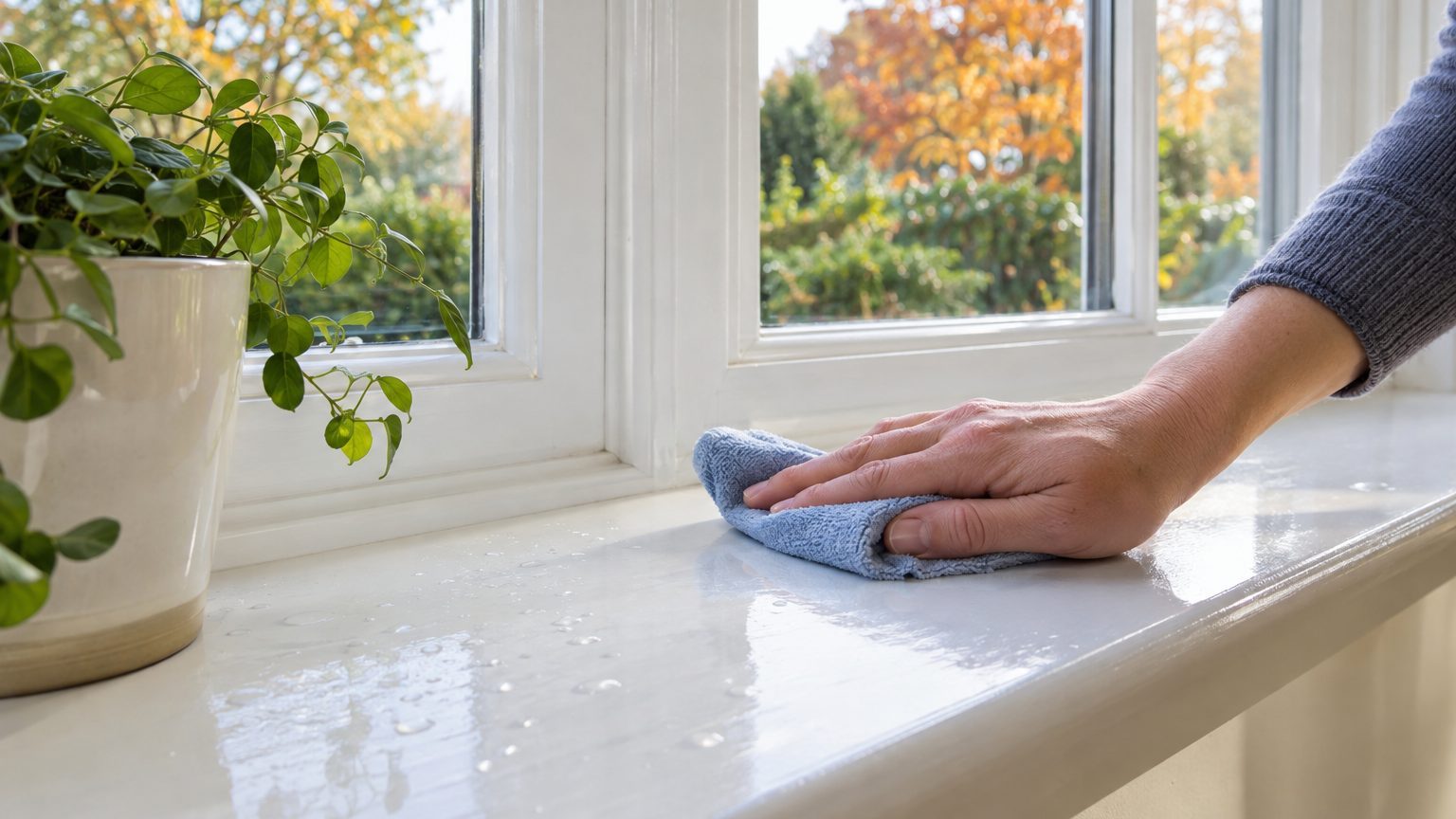
Start with a thorough wash using sugar soap, diluted to the maker’s instructions, or failing that warm water with a good squirt of washing-up liquid. Work from the bottom upwards so drips do not streak a clean area, then rinse with clean water and let everything dry fully. It is dull work, but it accounts for most of the difference between a job that lasts and one that does not.
A liquid deglosser (sometimes sold as “liquid sandpaper”) is the next step if you want extra insurance. You wipe it on with a cloth, it softens the very top of the gloss, and you can usually paint once it has flashed off, though the timings vary by product, so read the tin. Wear gloves, open a window, and do not treat it as a replacement for primer, because it only prepares the surface rather than bridging the gap between old and new paint.
Some people also go over the surface with a fine abrasive pad. That is technically light scuffing rather than sanding, and it is a fair compromise if you have the time, though it is not strictly necessary if the other steps are done well.
The primer that saves the job
You want a primer sold specifically for adhesion or bonding to glossy, difficult surfaces, and the label should say so plainly. These come in a few types: shellac-based, solvent-based and water-based. Think of the primer as double-sided tape, gripping the slick old gloss on one face and offering a nice rough welcome to your topcoat on the other.
Shellac-based primers are tough and good at blocking stains, but they smell strong and need methylated spirits for cleaning brushes. Water-based bonding primers are gentler on the nose and easier to clean up, and for most rooms in a normal home they do the job nicely. If your gloss is stained by smoke, tannin or water marks, the shellac type earns its extra bother.
Apply one thin, even coat and resist the urge to load the brush. A thick coat dries slowly and can stay soft underneath. Follow the recoat time on the tin, which is often a few hours but depends on temperature and humidity, and do not rush it.
Then choose your topcoat. A water-based satin or eggshell works well over a bonding primer, and two thin coats beat one fat one every time.
A quick test, and when to sand anyway
Before you commit a whole room, test a small hidden patch, such as the back of a door or the inside edge of a cupboard. Once the paint has dried for several days, press a strip of strong tape firmly onto it and pull it off sharply. If paint comes away with the tape, your prep needs another look.
Cold, damp rooms ruin even good primer.
Paint dries and bonds best in mild, dry conditions, so a chilly bathroom in January is a poor time to start. Keep the room ventilated, but avoid draughts that blow dust onto wet paint.
Some surfaces do still need sanding. If the existing gloss is flaking, cracked, bubbled or heavily chipped, no primer can bridge those flaws, and the loose material has to come off first (with a wet-sanding method and a mask if there is any chance of lead). A sound, well-adhered gloss is a different matter, and that is the one you can safely skip the sandpaper on.
Finally, remember that paint feels dry long before it is properly cured. Many household paints take a few weeks to reach full hardness, so go gently on a freshly painted door or windowsill for the first fortnight, avoid scrubbing it, and do not slam it shut against a damp, tacky frame.