
That gap under the back door wasn’t just letting in cold air. It was a motorway for spiders, ants, dead leaves, dust, and goodness knows what else, all sneaking into the hallway every single day without me realising. I only fitted that brush strip because my ankles were fed up with the icy blast every time I walked past the kitchen. Two weeks later, running the hoover along the same stretch of hallway, I noticed something odd: barely any grit, no stray leaves, none of the little black husks and cobweb bits that usually collected by the skirting board. The draught had gone, sure. But so had a whole ecosystem of unwanted visitors I hadn’t even clocked were there.
It turns out the gap under a typical external door is far more generous than it looks. Gaps as small as 1/16 inch or less can let insects in, while gaps a quarter inch wide can let in mice. My old door had a good half-inch of daylight showing under it in places, which by that measure was practically an open invitation. Spiders in particular don’t need much room at all; insects and spiders can slip through gaps as small as about 1/16 inch, with the bottom corners of doors being particular trouble spots. That explains the little huddles of cobwebs I always found tucked into the corners by the door frame, no matter how often I swept them away.
Key takeaways
- A tiny gap under an external door is a motorway for spiders, ants, and insects
- A brush strip costs less than £10 but blocks pests AND cuts heating bills by up to 10%
- The hidden ecosystem underneath your door is far larger than you realize
Why a five-minute fix does two jobs at once
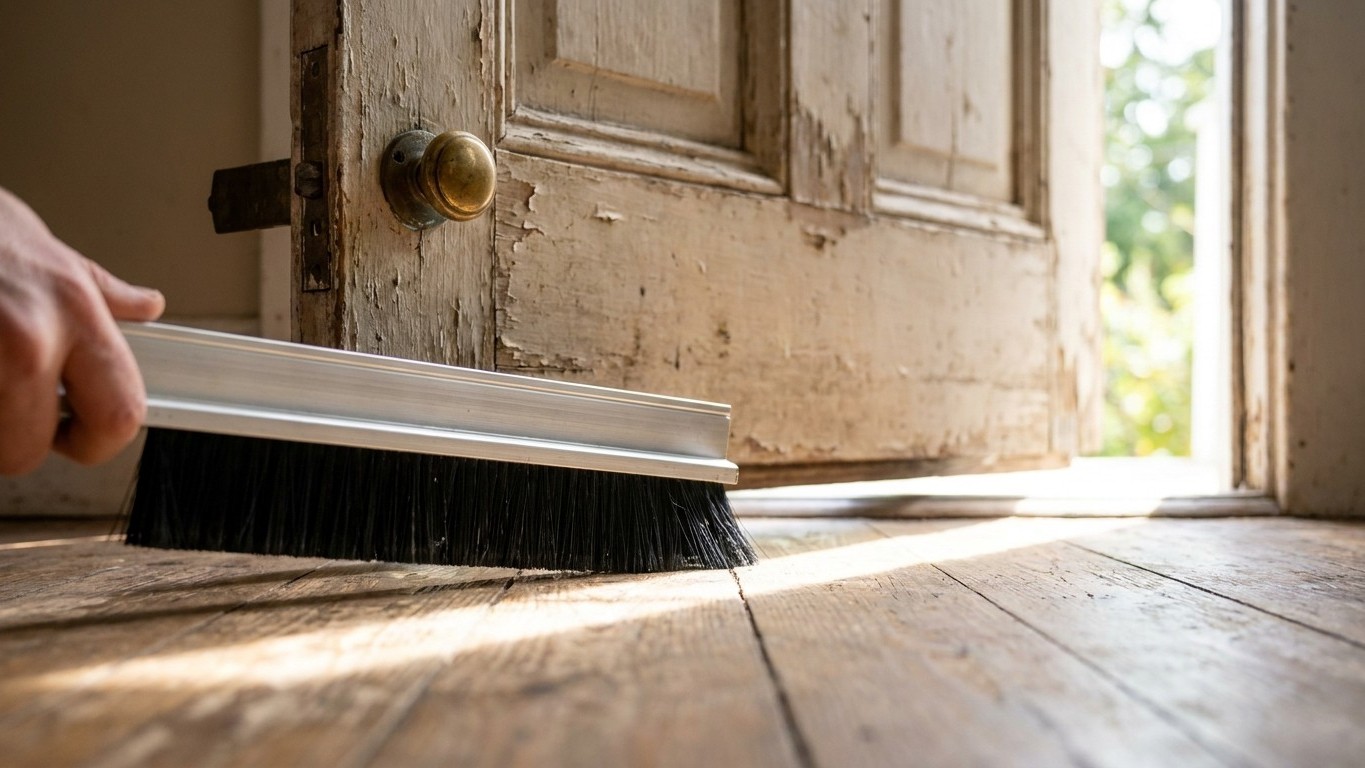
A brush strip works on drafts and pests through the same simple mechanism: it closes the gap. A brush strip screws to the bottom of the door and creates a seal with flexible bristles, and it’s the best permanent solution for under-door draughts because the bristles flex over uneven floors and carpet without dragging. Because the bristles bend rather than sit rigid, they don’t drag on the carpet or catch on the door frame threshold, but they still form enough of a barrier to stop crawling insects using the gap as a shortcut. One pest-control test I came across put a number on it: in one trial ten flies reached bait through an unsealed gap, but once a brush door sweep sealed the 0.07 inch gap, no flies were able to reach it. That’s a striking difference for something so cheap and unglamorous.
The heating benefit is well documented too, and it’s not marginal. The gap under a typical external door lets through as much cold air as having a 6-inch hole in your wall, which is a genuinely alarming way to picture what was happening under my back door every winter’s evening. Research from the Energy Saving Trust shows that using a brush draught excluder can reduce heat loss by 10%, and more broadly, the Energy Saving Trust estimates draught proofing saves £45 to £125 per year on heating bills. For a job that took me less time than it takes the kettle to boil, that’s a proper return.
What I actually did, step by step
I bought a standard aluminium-backed brush strip, the kind sold in every DIY shop and builders’ merchant for a few pounds. Standard 838mm strips fit most UK doors, so it’s worth measuring yours before ordering, since a strip that’s too short leaves a gap at one end, which rather defeats the purpose. Ideally you take the door off its hinges first, because installation needs a drill and screwdriver, and you’ll want to take the door off its hinges if possible since it makes it much easier to screw the strip on straight. I didn’t fancy wrestling a door off its hinges on a Tuesday evening, so I did it in situ, and while it took a little more patience lining up the bristles evenly along the bottom edge, it was entirely manageable with the door propped open. Budget-wise, this is genuinely one of the cheapest fixes going, sitting somewhere at £6–£10, one of the cheapest and most effective energy upgrades you can make to a door.
One quick word of caution, though, and it’s an important one my own mother would have insisted on: this trick is for external doors only. Internal doors should not be draught proofed, because there should be a gap beneath internal doors to make sure you get sufficient air flow throughout your home. Sealing up an internal door completely can trap moisture and stop air circulating properly between rooms, which causes its own problems over time.
The bit nobody mentions: keep an eye on the bristles
What surprised me most, once I’d worked out what was going on, was how little maintenance the whole thing needs. Regularly cleaning the brush strip ensures optimal functionality and longevity, which in practice means running the hoover nozzle along it every so often to clear out any dust or debris that gets caught in the bristles themselves, since a strip clogged with fluff and grit won’t seal nearly as well. It’s also worth checking the corners occasionally, as door sweeps should be inspected regularly for damage, since corners are often susceptible to wear. Mine has been down for a good while now and shows no sign of flattening, but I do give it a once-over every few months out of habit more than necessity.
The other thing worth knowing, and something I only found out afterwards, is that spiders don’t vanish completely just because you’ve sealed one entry point. As one pest control source put it plainly, weatherstripping and door sweeps reduce pest numbers considerably even though they won’t eliminate them entirely, since determined insects will always find another way in through a letterbox, an airbrick, or a gap round a window frame. So the hallway hasn’t gone completely clear of eight-legged lodgers since I fitted that strip, but it’s noticeably quieter on that front, and the hoovering certainly takes less effort than it used to.
Sources : homesecureshop.co.uk | burrtecusa.com