
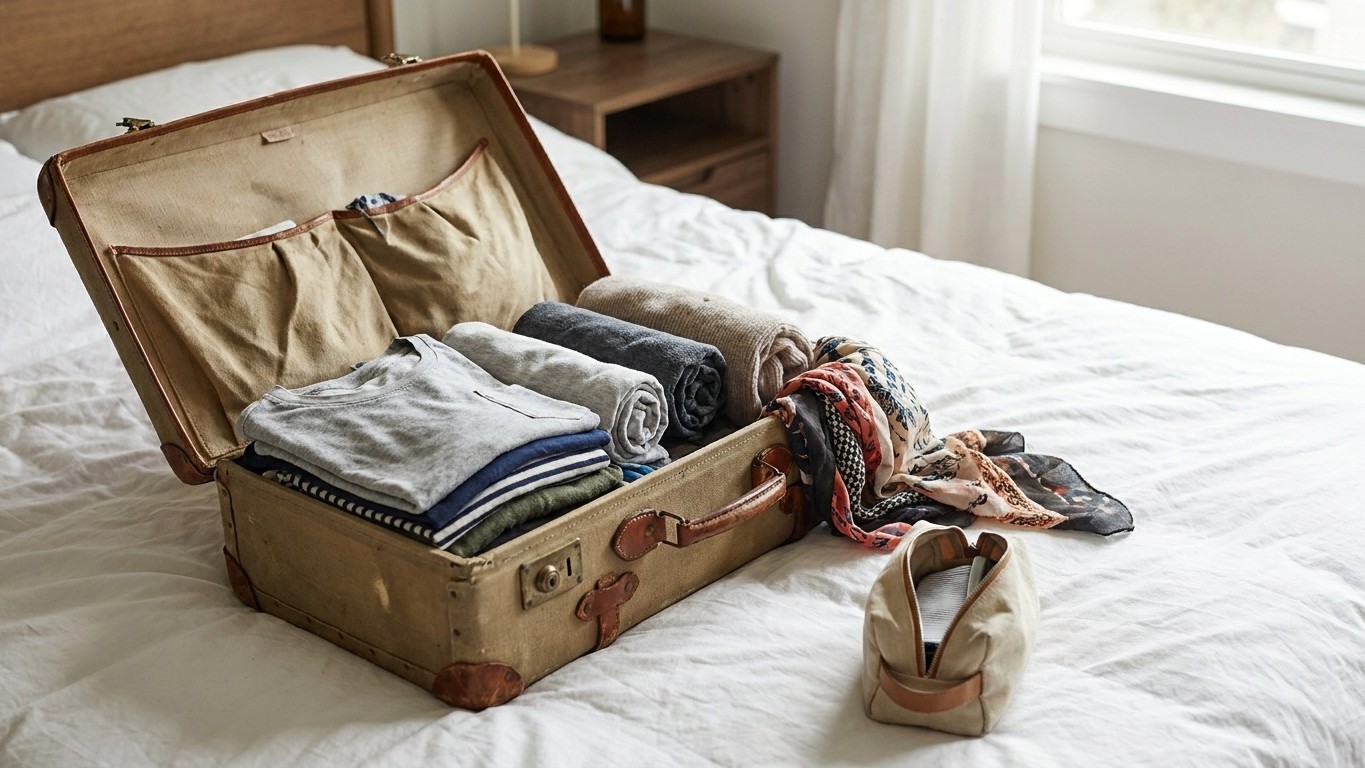
Three weeks. That’s roughly how long it took for the “welcome home” spots on this reader’s arms and legs to appear after a straightforward holiday. No dramatic hotel horror story, no obvious culprit at the time. Just a case wheeled through the front door, hoisted onto the duvet for a comfortable unpack, and left at that. The delayed timing turns out to be the biggest clue of all, because it points squarely at one of the most notorious stowaways in modern travel: the humble, patient, thoroughly unpleasant bed bug.
What makes bed bugs so sneaky is that you genuinely don’t feel them at work. You probably don’t feel a mosquito bite while sleeping, and bed bugs have a similar defence system that prevents you from feeling you’ve been bitten, injecting an anaesthetic and an anticoagulant into the skin when they bite. That’s precisely why the marks don’t show up straight away. Visible marks often take from one up to fourteen days to appear, and some unlucky souls, as one dermatology resource notes, can develop reactions up to 10 days after a bite. Three weeks sits at the outer edge of that window, but it isn’t unheard of, especially if the initial exposure was light and the bites built up gradually as a small colony settled in and multiplied.
The marks themselves have a signature look that’s worth learning, because it’s genuinely different from a stray mosquito bite you might pick up in the garden. The marks bedbugs leave will be red, slightly swollen, itchy and may appear in clusters along the neck, shoulders, back, legs or arms. Pest control specialists describe something almost cheeky about the pattern too: you may see a row of bites when the bedbug has been disturbed and tried to feed again, sometimes called the breakfast, lunch and dinner sign. If you’ve woken up with three or four bites in a neat little line along your forearm, that’s about as close to a smoking gun as it gets. It’s worth remembering, though, that individual responses to bed bug bites can differ widely, with some people developing obvious welts while others show no outward symptoms at all, which is exactly why two people sharing a bed can wake up with wildly different results.
Key takeaways
- Bed bug bites can take up to 14 days—or even longer—to appear on your skin, which is why the connection to your holiday isn’t obvious
- That ‘comfortable’ habit of unpacking directly onto your bed is one of the easiest ways to invite bed bugs into your home
- The telltale signs aren’t always visible: tiny dark spots on luggage, a distinctive line of bites, and a musty smell are what actually give them away
How they hitched a ride in the first place
The case-on-the-bed habit is, unfortunately, doing most of the damage here. Placing luggage directly onto a mattress is one of the single easiest ways to invite trouble, because it puts your belongings at exactly the height and proximity bed bugs need. Your luggage is one of the easiest ways for bed bugs to travel home with you, so it’s worth using a luggage rack, ideally metal, kept away from walls or furniture, and avoiding placing bags on the bed or floor altogether. Hard-shell cases offer a genuine, if modest, advantage too, since it is harder for bugs to latch onto a rigid case than to work their way into fabric.
It isn’t only five-star mattresses that harbour them, either, and there’s a slightly uncomfortable truth in how these insects move around beyond hotel rooms. It could be as simple as getting on a train and having one transfer to your clothes, which can then be carried back home. Buses, cinema seats, even a friend’s sofa can all be sources. Bed bugs are adept travellers, primarily hitching rides on luggage, clothing, and personal belongings, and they often spread through human activity in high-traffic areas such as hotels, airports, buses, and trains. And once they’re in your suitcase, they’re not in a hurry to reveal themselves. They can survive months without feeding, tenacious things. A case shoved into a cupboard for a fortnight before the next trip is no deterrent at all.
What to actually check for, and why the bed-unpack is the mistake
Unpacking on the mattress feels like the sensible, comfortable option, particularly after a long journey when the floor seems miles away and your knees have other ideas. But it’s precisely the wrong surface. Official guidance from pest agencies is blunt about this: in hotel rooms, use luggage racks to hold your luggage when packing or unpacking rather than setting your luggage on the bed or floor, and try to keep luggage away from the bed. The same logic applies the moment you’re home too. The safest approach is to unpack in a controlled area such as a bathroom, utility room, or hard-floor space, ideally somewhere well away from soft furnishings that a stray hitchhiker could disappear into.
Before you do anything else, give the case itself a proper inspection under decent light. Focus on seams, zips, pockets, and folds where bed bugs like to hide, looking for small dark spots, shed skins, eggs, or live insects, as these are the most common signs of contamination. The dark spots are a giveaway many people miss, mistaking them for dirt. Signs you might notice include blood stains on your sheets or pillows, tiny dark spots on your mattresses, itchy bites on your skin in a line or group, and a musty smell.
Getting rid of them properly, and stopping it happening again
If you suspect something has already made it into your bedroom, the response needs to be thorough rather than half-hearted, because a few survivors is all it takes to start again. Remove all your clothes from your suitcase outside your bedroom, preferably on a hard floor, and put them straight on a hot wash at 60°C. Washing alone isn’t the whole story, though, and this is a detail that trips a lot of people up. Unpack directly into a washing machine and inspect your luggage carefully, remembering that time in a dryer at high temperatures kills the bed bugs, since just washing will generally not kill them. A hot tumble dry cycle does the job that the wash alone can’t manage.
The suitcase itself needs attention too, not just what came out of it. Vacuum-clean your belongings, including all clothes, bags and suitcases, since a thorough vacuum will remove all dead or remaining bed bugs, then remove the vacuum bag immediately, wrap it in another plastic liner bag and dispose of it. Non-washable items like books, electronics, or wooden souvenirs are trickier and generally need separating out for a different treatment approach, often heat or prolonged sealing in plastic rather than water.
If bites keep appearing despite all this, or you spot live insects rather than just the telltale spotting, it’s genuinely time to call in professional help rather than battling on with sprays from the supermarket shelf, which tend to have limited effect against a resistant, well-hidden colony. If you think you have bedbugs, contact a pest control expert approved by the British Pest Control Association. Many UK councils also offer support, and it’s worth checking with yours directly, since some environmental health teams provide inspection or treatment services, occasionally at reduced cost for residents dealing with a confirmed infestation. It’s an unglamorous end to a lovely holiday, but the fix, once you know what you’re looking for, is entirely manageable with a bit of hot water, a decent vacuum, and a firm new rule about never letting the suitcase touch the bed again.
Sources : fantasticpestcontrol.co.uk | fox-pest.com