
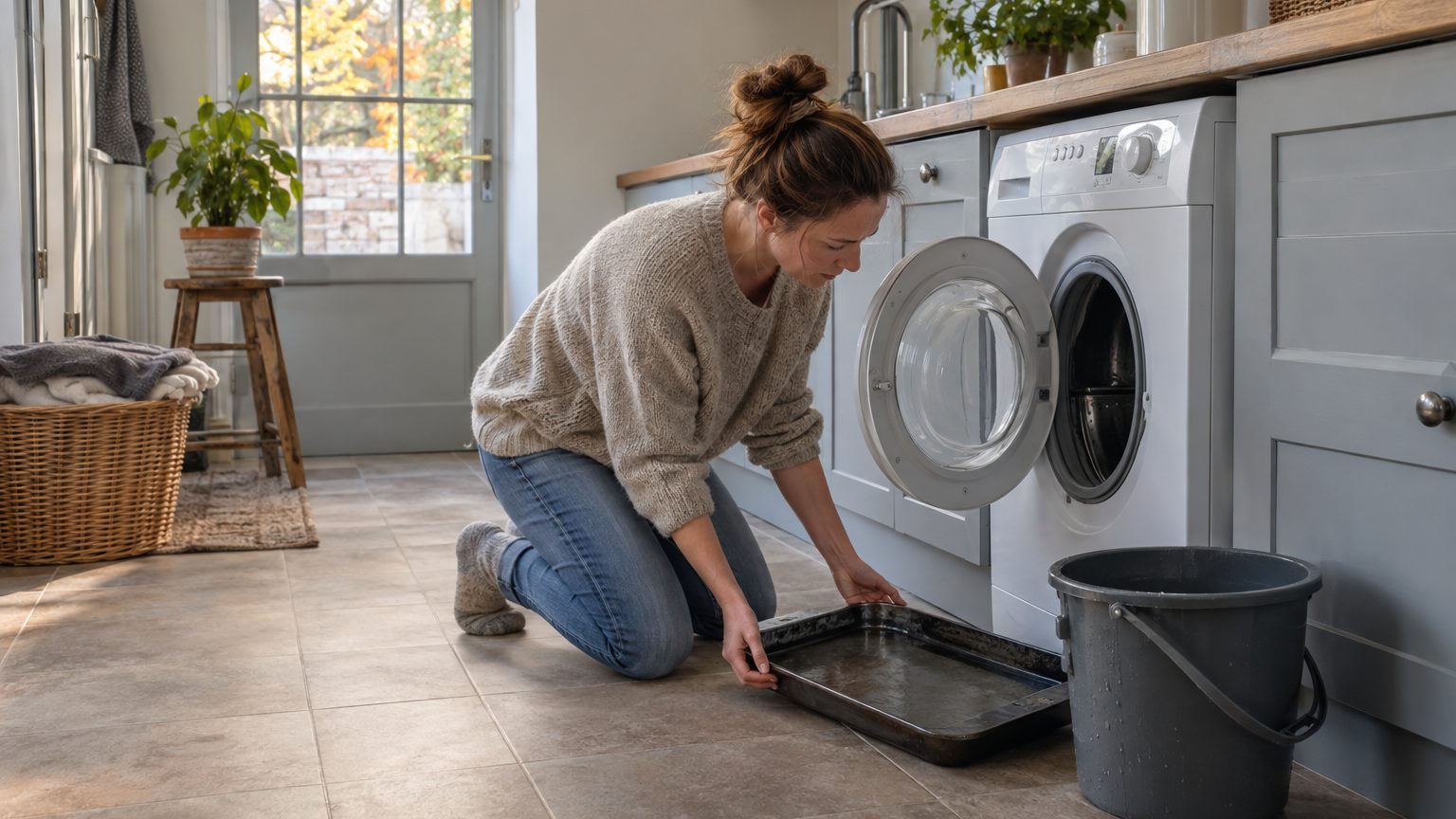
A washing machine that sits full of grey water after the cycle has finished is usually blocked, not broken. Nine times out of ten the culprit is a setting, a kinked hose, a clogged filter or a sluggish household drain. Work through them in that order and you may be sorted within an afternoon, for the price of a few old towels.
Unplug the machine before you touch anything.
Water and mains electricity make poor companions, so switch off at the socket, pull the plug and spread towels on the floor. Keep a shallow baking tray and a bucket within reach. Even a “finished” machine holds a surprising amount of water, and it may still be hot if the last wash was a 60°C or 90°C cycle. Give it half an hour to cool if so.
- Most drainage faults are blockages, not a broken machine.
- A hose kinked behind the machine or hooked too high can stop the pump.
- A clogged pump filter is one of the most common causes of no drainage.
Start with the five-minute checks
Look at the programme first. Some cycles, delicates and wool among them, end on a “rinse hold” or “no spin” setting that leaves water in the drum on purpose, so the clothes don’t crease. Pressing the drain or spin button, or choosing a spin-only cycle, releases it. Check too that the machine hasn’t been paused and that the child lock isn’t on, since a stray finger can do either.
Next, look at the load. A drum stuffed with towels, or one heavy duvet, can go out of balance, and the machine may abandon the spin rather than shake itself across the kitchen, so redistribute the clothes and try a spin on its own.
Suds are the quieter offender. Too much detergent, especially in a soft-water area or with a half-empty drum, builds a foam that the pump struggles to shift. If the door glass is full of bubbles, leave the machine for an hour to let them settle, then run a rinse and spin. Next time, measure to the line on the packet for your load size rather than a generous glug.
The hose and the drain behind the machine
Pull the machine out gently and look behind it.
The drain hose is a ribbed plastic pipe, and it kinks more readily than you’d expect, especially if the machine has been shoved back into a tight gap. Straighten any bends and make sure nothing is squashing it. Most manuals give a height range for where the hose hooks into the standpipe or sink trap (often somewhere between 60cm and 100cm from the floor, but your own booklet is the authority), and a hose hooked too high makes the pump work uphill.
If the hose looks clear, disconnect it with a bucket ready and look through it with a torch. Fluff, hair and the end of a lost sock can form a plug you’d never spot from outside.
Then there is the house’s own plumbing. If the kitchen sink gurgles or drains slowly while the machine empties, the standpipe or trap is probably part-blocked, and the washing machine is simply the first to complain. A sink plunger, or a trap unscrewed over a bucket and rinsed out, often cures it. If you rent, a quick message to the landlord is wiser than unscrewing pipework.
The filter, where the missing socks end up
Most front-loaders have a small pump filter behind a flap at the bottom corner of the front panel, and a clogged one is among the commonest reasons for a machine refusing to drain. Slide the baking tray underneath, open the little emergency drain tube if your machine has one, and let the water run out, emptying the tray into the bucket as it fills. Then unscrew the filter slowly, anticlockwise, because more water will follow it. Top-loaders and some other designs put the filter elsewhere, so a glance at the manual saves guesswork.
Expect a grim little treasure hoard.
My mother kept a jam jar on the shelf by her machine for whatever the filter coughed up, and over the years it collected coins, hair grips, buttons and one small plastic dinosaur. Rinse yours under the tap and scrub the threads with an old toothbrush.
Before refitting it, shine a torch into the housing. The small propeller inside (the pump impeller) should turn freely under a fingertip. If it is snagged with thread or elastic, tease it loose with tweezers, then screw the filter back in firmly, because a loose one will leak across your floor.
Clean it every two or three months and it rarely returns.
In hard-water areas, limescale can narrow the pipework over time, so a hot maintenance wash with the drum empty, as your manual recommends, once a month is cheap insurance. Washing-machine cleaner or washing soda crystals are the usual choices, though follow the instructions in your own booklet for what suits your model.
When the engineer earns their fee
If the water is out, the filter is clear and the hose runs freely but the machine still will not drain, the pump or its wiring is the likely fault. A pump that hums without moving water is probably jammed or worn, whereas complete silence points towards a failed motor or a control board problem. Many displays show a fault code, and the manual lists what each one means for your brand. Tell the engineer the code and what you have already checked, which saves their time and may shorten the visit.
Replacing a drain pump is a routine repair, but get a written quote before agreeing to it. A sensible rule of thumb: if the machine is past eight or ten years old and the repair approaches half the price of a comparable new one, replacing it may be better value. Check first whether a manufacturer’s guarantee or any home insurance cover applies.
One last practical point: if the door will not open to rescue the washing, some machines have a small emergency release cord or tab behind the filter flap. Pull it gently, and only once the water level has dropped below the door seal.