
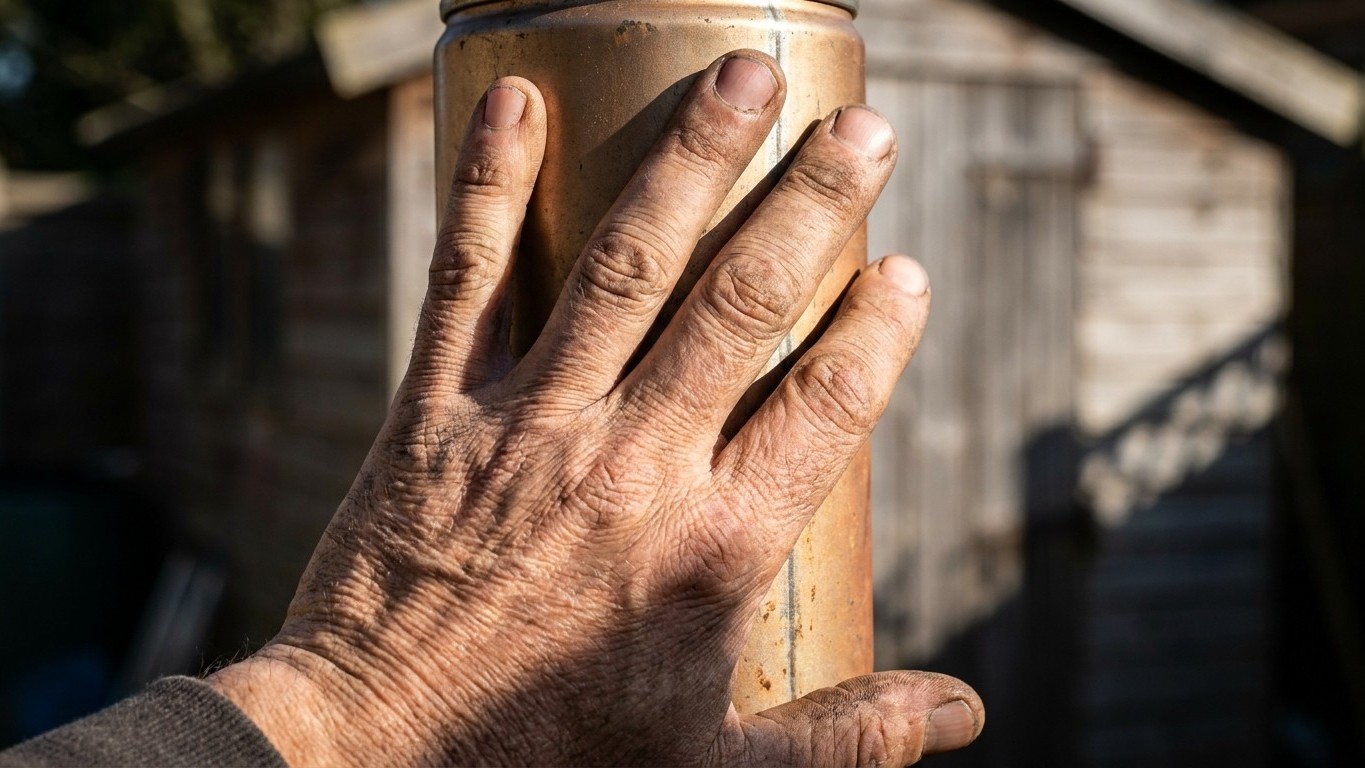
Press your hand flat against a can of fly spray or WD40 left at the back of the shed on a scorching afternoon, and if the metal feels properly warm to the touch, not just mildly sun-kissed but genuinely hot, that can has likely spent hours creeping towards the point where its internal pressure starts working against it. It’s a rough-and-ready gauge, nothing more, but it tells you something worth knowing: the propellant inside is a liquefied gas, and gases don’t take kindly to being cooked.
Sheds are dreadful places for aerosols, and the reason comes down to simple physics rather than any mystery. Most aerosols have a max tolerance of 50C, which sheds could reach in enclosed spaces, especially if cans are exposed to direct sunlight. Three o’clock in the afternoon tends to be when that heat peaks, after a morning of sun baking through a metal or wooden roof with nowhere for the warm air to escape. If that happens, then internal pressure can build up so much that cans can fail. Today, many cans are designed to tear apart rather than fragment to reduce potential injury, but they can still be a serious hazard. I’ll admit I used to think the “keep away from sunlight” warning printed on every can was just standard small print nobody reads, the sort of thing lawyers insist on. Turns out it’s rather more literal than that.
Key takeaways
- A simple hand test reveals whether your shed’s aerosols are approaching dangerous pressure levels
- Sheds can exceed the 50°C safety limit for most aerosols, causing internal pressure to build rapidly
- Recent incidents show how quickly heat can turn a storage can into an explosion risk—some resulting in hospital visits
Why a shed becomes an oven and what it does to your stuff
The trouble with sheds specifically, rather than, say, a kitchen cupboard, is that they’re built to trap heat rather than shed it (no pun intended, though I’ll take the credit anyway). Metal sheds in particular act like little greenhouses. Product expert Sue Taylor, speaking about the effect on stored goods, put it plainly: “The issue is that sheds can get incredibly hot during periods of really warm weather, which can have a big impact. For some products like paints and adhesives, this can cause thermal and polymer degradation over time, which can affect their overall quality.” So even before you get to the safety question, that half-used can of spray paint you were saving for the garden bench might simply stop working properly.
On the safety side, it isn’t only aerosols you need to be wary of. Gas canisters for camping stoves and small BBQ tools sit in exactly the same danger zone. A Staffordshire case from a recent heatwave illustrates it starkly: crews were called at around 3.20pm to a property following reports of a small explosion, when a small butane gas cannister, which had been on a table in direct sunlight, had exploded, leaving two women and a toddler with minor burns. That’s not a shed, but the mechanism is identical, heat plus pressure plus confinement, and it shows how quickly things can escalate from “warm can” to hospital trip.
When aerosols and heat sources have already gone wrong
London Fire Brigade’s incident records make for genuinely sobering reading if you fancy a healthy dose of caution with your morning tea. In one case, an air freshener can was left on a lit hob and the resulting blast, in the words of Watch Manager Anton Keach, meant “leaving an aerosol can next to your kitchen hob can be deadly,” with the force of the blast shaking the building and badly damaging the walls, floor and shattering glass inside the flat, leaving it uninhabitable. Another incident saw a butane canister rupture after being left too close to a fan heater, blowing out an entire shopfront window and damaging a parked car outside. A third involved a leaking dry shampoo can that ignited after an overhead heater was switched on, blowing the bathroom window clean out of its frame.
None of these happened in a shed, but they share the same lesson your palm-test is really getting at: heat doesn’t need to be dramatic to be dangerous. A fan heater, a hob, an ordinary sunny afternoon behind a closed shed door, they’re all capable of nudging a can past its limit. As one London Fire Brigade spokesperson summed it up after the Thornton Heath incident, “any cans which contain a compressed gas should be kept clear from any heat sources, whether it be heaters or candles.”
What to actually do about the tin at the back of the shed
Right, enough doom and gloom, let’s talk about fixing the problem, because it really doesn’t take much effort. Cambridgeshire Fire and Rescue’s own household advice is refreshingly simple: dispose of spent aerosols by recycling where possible, don’t store quantities of aerosols indefinitely in sheds and garages or under sink cupboards, use only as directed, protect from sunlight and do not expose to high temperatures, do not pierce or burn even after use, and keep away from sources of ignition. That’s essentially the whole rulebook in one breath.
In practice, that means clearing out the shed of anything pressurised at least twice a year, spring and fresh autumn, rather than letting cans accumulate behind the mower for a decade. If you’re storing what’s left, a north-facing garage shelf, a shaded utility room, or even a cupboard indoors away from radiators beats a south-facing shed roof every time. Ideal Home’s gardening advice suggests something similarly sensible for anything you can’t bring indoors: move items outside to a well-ventilated and shaded spot, like a covered porch or near a north-facing wall, keeping them out of direct heat and away from anything metal that can add to the surrounding heat.
Do the palm test if you like, it’s harmless and it genuinely does tell you something (a can too hot to hold comfortably for more than a second or two has no business being anywhere near your shed on a summer afternoon). But treat it as a starting point, not a certificate of safety. A can can feel merely warm and still be closer to its pressure limit than you’d think, since the metal skin cools faster than the gas trapped inside it. The safest habit isn’t testing temperature at 3pm, it’s never letting your aerosols sit through a heatwave in the first place.
Sources : idealhome.co.uk | tamarbridge.org.uk