
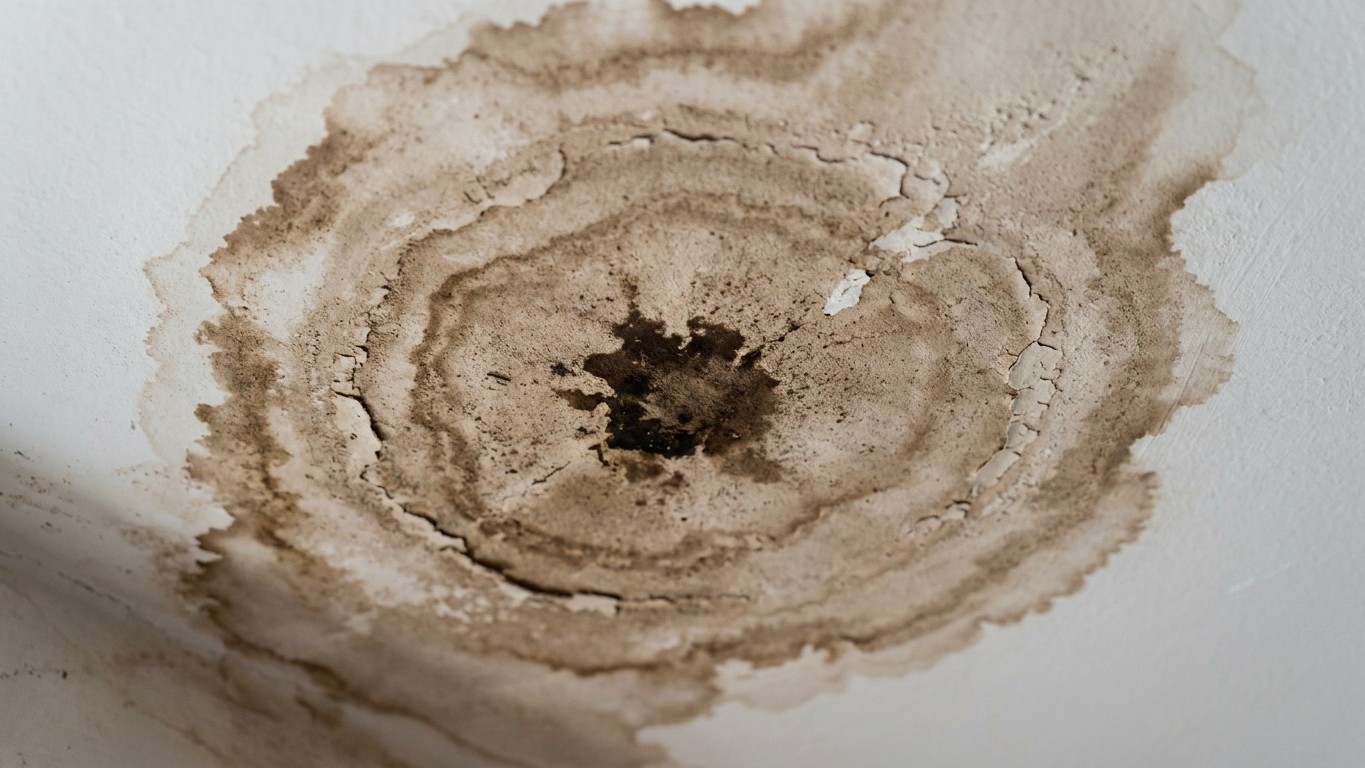
Standard plasterboard, tiled straight over with no membrane underneath, will let water through eventually. Grout and cementitious adhesive look watertight but aren’t; they’re only water-resistant, which means moisture creeps through the joints and adhesive bed over months until it finds the gypsum core behind and turns it to soggy mush. By the time a brown ring appears on the ceiling below, the damage has usually been building for a good while, and the fix is rarely a quick patch job.
I hear this story more often than you’d think, and it always follows the same pattern. A weekend project, a bit of confidence with a tile cutter, and a decision to skip what looks like an unnecessary extra step. The tiles go up, the grout goes in, everything looks smart and finished. Then, months later, a stain blooms on the ceiling of the room below, or the tiles near the shower tray start sounding hollow when you tap them. That’s the moment the shortcut catches up with you.
Key takeaways
- One homeowner thought skipping the waterproofing membrane would save a weekend—until moisture found its way through grout joints into the gypsum core
- Water doesn’t gush through walls; it wicks invisibly along grout lines for months before a telltale brown stain appears on the ceiling below
- The fix for doing it wrong costs thousands and weeks of disruption, while doing it right from the start costs £80–£200 and adds just two curing days
Why tiles and grout were never meant to do the job alone
It is a common misconception that cementitious adhesives and grouts are waterproof, however, most are only water-resistant, and their porous nature allows moisture to pass through. Over time, water is absorbed through the grout joints and adhesive bed, and then into underlying substrates, and if the substrate is unprotected, it can lead to damp and mould issues. Ordinary plasterboard, sometimes called drywall, has a gypsum core wrapped in paper. Gypsum absorbs water readily, and once it’s saturated behind a wall of tiles with nowhere to dry out, it stays wet for a long time.
This is precisely why the industry rulebook changed. Since the 2018 revision of BS 5385-1 (clause 6.1.1.3), all substrates in wet areas including domestic showers, bath surrounds, and wet rooms must be waterproofed with a suitable proprietary tanking membrane system before tiling. That’s not a suggestion buried in a technical appendix somewhere, it’s the standard the whole UK tiling trade is expected to work to. Under the revision, the standard states that ‘In wet areas … substrates should be protected with a suitable proprietary tanking membrane system’. Even moisture-resistant plasterboard, the green or blue-tinted board many people assume is “shower safe”, doesn’t get a free pass. The British Standard for wall and floor tiling now recommends that plasterboard, including moisture-resistant plasterboard, is generally unsuitable for wet areas unless additional protection in the form of a waterproofing tanking system is used. The resistant paper facing simply slows the inevitable rather than stopping it.
Where the water actually goes, and why it’s so quietly destructive
What makes this kind of failure so sneaky is that it’s invisible for ages. Water doesn’t gush through a hole, it wicks slowly along grout lines, especially at joints, corners, and around the shower mixer or hose fittings where movement and vibration open tiny gaps over time. This official British Standard clearly states that in wet areas, substrates should be protected with a suitable tanking membrane system before tiling, because tiles and tile grouts alone cannot be expected to provide a completely watertight seal. Once that moisture reaches the plasterboard, it travels sideways along the paper facing and downwards with gravity, often surfacing well away from the original leak point, which is why the culprit tile can be maddeningly hard to identify just by looking at the stain below.
By the time you see discolouration on a ceiling downstairs, the plasterboard behind the shower has typically been wet for weeks or months already. Getting waterproofing wrong is one of the most expensive mistakes in bathroom fitting, and failures typically remain hidden until water damage to joists, ceilings, and adjacent rooms forces a complete strip-out. That’s the grim reality: a job that would have taken an extra half day at the outset can turn into ripping out every tile, replacing sodden boards, checking timber joists for rot, and redecorating the ceiling below. What was a Saturday afternoon saving becomes weeks of disruption and a bill that dwarfs whatever a proper membrane kit would have cost.
What proper protection actually looks like
The good news is that doing it right doesn’t require a specialist workshop or years of training, just the right sequence and a bit of patience for drying times. For shower enclosures, you’ll need waterproofing extending at least 1,200mm high around showers and 300mm beyond the splash zone, following British Standard BS 5385 guidance. There are two broad approaches worth knowing about:
- Liquid tanking systems, brushed or rolled on in coats with a reinforcing tape at joints and corners, which cure into a flexible waterproof skin.
- Sheet membranes, bonded on with tile adhesive, which some tilers prefer for their consistency and speed on larger areas.
Two main system types exist: liquid-applied membranes painted or rolled on in two coats, and sheet membranes bonded to the substrate with tile adhesive, and the choice between them depends on the substrate, project timeline, and installation environment. Either way, don’t rush the curing stage. Quality tanking kits cost £80-£200 for an average bathroom, and the membrane must cure for 24-48 hours before tiling. That waiting time feels frustrating when you’re itching to see the finished tiles going up, but it’s the cheapest insurance you’ll ever buy for a bathroom.
If you’re gutting the shower area anyway, this is also the moment to consider swapping standard plasterboard for a proper cement or foam tile backer board, which copes far better with prolonged dampness than gypsum ever will. And spare a thought for your home insurance while you’re at it: most insurance providers will refuse to cover the resulting water damage if the installation does not meet the technical requirements of BS 5385. A weekend spent doing it properly, membrane, tape, curing time and all, isn’t really a weekend lost. It’s the one that stops next winter’s ceiling stain from ever appearing at all.
Sources : homebuilding.co.uk | krollinteriors.co.uk