
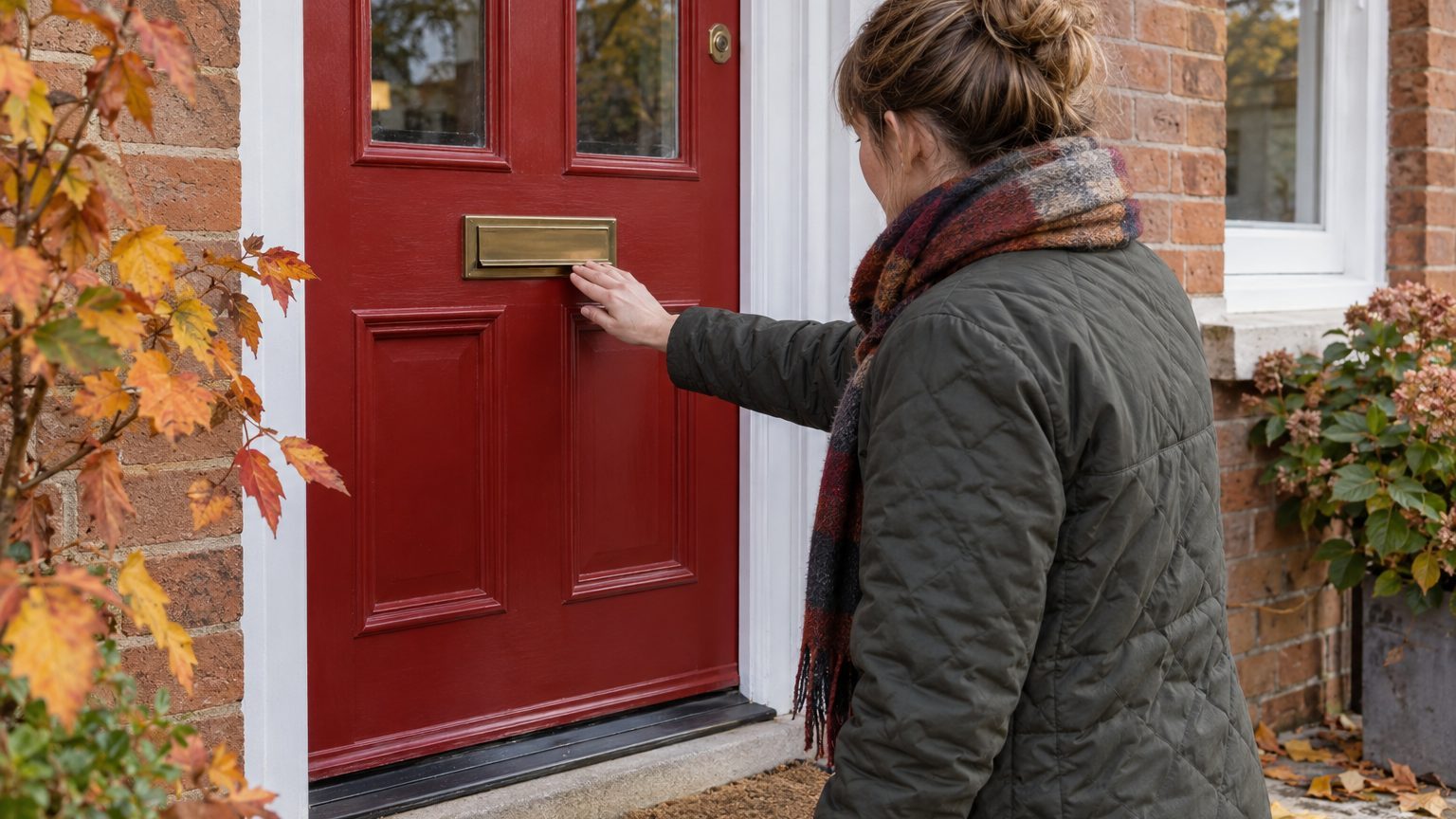
A standard letterbox is a hole in your front door, roughly the size of a paperback, and it lets in more cold than most people credit. The good news is that a few cheap fixes (some starting around £5, others costing next to nothing) will quieten it without turning your postie into an enemy.
Each fix suits a different sort of letterbox and a different level of patience. Some take five minutes with scissors, others an afternoon with a screwdriver and a cup of tea.
- A brush-style draught excluder starting around £5 parts for post and closes immediately after.
- A homemade felt flap taped or tacked to the inside costs pennies and takes five minutes to fit.
- A sprung inner flap screwed inside closes more firmly than an outer flap and takes about ten minutes to install.
Find the Draught Before You Fight It
Cold air takes the easiest route, and a letterbox is a gift.
On a blustery day, hold the back of your hand a few inches from the flap, then run it around the edges of the letter plate. Skin is far more sensitive than you’d expect. A strip of tissue paper taped to a pencil will flutter wildly if air is sneaking through, and it’s safer than the old candle trick, which has a habit of getting too close to the curtains. Check the keyhole and the gap beneath the door at the same time, since draughts rarely come from one spot only.
Then get your tape measure. Note the width and height of the opening, the depth of the door, and whether the flap is sprung or just hangs.
Measure first, buy second.
Five Fixes, Cheapest First
A brush-style draught excluder is the classic, and prices tend to start at around a fiver. It fixes to the inside of the door, with dense bristles that part for the post and close again straight afterwards. Check that the brush is at least as wide as your opening, because a short one simply moves the gap sideways.
For the thrifty, a homemade flap costs pennies. Cut a piece of thick felt or an offcut of heavy curtain lining slightly bigger than the opening, then fix it along the top edge on the inside with strong double-sided tape or a few small tacks.
A second, sprung inner flap is the tidiest answer for a letterbox that rattles in the wind. The metal or plastic type is screwed to the inside of the door and sits snugly against the door face, so it closes more firmly than a lightweight outer flap ever will. Fitting takes about ten minutes, and you may need to drill small pilot holes first. Do check the screw length against the thickness of your door, as a screw that pokes through the outer face is a miserable thing to find on a Sunday morning.
An internal letterbox cover or catcher bag is worth a look if you also hate post landing on the mat. Many have a hooded or lined opening that blocks air while collecting letters and parcels. Choose one that fits the letterbox size you measured, and avoid anything that props the flap open.
The fifth fix is not strictly the flap at all. Often the draught runs around the letter plate, where the frame meets the door.
Tighten any loose screws, then run a thin bead of clear silicone or a strip of self-adhesive foam seal behind the plate if it has come away slightly. My gran used a rolled-up wool stocking at the bottom of the door, which looked dreadful but worked a treat, and a modern draught snake does the same job with rather better manners. Seal the keyhole too, since a small cover or even a magnetic escutcheon stops that thin, whistling stream.
Keeping the Post Coming
A brush that grips the post will annoy your postie.
Test whatever you fit with a thick magazine and a small padded envelope pushed through from outside. If the item sticks, snags, or tears, the bristles are too stiff or the flap too tight, and your deliveries will suffer. Loosen the tension, trim the felt, or switch to a lighter brush. Post that arrives crumpled, or is left in a sorting office, costs you far more in frustration than any heating saving. And if you have a dog who greets the postman enthusiastically, a snug internal cover also protects fingers on both sides.
Gaps are easy to spot once you have found them, but it pays to recheck in late autumn, before the heating goes on in earnest. Adhesive loses grip in damp weather, and a door that swells and shrinks through the seasons will move your fittings a little. A quick press along the tape lines, and a look at the bristles for flattened patches, keeps Everything snug until spring.
One caution for flats and shared buildings: if your front door is a fire door, do not cut, drill, or replace the letterbox without checking with your landlord or managing agent first. Fire doors are tested as a complete assembly, and even a small alteration can undermine that protection.