
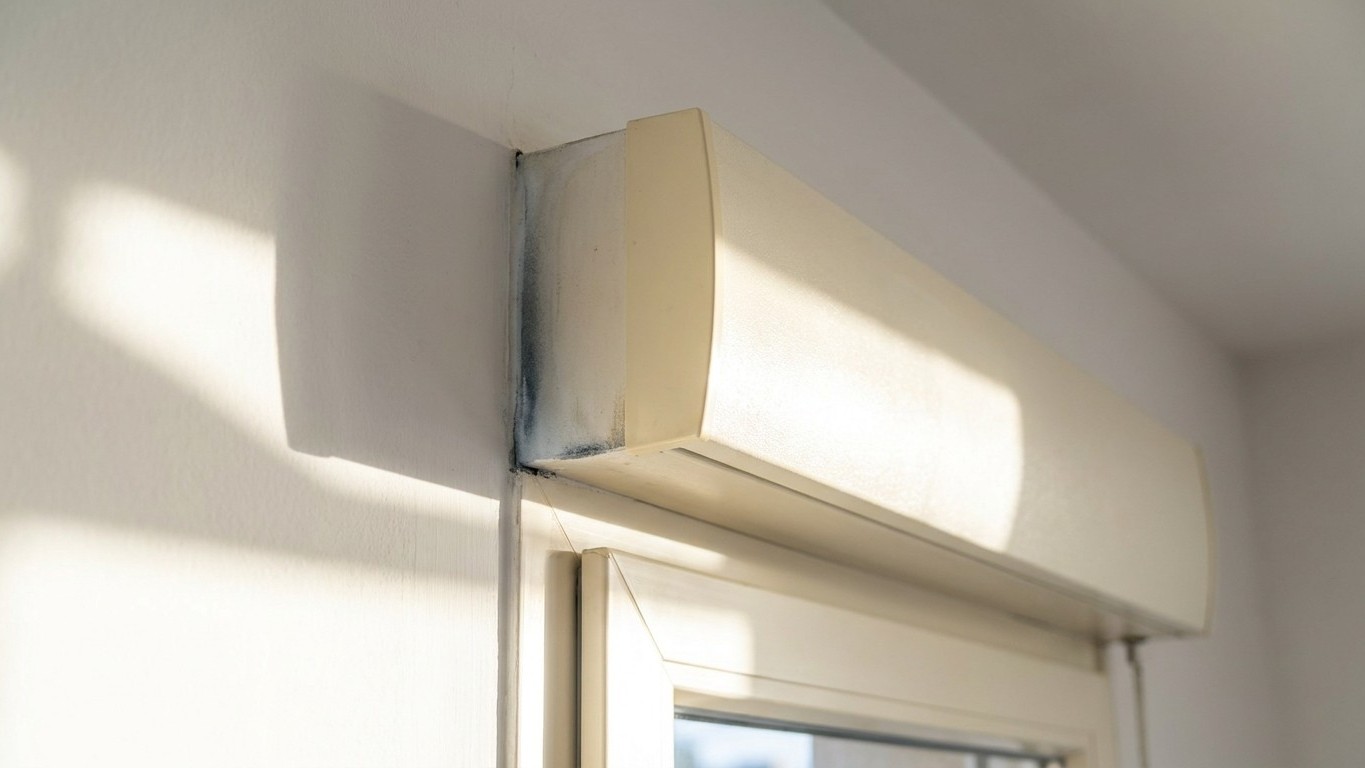
Draw the shutters at dawn, keep them shut till dusk, and you’d think the job’s done. But there’s a small box sitting just above your window frame that most of us never think about, and during a heatwave it can undo half your hard work. It’s called the shutter box (or roller box, if your windows have that style), and when it’s poorly sealed or uninsulated, it becomes a direct channel for hot air to seep straight into the room you’ve been trying so hard to keep cool.
Roller shutter boxes are the housing that holds the shutter slats when they’re rolled up. To let the mechanism move freely, there have to be small gaps and openings around it, and that’s exactly the trouble. The traditional roller shutter box needs openings and gaps to allow the shutter to move, and without adequate insulation these become preferential passageways for air. In winter that means draughts. In summer, the same gaps let outside heat pour in almost unchallenged, no matter how tightly you’ve drawn the shutters themselves.
Key takeaways
- There’s a hidden heat leak hiding in plain sight above every window with shutters
- This tiny spot could be responsible for losing up to 30% of your shutter’s thermal performance
- A simple €30-70 insulation job can reclaim the cooling power you’ve been losing all summer
Why this tiny box causes such a big problem
Most people assume a closed shutter is a closed shutter, full stop. I used to think the same, until I learned just how much surface area that box adds to a wall that’s otherwise fairly well protected. French energy specialists have looked closely at this, and the figures are eye-opening: poorly insulated shutter boxes can be responsible for up to 20% of the heating bill increase caused by thermal bridging, and separately, thermal bridges at this junction can account for up to 30% of a shutter box’s overall energy performance loss.
That’s a startling share for something the size of a shoebox tucked above your window frame.
The reason it behaves so badly comes down to materials and design. The roller shutter box is the casing above your window that houses the shutter when it’s rolled up, usually made from aluminium, PVC, or wood, and while it plays a structural role, it remains a weak point thermally. Aluminium in particular is a superb conductor, meaning it happily carries heat from the scorching exterior straight through to your ceiling and wall cavity. Add in the fixing screws and wall junctions, which are themselves points where heat conducts through connecting materials, with metal fixings and joints between the box and the wall acting as thermal bridges, and you’ve got a little hotspot working against every closed shutter beneath it.
It’s worth saying that closing shutters still helps enormously, don’t stop doing it. A study by the Actibaie group, published in July 2022, showed that closed roller shutters can reduce the temperature difference between indoors and outdoors by up to 10°C during heatwaves. But that impressive figure assumes the whole system, box included, is doing its job properly. If your box is the weak link, you’re leaving a good chunk of that benefit on the table.
How to check if your own shutter box is the culprit
You don’t need any special kit to test this. On a properly hot afternoon, run your hand along the ceiling or wall just above a closed shutter. If you feel a distinct warmth, or worse, a faint draught of hot air even with the window shut, you’ve found your leak. Older houses with retrofitted external boxes tend to be the worst offenders, simply because the fit between box and wall was never designed with airtightness in mind. Newer integrated boxes, built into the wall during construction, generally fare better, though even these can develop gaps around fixings over the years.
The fix doesn’t have to mean replacing your windows or shutters entirely, which is a relief for anyone watching the pennies this summer. Sealing and insulating the box itself is a modest job compared to a full window upgrade. Rigid insulation boards cut to fit inside the casing work well in tighter spaces, while mineral wool or foam strips can line larger boxes without interfering with the roller mechanism. Insulation kits designed specifically for roller shutter boxes typically include panels sized to standard box dimensions. Whichever material you choose, the seal around the edges matters just as much as the insulation itself, since gaps left unfilled will keep letting air through regardless of what’s packed inside.
A few sensible precautions before you start
If you’re tackling this yourself, a little care goes a long way. Make sure you don’t block any part of the mechanism when insulating the box yourself, and test the shutter afterwards, particularly if it’s motorised, to check the motor hasn’t been affected. It’s tempting to stuff every gap with as much material as possible, but a shutter that jams halfway down is no help to anyone during a July scorcher.
- Clean the inside of the box thoroughly first, dust and grime stop insulation from sticking properly
- Choose a slim, rigid material if space inside the casing is tight
- Test the shutter’s movement several times after fitting, before calling the job finished
The reassuring part of all this is that it’s genuinely one of the cheaper fixes in the whole business of keeping a home comfortable. A decent quality insulation kit for a shutter box typically costs between 30 and 70 euros per window, which translates to a broadly similar spend here once you account for materials from a local hardware shop rather than a specific imported kit. Compared with air conditioning units, replacement glazing, or even a decent set of external awnings, that’s small change for stopping a genuine leak of hot air into a room you’ve spent all day trying to keep dark and cool.
One thing that surprised me while looking into this: the same weak spot works both ways, so the effort you put in now pays you back twice over. Come autumn, that same sealed and insulated box will be keeping your heating bills down rather than your electric fan running flat out, which makes it one of the rare home improvements that’s genuinely useful in every season, not just the one you tackled it for.
Sources : pentagonshutters.com | rollashield.com