
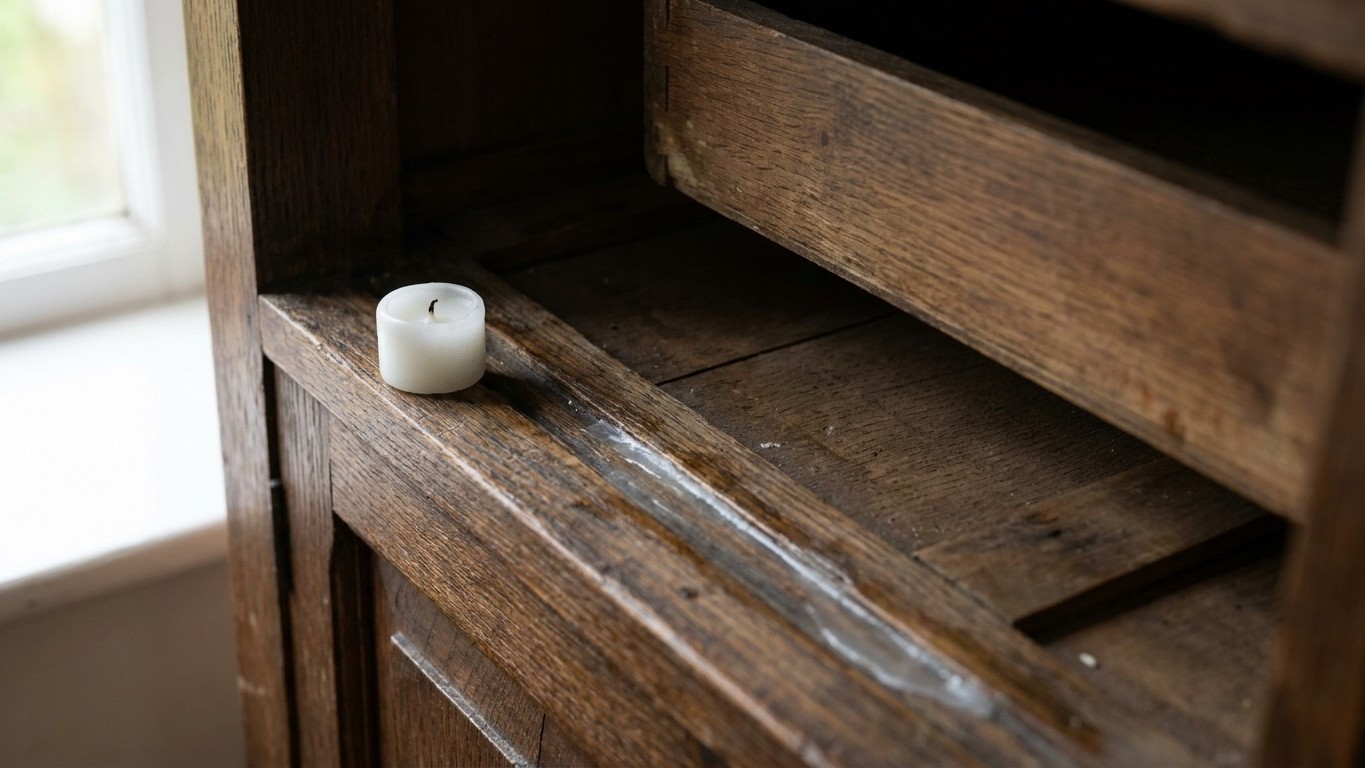
He kept it wedged between a rusty tape measure and a tin of screws, this stubby half-inch of candle, its wick long gone black and useless. For years I assumed it was pure sentiment, some leftover from a birthday cake or a power cut, too small to burn but too precious to bin. Then one summer the kitchen dresser drawer stuck fast, swollen with the damp, and my grandfather reached past the WD-40 straight for that waxy little nub. He rubbed it along the wooden runners, slid the drawer home twice, and it glided like it had never given anyone a moment’s trouble.
Turns out he was following a repair trick that’s been passed down through generations of British households, long before silicone sprays and self-closing runners existed. Wood, unlike metal, has almost no natural slip to it. Wood doesn’t have a lot of natural lubrication, which is why it can be hard to open some stuck drawers. Two rough wooden surfaces rubbing together create friction, and that friction only gets worse as fibres swell, splinter or simply wear unevenly over decades of use.
Key takeaways
- A forgotten toolbox trick reveals why candle wax beats modern lubricants on wood
- Summer humidity swells wooden drawers—and one household item keeps them sliding smoothly
- A 20-year-old application still glides perfectly, while oil-based solutions eventually attract dirt and grime
Why a bit of old candle beats a squirt of oil
The instinct most of us have is to reach for whatever oil or spray is under the sink. My grandfather never touched the stuff on wood, and it turns out he had good reason. Oil-based lubricants can attract dust and potentially damage wood over time. Woodworkers on forums echo the same warning from decades of hands-on experience: grease or oil will just attract dirt to the slides and eventually make them gritty and abrasive, whereas paraffin on the slides and grooves lets the drawer glide smoothly and easily even when heavily loaded, lasting a long time without attracting dirt.
Wax works differently. It doesn’t soak into the grain the way oil does. Instead it coats the surface, filling in the tiny rough patches on the wood so the drawer rides on a smooth, slick film rather than grinding wood against raw wood. Dust, dirt, and debris can build up in the tracks, while constant friction between surfaces may gradually wear the wood down unevenly, creating sticking points, and a waxy coating stops that wear from compounding. One woodworker on a furniture forum used a clear white candle on his kitchen drawers twenty years ago, and it was still sliding smoothly, reckoning it must be paraffin wax. That’s the kind of longevity my grandfather would have nodded along to approvingly.
There’s also a seasonal element Nobody Tells You about at the DIY shop. This sticking is especially true in the summer, since warm, humid summer air can cause wood to swell slightly, which is why you notice more friction and have a harder time opening wooden drawers. A candle stub in the toolbox, then, wasn’t just for emergencies. It was for July.
How to actually do it (the bit he never explained properly)
Doing this properly takes five minutes and costs nothing if you’ve already got a candle knocking about in a drawer somewhere. Pull the sticking drawer right out and have a look at the runners, both the wooden rail underneath the drawer and the track it sits in inside the carcass. If they’re only lightly rough, you’re in business. If they’re badly split or broken, wax won’t fix that; you’ll need to sand or replace the runner first. Assuming they’re just tired and dry, here’s what to do:
- Rub the candle firmly along both bottom edges of the drawer sides and along the full length of the wooden runners it sits on, working the wax right into the grain rather than just skimming the surface.
- Slide the drawer back in and work it in and out a dozen times or so, which spreads the wax evenly and pushes it into any tiny grooves.
- Give it a final wipe with a dry cloth to remove any loose flakes, so nothing crumbles onto your cutlery or linen.
This mirrors almost exactly what conservators and restorers still recommend today: rub a candle or block of paraffin wax along the drawer runners and the bottom edges of the drawer sides, work the wax into the wood ensuring even coverage, then reinsert the drawer and slide it back and forth to distribute the wax. Plain white candles are ideal because white candles are budget-friendly, and rubbing them thoroughly along the edges and sliding surfaces gives a quick fix, though scented soaps or candles might attract insects, so opt for plain varieties. No need to buy anything special from a hardware shop, and no need to feel embarrassed asking for “that cheap paraffin stuff” either. Gulf Wax is a household paraffin wax, commonly used for canning and making candles, and it’s essentially the same stuff burning in half the candles in your cupboard right now.
When wax isn’t quite enough
Sometimes a stuck drawer is trying to tell you something a bit more serious than “please oil me.” If the wood is cracked, the joints have come loose, or the runner itself has snapped, no amount of wax will paper over that. If the runners or tracks are overly worn down or broken, they might need to be replaced rather than waxed. Equally, if you’ve inherited a proper antique with wood-on-wood glides, restorers sometimes reach for a proper paste wax blend rather than a plain candle. A mix of carnauba, beeswax, and candelilla waxes works because carnauba, the hardest dry lubricant wax on the market, helps the gliding action without creating a sticky mess or affecting the wood itself, and the difference is audible: an untreated old dresser drawer rattles and shakes as you pull it out, while a drawer treated with carnauba wax is quiet as a whisper.
None of this means the candle-stub method is Old-Fashioned nonsense, though. Modern soft-close metal runners with ball bearings have largely replaced wood-on-wood in new furniture, and fair enough, they’re wonderfully low maintenance. But for the millions of solid wood dressers, sideboards and desks already sitting in British homes, many of them older than the people opening them, a scrap of candle remains the cheapest, safest fix going. My grandfather never read a single one of these modern conservation guides. He just knew that wax on wood beats oil on wood, every single time, and kept the proof of it rattling around in his toolbox for thirty years.
Sources : macgyverisms.wonderhowto.com | ovisonline.com