
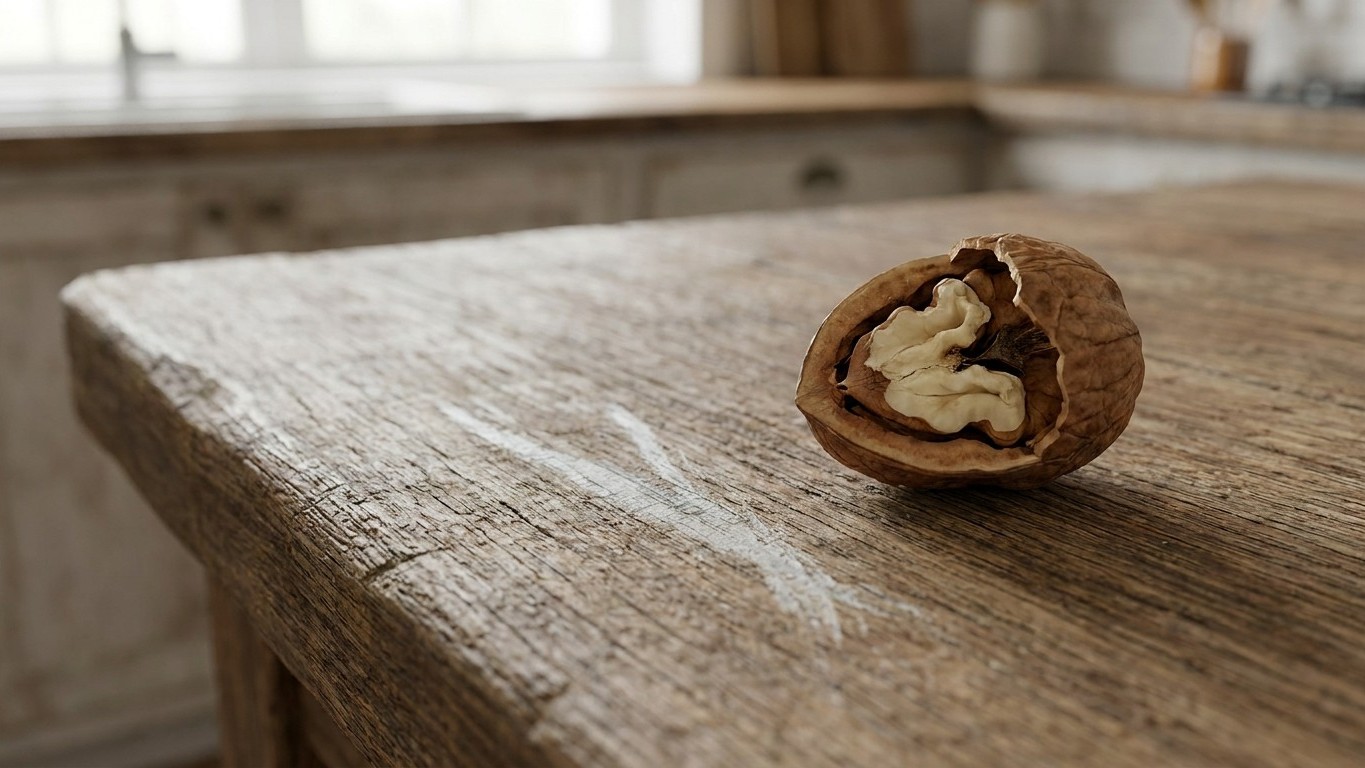
He’d crack the shell with the back of a spoon, rub the pale flesh along a fresh scuff on the sideboard, and buff it with an old tea towel until the mark simply melted away. I thought he was mad, or worse, that he’d run out of proper polish. He hadn’t. What my grandfather knew, and what I only understood decades later while researching this piece, is that a walnut genuinely can heal a scratch in wood, and there’s real chemistry behind it, not just old wives’ tales.
Key takeaways
- A common kitchen staple holds a secret your grandfather discovered decades ago
- The chemistry that makes this work has nothing to do with magic and everything to do with wood porosity
- When it works, it works better than products costing ten times the price—but there’s a catch
The chemistry hiding inside a nutshell
Wood, even once it’s been varnished, waxed or oiled, stays porous underneath. It drinks up whatever touches it. Wood absorbs oils, being a living, porous material, even when it looks solid. When something scrapes across the surface, it doesn’t just remove polish, it exposes tiny dry fibres that catch the light differently to Everything/”>Everything around them, which is why a scratch always looks paler than the wood surrounding it.
Crack open a walnut and you release exactly what those exposed fibres are thirsty for. Walnuts contain natural oils and brown pigments that help darken and blend scratches into the surrounding wood, and the texture of the nut also gently buffs the surface as you apply it. Rather than sitting on top like a filler or a felt-tip touch-up pen, that oil sinks in and darkens the raw fibres from within, so the repair moves with the grain instead of looking like a patch stuck over the top. A cleaning expert I came across while checking this put it rather nicely: rubbing the nut against the wood “moistens the dry spot and helps bring the stain in line with the surrounding grain,” and the friction “generates a small quantity of heat, which can open up the pores of the wood.” That’s the bit my grandfather never explained, though I suspect he felt it in his fingers every time, that gentle warmth building as he worked the nut back and forth.
Doing it properly (my grandfather’s way, more or less)
There’s no great mystery to the method, but a few small details separate a good result from a disappointing smear. Start by wiping the area clean and dry, because dust or old polish will simply block the oil from soaking in where it needs to. Then break the shell and rub the meat of the nut firmly along the scratch, following the direction of the grain rather than crossing it, for a good thirty seconds or so, building up that friction and warmth. Leave it a few minutes to let the oil settle into the fibres, then buff gently with a soft cloth, ideally cotton or microfibre, to remove any crumbs and bring up a soft sheen.
Freshness matters more than most people realise. A walnut that’s been sitting in the bottom of a fruit bowl since Christmas has lost much of the oil that makes this trick work, so reach for nuts still in their shell if you can, as they hold their oils better than pre-shelled ones from a bag. Skip anything roasted or salted, too. Roasting changes the structure of the oil so it’s less effective for fixing floor scratches, and salt is simply abrasive, which is the last thing a scratched surface needs.
Where the trick shines, and where it simply won’t
This is not a miracle cure for every mark on every surface, and I think it’s only fair to say so plainly. It works beautifully on light, surface-level scratches in natural or lightly finished wood, and it’s genuinely most effective on timber that shares a similar tone to the nut itself, walnut furniture obviously, but also oak, teak, mahogany and darker pine. On very pale woods like ash or new pine, the oil can leave things looking slightly muddier rather than restored, so test on a hidden edge first.
It won’t touch deep gouges, missing chunks, or anything on painted or laminated surfaces, since the oil has nowhere porous to sink into on a photographic laminate layer or beneath a coat of paint. High-gloss or heavily lacquered finishes are much the same story, the oil just pools on top and needs wiping away, leaving you no better off. For those trickier jobs you’re genuinely better served by wood filler and a colour-matched wax stick, and there’s no shame in reaching for one.
My grandfather’s toolbox logic still holds up rather well when you consider the alternative. Professional floor refinishing runs into hundreds of pounds even for a modest room, and even the smaller repair sticks and touch-up pens sold for furniture rarely blend in the way a genuinely porous, oil-hungry surface responds to real walnut oil. Keeping a small bag of walnuts in the shell tucked beside your polish and cloths costs next to nothing and covers you for the everyday scuffs that chairs, cats and careless house moves inevitably leave behind. I keep one in my own kitchen drawer now, right next to the beeswax, and every time I crack one open for a scratch on the dresser, I think of him standing there with his tea towel, quietly right all along.
Sources : reteuro.co.uk | exquisitelyunremarkable.com