
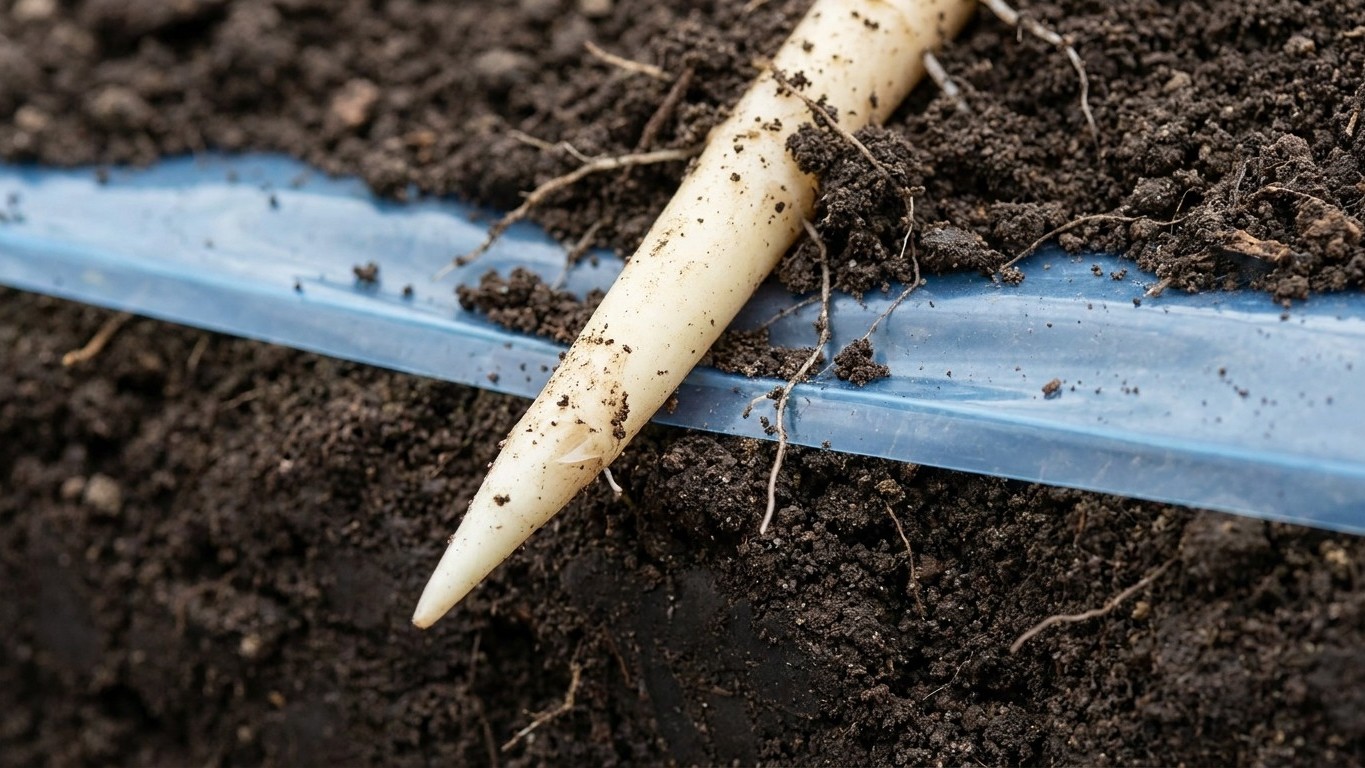
Couch grass rhizomes are tipped with a hardened, almost needle-like point that lets them shoulder their way through pool liners, weed membrane and even potato tubers, not because the plant is unusually clever, but because that pointed tip evolved to force its way between soil particles and rock fragments. A sheet of vinyl or PVC offers barely more Resistance than compacted clay. Gardeners who lay a liner over a patch of what they assume is ordinary lawn, expecting the weight and darkness to finish it off, often find fresh green blades poking through the very same summer.
Key takeaways
- Couch grass rhizomes have needle-like tips that evolved to penetrate soil—pool vinyl offers barely more resistance than compacted clay
- Each 25mm fragment of a severed rhizome regrows into a new plant, meaning incomplete removal guarantees return
- Darkness and weight alone won’t kill it; dormant rhizomes wait for any light or air pocket to send up fresh shoots
The rhizome that behaves like an underground drill bit
What most of us call couch grass, and what botanists know as Elymus repens, spreads mainly through a network of pale, segmented underground stems rather than seed. The distinctive pale cream rhizomes beneath the surface are tough, springy, and sharp-tipped, nothing like the soft fibrous roots of ordinary lawn grass. One gardening supplier puts it plainly: those white underground stems have sharp tips that can pierce through other plants’ roots, plastic sheeting, and even pond liners.
The network itself is shallow but relentless. The horizontal rhizome network sits in the top 10–15cm of soil, but spreads metres in every direction. A detailed UK guide describes the rhizome as “white or pale cream, segmented like a thin underground bamboo, 2-4mm diameter, with a pointed growing tip that can pierce a potato tuber.” If it can drive through a firm potato, a thin sheet of pool vinyl really doesn’t stand a chance. On one gardening forum, a frustrated allotment holder summed up the damage rather memorably, saying “I’ve had numerous potatoes pierced deeply with couch grass.”
There’s a second reason liners fail: fragmentation. Every time a rhizome is cut, whether by a spade, a rotavator, or simply the pressure of soil settling under a pool base, it doesn’t die. Each 25mm fragment regrows into a new plant. So even ground that looks perfectly cleared before installation can be hiding dozens of viable little segments, each one capable of starting fresh. And the spread is quicker than most people expect. A 1m² patch typically becomes 2m² in one year and 4m² in two years. Left under a liner for a season, that’s more than enough growth to find a weak seam.
Why “the grass will just die under there” is only half true
It’s a perfectly reasonable assumption. Cut off light, add a few hundred kilos of water pressure, and most plants sulk and rot within weeks. That logic works for annual weeds, moss, and ordinary turf. Couch grass rhizomes, though, store enough energy to sit dormant and simply wait, sending out a shoot the moment conditions allow even a sliver of light or a pocket of air. One grass identification guide notes that unlike annual weeds that die off after one season, this plant lives for years and spreads through an aggressive network of underground stems, so if you’ve ever pulled a weed only to see three more pop up in its place a week later, you’re likely dealing with couch grass.
You’ll sometimes hear pool installers in America describe a very similar horror story involving “nutgrass”, though that plant is technically a sedge rather than a true grass. While some people refer to this plant as nutgrass, the term nutsedge is more accurate, as it is actually a type of sedge, since grasses typically have hollow, soft, rounded stems. Different family, same infuriating trick: a underground storage organ tough enough to force its way through vinyl. Our own couch grass doesn’t need a tuber to pull off the same feat. Its rhizomes are sharp-tipped and can easily pierce through landscape fabric or even the roots of a favourite prize-winning rose.
What actually stops it before the liner goes down
Spraying and hoping rarely works on its own. Glyphosate only kills the parts of the plant it touches, and glyphosate alone fails because broken rhizomes regrow from 25mm fragments. The reliable route, tedious as it sounds, is physical removal followed by patience. A proper UK clearance plan looks something like this: full rhizome removal by fork in autumn, then a smother sheet for 6-12 months, then a second forking the following autumn. Three seasons rather than three weekends, but it works where quick fixes don’t.
For anyone about to lay a pool base or a new border, there are three sensible checkpoints:
- Fork over the entire area and sieve out every visible rhizome fragment, not just the obvious clumps
- Water the cleared ground and wait three to four weeks before covering it, since any missed rhizomes will produce green shoots in this window, giving you a second chance to pull them
- Only then lay a proper smothering sheet, ideally heavy-duty black plastic or thick cardboard, for a full growing season, because as one grower puts it, covering the area with a heavy-duty black plastic sheet or thick cardboard for an entire growing season will eventually starve the roots of energy
A wildlife gardening charity offers much the same advice for anyone tackling a patch by hand rather than machine: couch grass can be controlled by removing the rhizomes by fork in late winter or early spring as they appear, or, where practical, covering with mulch or better black plastic for a whole season. Skipping straight from bare, weedy soil to a finished pool base or ornamental bed is the single most common false economy in the whole business, and it’s exactly how a determined little rhizome ends up sitting in your lounge as a very expensive puddle.
One quirk worth knowing before you reach for the spade in anger: those same rhizomes that ruin liners and pierce potatoes are, by all accounts, edible once washed and roasted, having been used as a starchy famine food long before anyone thought to put a swimming pool on top of them. Small comfort when you’re staring at a leak, perhaps, but proof that this weed has been outsmarting gardeners for rather longer than vinyl liners have existed.
Sources : poolspamarketing.com | floridacoastabovegroundpools.com