
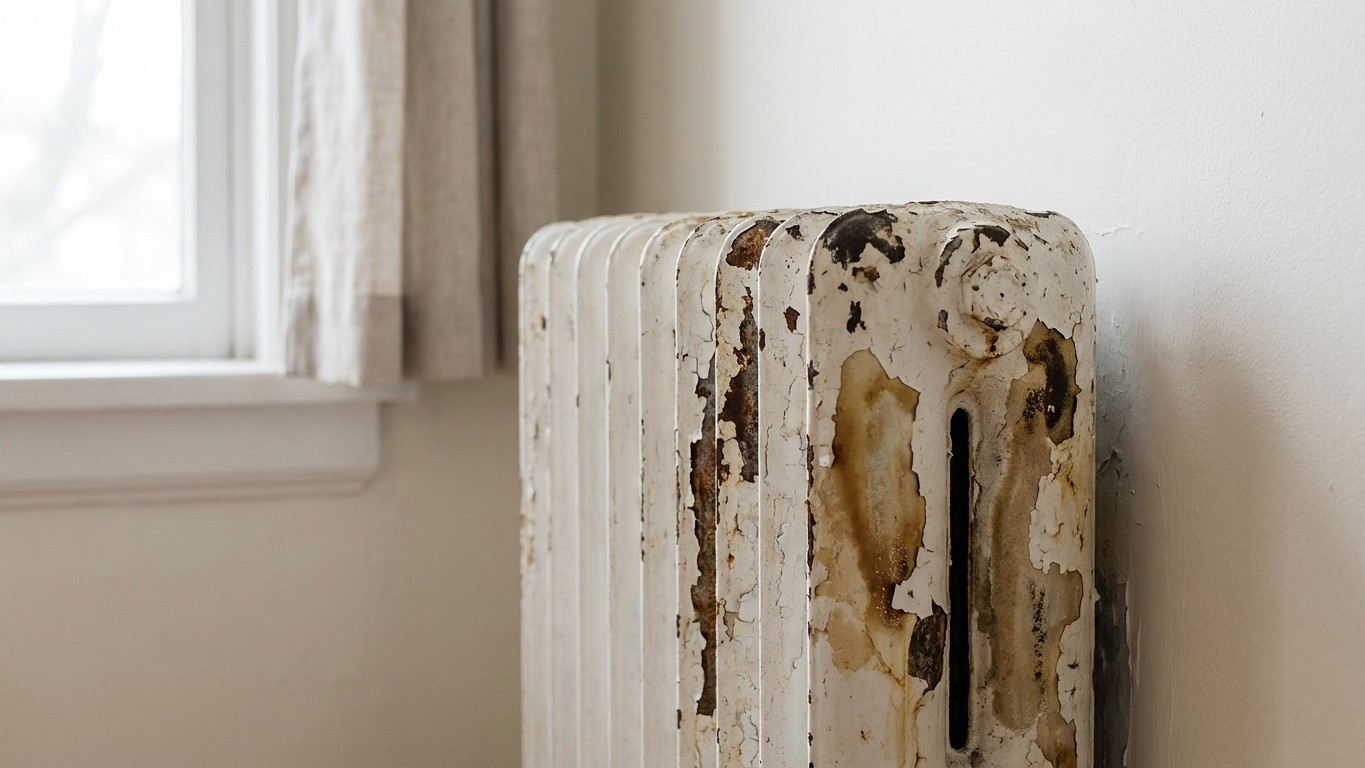
That fresh white sheen lasted about as long as it takes autumn to arrive. The moment the boiler fired up in October, the smell hit: a sharp, chemical tang creeping under doors, curling out from behind the radiator, filling the room with something between a school science lab and a bonfire. By then, the damage was done, and no amount of open windows was going to undo an afternoon’s work with a rattle can of ordinary spray paint.
This happens far more often than you’d think, and it’s almost always down to the same mistake: using standard spray paint, gloss, or even a lovely tin of leftover wall emulsion on a surface that’s going to reach genuinely high temperatures for months on end. Radiators aren’t just another bit of metal trim in the house. They’re one of the few surfaces we deliberately heat up, day after day, and most paints simply weren’t built for that.
Key takeaways
- Standard spray paint and gloss aren’t designed for sustained heat and release toxic fumes when radiators warm up
- The timing of when you paint matters as much as what you use—uncured paint trapped in a radiator becomes a chemistry experiment
- There’s a specific (and simple) way to paint radiators that won’t turn your home into a garage smell nightmare
Why the paint you had in the shed was never going to cope
Standard latex and acrylic paints, the kind sold for walls, skirting boards and furniture, are not designed to withstand sustained heat. Standard latex paints are not suitable for radiators because they can’t handle the heat, and when exposed to high temperatures they are prone to chipping, bubbling, and peeling, while acrylic paints will likely degrade over time in the same conditions. Even a can labelled “spray paint for metal” isn’t automatically safe. Unless the tin specifically says heat-resistant, it’s a gamble.
The other culprit is timing rather than product. Oil-based gloss paints need far longer to cure than most people realise. Although oil based paint dries after 16 to 24 hours for re-coating purposes, the gloss paint won’t be fully hardened for at least 7 days and can be longer. During that curing window, solvents are still slowly evaporating out of the paint film. During this curing process there are still solvents in the paint that are evaporating quite slowly into the air, but as soon as you add heat to the process, you are causing the solvents to evaporate at a faster rate, therefore increasing the amount of solvent in the air. Paint a radiator in August, switch the heating on in October, and you’ve unwittingly timed the whole thing to release those trapped solvents right into your living room.
What’s actually happening when the smell hits
It isn’t your imagination, and it isn’t dangerous smoke from nowhere. It’s the paint quite literally cooking. One homeowner described the experience vividly: when the boiler kicked in and the radiators started spurting to life, the joy was squashed with the smell of burning paint, and moments later the condo was filled with smoke. That’s an extreme case, but it illustrates the principle. Uncured or unsuitable paint doesn’t politely wait until it’s ready to be heated; it reacts however the chemistry dictates the moment the metal warms up.
Old cast iron radiators, common in period British homes, seem to suffer worst, largely because they run hotter for longer with old-fashioned heating systems. Since most hot water systems don’t get hot enough to cause paint to outgas as viciously as some describe, this level of reaction usually points to steam heat or a very high temperature boiler, where the heat drives off residual solvents and moisture that would normally dissipate over weeks and months through normal aging, only much faster. Even paints marketed as fire-resistant aren’t immune to a bit of pong on their first proper heating. It is a fact of life that any painted surface will stink for a while when it is first heated, even fire resistant paints.
The frustrating truth is that no amount of scrubbing or wiping shifts the smell once it’s baked in. Some people wait it out for months, hoping it’ll fade, only to find the paint was never suited to the job in the first place, and the smell simply returns every time the heating clicks on.
Living through the fumes, and doing it properly next time
If you’re already stuck with a freshly painted radiator and a house that smells like a garage, the fix is uncomfortable but reasonably quick. Every tradesperson and forum thread on the subject agrees on the same approach: don’t turn the heat off and hope, push through it instead. Crank the heat up for the first few days and open a lot of windows, treating it like a bitter pill to be faced and dealt with at once, because if you try to hide it, it will take forever to go away. Keep a fan circulating air, prop windows open even in the cold, and accept a few unpleasant evenings. Within a week or two, most cheap gloss and spray paints will have finished off-gassing. Gloss paint can smell for a day or two, so just ventilate your room, and if it persists check for leaks in your radiators.
For anyone tackling this properly from scratch, the fix is straightforward and doesn’t need to cost a fortune. Clean the radiator with warm soapy water, sand lightly to key the surface, and use a proper metal primer if you’re down to bare metal. Use a heat-resistant spray paint, or a paint sprayer with a heat-resistant formula to speed up the process. Radiator-specific ranges exist for exactly this reason, with Rust-Oleum Radiator Paint offering over 110 shades, so there’s no need to compromise on colour to get something that’ll actually survive a winter. Give it two thin coats rather than one thick one, and crucially, let it cure properly before switching the heating back on. Let the paint cure for at least 24 to 48 hours before using the radiator, and if you must warm the room sooner, turn the heating on low and increase it gradually.
One detail worth remembering for next autumn: painting a radiator in high summer feels sensible, since it’s cool and out of use, but that’s precisely why so many people get caught out. The paint sits there curing slowly all through the warm months, then meets a fully cranked boiler for the first time in one go. Painting it in early spring instead, so it’s had a proper baptism of gentle heat before the clocks even go forward, spares you the October surprise altogether.
Sources : forum.heatinghelp.com | forum.heatinghelp.com