
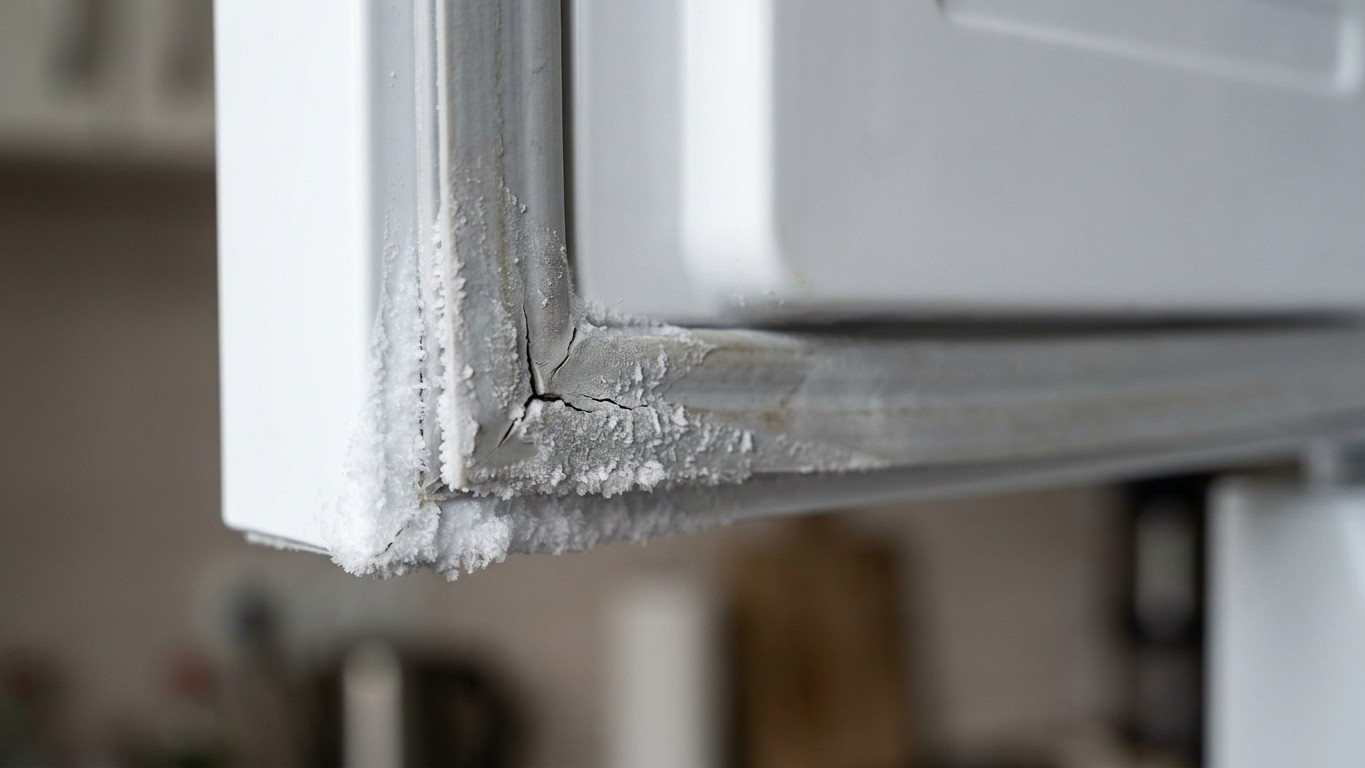
Frost crawling up the inside walls of a freezer during a heatwave isn’t just unsightly. It’s a compressor working overtime, and it’s money leaking straight out of your electricity meter. That summer, with the mercury sitting at 95°F (35°C) outside, my chest freezer looked like the inside of an igloo, and I genuinely thought that was just what freezers did when it got hot. A repairman set me straight with nothing more than a sheet of paper and thirty seconds of patience.
Key takeaways
- A worn door seal can secretly drain 30% more energy from your freezer without you noticing
- One household item can diagnose the problem in seconds—and it costs nothing
- Fixing it doesn’t require a new freezer, and the payoff extends far beyond your next electricity bill
What that ice sheet was actually costing me
Frost isn’t a harmless by-product of cold air meeting warm air. It behaves like a blanket, and not the good kind. Frost build-up inside a freezer acts like insulation, because the freezer needs to transfer heat from the inside walls to the evaporator coils, the part that removes heat and keeps things at a consistent temperature. Once that layer thickens, the ice means the coil temperature has to drop much lower to remove the same amount of heat, so the motor works harder and uses more energy.
The numbers surprised me more than the frost itself. Even a small layer of frost, just a few millimetres thick, can increase a freezer’s energy use by as much as 10%. Left to its own devices through a whole hot summer, though, things get properly ugly: if left unchecked, heavy frost can lead to energy use skyrocketing by as much as 30%. Some appliance specialists put the threshold even lower, noting that once frost reaches just 3 millimetres, a freezer starts working much harder, pushing energy use up by 30 percent. That’s not a rounding error on your bill. That’s the difference between a freezer costing you a fiver a month extra or genuinely biting into your household budget.
What struck me most was learning that frost isn’t really “caused” by hot weather at all, not directly. A common culprit is the door seal: if it’s dirty or worn out, warm, moist air sneaks in, condenses, and freezes. The heat outside simply makes the seal’s job harder, exposing a weakness that had probably been there for months, quietly getting worse every time the door was opened and closed.
The paper trick that changed everything
The repairman didn’t bring diagnostic equipment. He pulled a till receipt out of his pocket. He closed the freezer door on the thin slip of paper, then gently tugged on it, expecting to feel firm resistance. On my freezer, it slid straight out along the bottom edge, no resistance at all.
He explained you’re meant to repeat this in several spots around the door, top, sides and bottom, because if the paper slides out easily in specific areas, the gasket may not be sealing well in those particular spots rather than all the way round. Mine had failed along one entire edge, which explained why the frost was concentrated there rather than spread evenly.
He also mentioned the flashlight version for anyone without much patience for paper: turn on a torch, place it inside the freezer, close the door, turn off the room lights, and look for any light leaking through the seal, because if you see light, the seal isn’t airtight. I tried it that evening and could see a thin gold line along the bottom of the door in the dark. Rather deflating, if I’m honest, given how long I’d been ignoring the ice.
Before condemning the gasket outright, he checked the obvious things first. He checked whether the appliance was leaning forward or heavily out of level, using a small level to check front-to-back and side-to-side alignment, then adjusted the front legs, since a slight backward tilt is often recommended so doors close more easily. Mine was fine on that front. The gasket itself, when he pressed a thumb along it, had gone hard and slightly brittle in that one corner, the classic sign of age rather than damage.
Sorting it without panic (or a new freezer)
Replacing a gasket sounds dramatic, but it needn’t wreck the household budget. Prices for compatible seals vary a good deal by make and model, so it’s worth checking with the manufacturer or a parts supplier for your specific freezer rather than assuming a fixed cost. Before spending anything, though, there’s a cheaper first step: sometimes the seal is simply dirty or sticky, so clean it thoroughly with a mild detergent and warm water, then dry it completely before closing the door. A softened, slightly warped gasket can sometimes be coaxed back into shape too, gently, with warm air rather than a naked flame anywhere near it.
Defrosting itself needs doing properly, not just chipping away with a butter knife (please don’t, it’s a false economy if you puncture the coils). Turn off and unplug the freezer, remove all the food, place towels inside, and use hot water steam or a low heat source to melt the ice, avoiding sharp tools and gently removing loose ice, then clean and dry the interior and check the door seals before restocking. Most households only need to go through this ritual once or twice a year, once frost has built up to more than a quarter of an inch thick.
A few daily habits keep the frost from creeping back once you’ve sorted the seal. Cool leftovers on the side before they go in, rather than sliding a steaming pan straight into the freezer. Keep the door open time short, plan what you need before you open it. And don’t pack the freezer so tightly that air can’t circulate, since an overpacked freezer restricts airflow, creating pockets of warmer air that can condense and freeze, leading to frost buildup.
What nobody tells you at the appliance shop is that frost has a knock-on effect on the machinery itself, not just your electricity meter. When a freezer works harder to compensate for frost buildup, the compressor and fan motors experience increased wear, which over time shortens the appliance’s lifespan and leads to earlier, more expensive breakdowns. That receipt in the repairman’s hand probably saved me more than one summer’s worth of higher bills; it likely bought the whole freezer a few extra years of life too.
Sources : thailandtatler.com | beaconsaves.com