
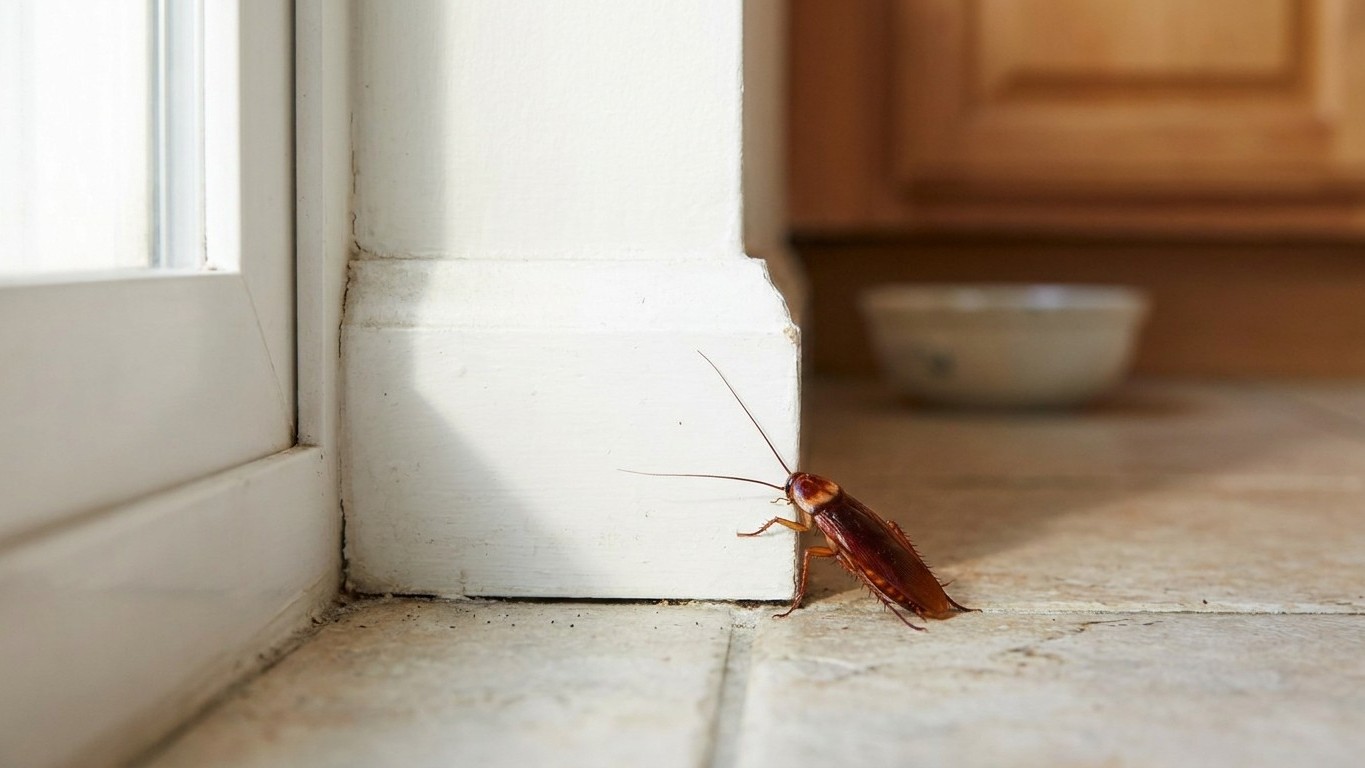
Three weeks after that fogger went off, my neighbour downstairs was seeing roaches she’d never had before. That’s not bad luck. That’s exactly what the science predicts happens when you set off a supermarket bug bomb in a flat with a cockroach problem.
Here’s the uncomfortable truth British households need to hear: those foggers, sometimes called “bug bombs” or total release foggers, do not kill German cockroaches, the species behind the vast majority of urban infestations. A rigorous study from North Carolina State University tested four different commercially available foggers across twenty infested homes, following every label instruction and official safety guideline to the letter. The researchers then monitored cockroach populations two weeks and one month after the bombs were released and found no declines from the pre-intervention estimates. Not a modest dip. Nothing. “The bug-bomb products did absolutely nothing to control cockroach populations in these homes,” DeVries said.
Key takeaways
- A rigorous scientific study found that commercial bug bombs failed to kill any cockroaches in real homes, despite working in laboratory tests
- The ‘flushing effect’ drives roaches into hiding spots and through shared walls into neighboring apartments
- Gel baits placed directly in cracks and crevices proved far more effective than foggers in eliminating infestations
Why the fog never reaches where the roaches actually live
Cockroaches aren’t sitting out in the open waiting for a chemical cloud to drift past. Bug-bomb chemicals fail to reach places where cockroaches congregate the most, on the underside of surfaces and inside cabinets, researchers say. A fogger sprays upward and settles downward, coating the middle of your floor, your worktops, your kitchen table. It’s precisely the places roaches avoid that get soaked, and precisely the places they hide, the crevice behind the fridge, the underside of the cupboard shelf, the gap around the boiler pipe, that stay bone dry.
Then there’s resistance. Most foggers rely on pyrethroids, a class of insecticide that’s been on the market for decades. Field roaches, unlike the pampered lab colonies used in early manufacturer testing, have had generations to build up tolerance. Researchers from North Carolina State University reported that their tests on several types of bug bombs showed that they killed, at most, 38 percent of the wild cockroaches in the spaces where they were used. Compare that with the lab insects used to certify these products in the first place: cockroaches raised in labs suffered a nearly 100 percent mortality rate in his study’s tests when exposed to the bug bombs, while the majority of their wild counterparts survived. That gap between laboratory promise and kitchen reality is, frankly, the whole problem in a nutshell.
Where they scatter to (and why it’s your neighbour’s problem now)
This is the bit that explains my downstairs neighbour’s sudden roach sightings. Foggers don’t just fail quietly, they actively make things worse through what pest specialists call the flushing effect. Pyrethroid repellents in foggers cause roaches to flee their hiding spots and scatter throughout your home. This “flushing” effect drives roaches from contained areas into new rooms and deeper wall voids. In a block of flats, “new rooms” doesn’t stop at your own front door. The repellent effect drives roaches from relatively contained areas into wall voids, neighbouring rooms, or adjacent apartments, transforming a localized problem into a widespread infestation.
Cockroaches travel through wall cavities, pipe boxing, and the gaps around shared plumbing without any regard for who pays the service charge. Fill your kitchen with pesticide vapour and the survivors, which is nearly all of them, simply relocate through those same routes into whichever flat offers calm and food. Three weeks is roughly the timeline for a displaced population to settle, breed a little, and become noticeable again, which lines up rather neatly with when my neighbour started complaining.
There’s also a residue problem nobody advertises on the can. Besides leaving behind numerous cockroaches, bug bombs also leave behind nasty toxic residue in the middle of floors and countertops. Independent monitoring after fogger use found chemical traces lingering on kitchen surfaces for a month afterwards, which is not somewhere you want your teacups drying.
What actually gets rid of them
The same North Carolina study didn’t just document failure, it tested an alternative in parallel. Ten homes were treated with gel bait instead of foggers, applied in small dabs directly into cracks, cupboard hinges, and the dark corners roaches actually favour. Gel baits are generally applied in small dabs via syringe, so they can be placed directly in the places where cockroaches hide. In contrast to the bug bombs, these baits were effective, after two and four weeks, in eliminating cockroach populations in the 10 homes. The mechanism is rather clever: roaches eat the bait, carry residue back to the nest on their bodies and in their droppings, and the whole colony, including eggs tucked away in cracks a fogger could never reach, gets exposed gradually.
For anyone dealing with a first sighting, my advice is far less dramatic than a fogger and considerably cheaper too. A tube of gel bait costs a fraction of a fogger kit and lasts weeks rather than one panicked evening. Squeeze small dots into hinge gaps, behind the cooker, along skirting boards, and under the sink, wherever there’s warmth, moisture, and crumbs. Keep worktops properly clear of food overnight, since even a few biscuit crumbs behind the toaster gives a colony reason to stay put. Seal obvious gaps around pipework with a bit of silicone sealant, which costs little and denies roaches the exact travel corridors they use to move between flats in the first place.
If numbers don’t drop within a month, that’s the moment to ring a proper pest control professional rather than reach for a second fogger. Councils in many parts of the UK offer subsidised pest treatment for tenants on lower incomes, which is worth a phone call before paying full private rates. And if you do share a building, a quiet word to your neighbours before you treat anything is far kinder than letting them discover the consequences three weeks later, the way mine did.
Sources : ncbi.nlm.nih.gov | ecoguardpestmanagement.com