
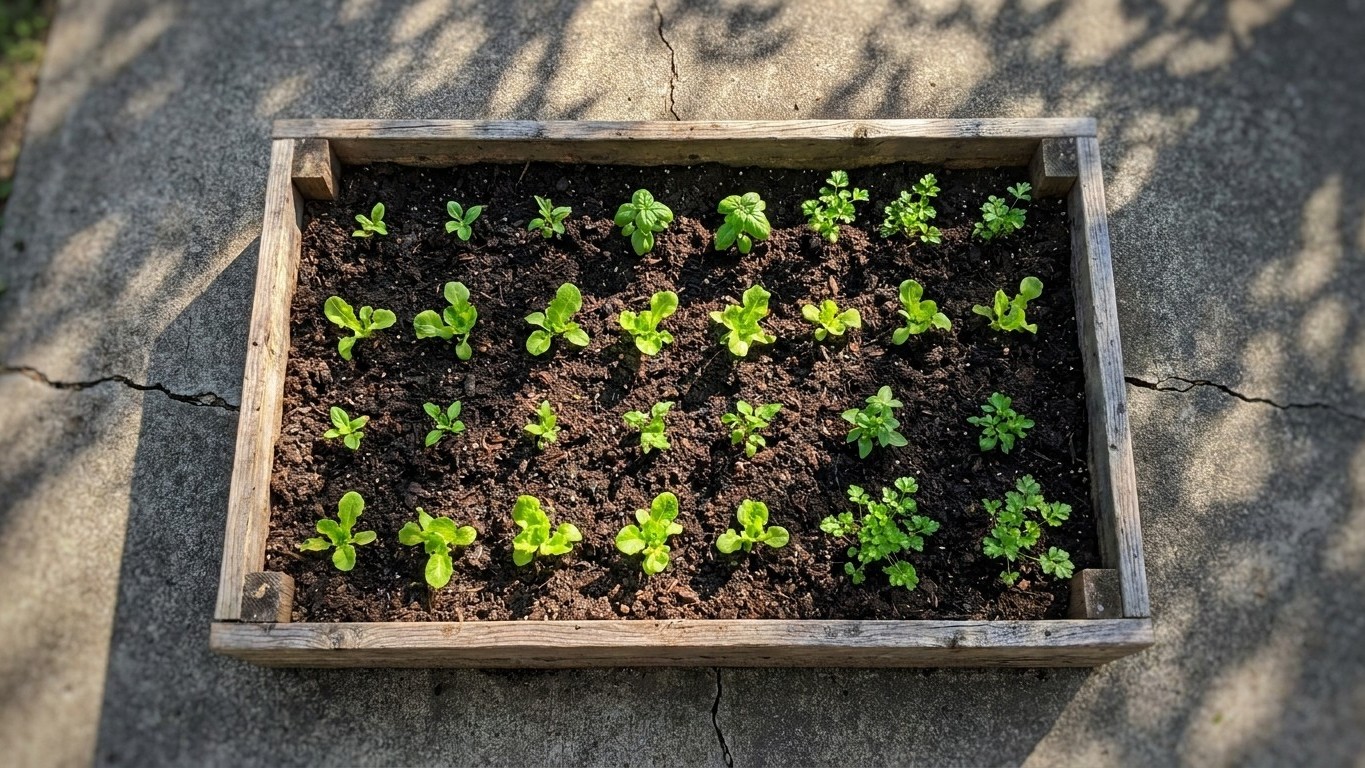
A solid concrete yard can grow food. Not in spite of the concrete, sometimes, almost because of it. The trick, shared with me by a retired landscaper who had spent forty years coaxing plants out of the most unlikely spots, is disarmingly simple: lay your cardboard flat on the surface, soak it, pile organic matter on top, and come back in a month. What you find when you return will change the way you think about where a garden can and cannot exist.
This approach sits squarely within a tradition known as sheet mulching or “lasagna gardening,” and it has been quietly practised by allotment holders and smallholders for decades. The simplest form consists of applying a bottom layer of decomposable material, such as cardboard, to the ground to kill existing vegetation and suppress weeds. Over a concrete surface, the cardboard isn’t suppressing weeds at all, it’s doing something far cleverer. It’s creating the conditions for an entirely new growing medium to begin forming, right there on the slab.
Key takeaways
- A 40-year veteran landscaper shares a deceptively simple method for gardening on solid concrete that challenges everything you thought you knew about where plants can grow
- Concrete might actually be your secret weapon—no weeds, faster soil warming, and a built-in canvas for creativity that traditional gardens can’t match
- What happens when you return to your cardboard-covered concrete slab after just 30 days will fundamentally change how you approach urban and paved-space gardening
Why Concrete Isn’t the Enemy You Think It Is
Most gardeners look at a paved yard and see an obstacle. Seasoned growers see a canvas. You won’t have weeds surrounding your raised garden beds if they’re on concrete. Concrete can also help the soil warm up more quickly in the spring, a real benefit if you want to start growing food early in the year. That warming effect is no small thing in a British spring, when the soil in a traditional bed can stay stubbornly cold well into April.
There is, however, one chemical quirk worth knowing about from the start. Concrete is alkaline. Over time, this may affect the soil in your raised beds. Test periodically with a pH meter and adjust as required. A simple, inexpensive pH testing kit from any garden centre will tell you what you’re working with. Most vegetables prefer a neutral to slightly acidic soil, somewhere between 6.0 and 7.0, so if the concrete begins to nudge your compost alkaline, a handful of sulphur chips or some ericaceous compost blended in will set things right.
The other matter is drainage. Before you place anything on the concrete, do a quick test. Pour some water on your concrete or paved surface and see where it drains. Usually this will be toward the property perimeter or away from structures, but it’s important to mark this now to prevent future problems. Build your growing area with that natural flow in mind and you’ll never have waterlogged roots.
The Cardboard Method, Step by Step
Right, now to the practical bit, because this is where it gets genuinely satisfying. You will need: plain brown cardboard boxes (the more the better), a good source of compost or well-rotted manure, some wood chip or leaf mulch, a watering can or hose, and a frame to contain the growing medium. That frame can be as simple as a wooden border made from scaffold planks or sleepers, or even large terracotta pots arranged together.
The Royal Horticultural Society recommends laying at least three inches of coarse gravel or stones covered with a geotextile membrane beneath a raised bed built over concrete or pavement. The membrane prevents the drainage material from clogging and getting mixed up with your soil. This drainage layer is not optional, it’s what stops the whole thing becoming a soggy, airless mess in a wet British autumn. Once your drainage is in place, lay your cardboard sheets across the base of the frame, overlapping them generously so there are no gaps.
Lay the cardboard sheets edge-to-edge over the entire bed, heavily overlapping seams. Wet the cardboard thoroughly to hold it in place until compost is added. Pile at least 6 inches of compost, manure, coir or organic blend over the cardboard. Then add a further layer of wood chip or autumn leaves on top, this is your “browns” layer, the carbon-rich material that feeds the slow decomposition process. As a no-till, no-dig method for planting, it helps maintain carbon sequestration. It conserves water and helps prevent soil erosion.
Depth matters more here than in a conventional bed. When building raised garden beds on top of hard surfaces, ensure a depth of at least 18 inches. Salad and herb gardens can be grown in 12-inch beds, but the deeper beds are better suited for a broad range of vegetable crops. Since plant roots will not have the luxury of reaching soil beneath ground level, you’ll need this depth to ensure healthy plant roots and to reduce watering needs. Tomatoes, courgettes, and beans will thank you for that extra depth. Shallow-rooted crops like lettuces and radishes will be perfectly happy with less.
A Word on Cardboard Safety (Without the Scaremongering)
You may have seen headlines recently warning that cardboard contains PFAS, so-called “forever chemicals.” The reality is more nuanced than the alarm suggests. Even if PFAS chemicals from food packaging make their way into recycled shipping boxes, the concentration of PFAS molecules will be greatly reduced, minimising the risk of plant uptake later on. PFAS molecules are now so prevalent that it’s impossible to escape them completely. Cardboard mulch doesn’t appear to add significant risk, and the benefits of sustainably reusing a box likely outweigh potential risks.
The sensible precautions are straightforward. Some potential concerns arise with colourful or glossy prints, which may include heavy metals or chemical coatings; waxed or grease-resistant surfaces, sometimes treated with PFAS; and heavily recycled cardboard, which may carry traces of chemicals from previous uses. For plain, brown shipping boxes, these risks are minimal. Stick to plain brown delivery boxes, the kind stacked up outside supermarkets and furniture shops, remove any plastic tape, and you’re working with one of the cleanest, most freely available mulching materials around. A simple test: drop a little cooking oil on the cardboard. If it beads up, the cardboard likely contains PFAS and should be avoided for edible beds. Two seconds, one drop of olive oil. Job done.
If you’d rather skip the cardboard debate entirely, thick layers of wood chips, organic straw, autumn leaves, weed-free grass clippings, and spent organic hay can be applied in its place. Many local tree surgeons will happily deliver a load of chipped wood free of charge, as it saves them disposal costs. Worth a phone call.
What Grows, and What to Expect
The good news is that vegetables, herbs, and flowers grow well in concrete planters. Ideal options include lettuce, carrots, tomatoes, cucumbers, and herbs like basil, thyme, and rosemary. Practically speaking, start with the easiest wins: salad leaves, dwarf French beans, courgettes, and mint (kept in its own pot, unless you want mint forever). All tolerate the slightly variable drainage that comes with any first-season concrete bed.
Do keep a closer eye on watering than you would with an in-ground bed. Raised beds on concrete don’t get the benefit of cool soil, which means they heat up and dry out faster than in-ground beds. A thick layer of mulch on the surface, straw, wood chip, or even shredded leaves, will slow moisture loss considerably. Compost and worm castings will help greatly with moisture retention.
One genuinely surprising detail that the retired landscaper mentioned as an afterthought: worms arrive on their own. There are worms in beds raised on concrete, which presumably have arrived from the compost that was added, and have then multiplied. They travel in with good-quality compost, settle into the organic layers, and begin doing exactly what worms do, aerating, feeding, improving. Within a season, what started as a box of compost on a slab begins to develop the characteristics of proper, living soil. That’s not gardening in spite of concrete. That’s gardening cleverly, wherever you happen to be.
Sources : gardensthatmatter.com | plantersraisedgardens.au