
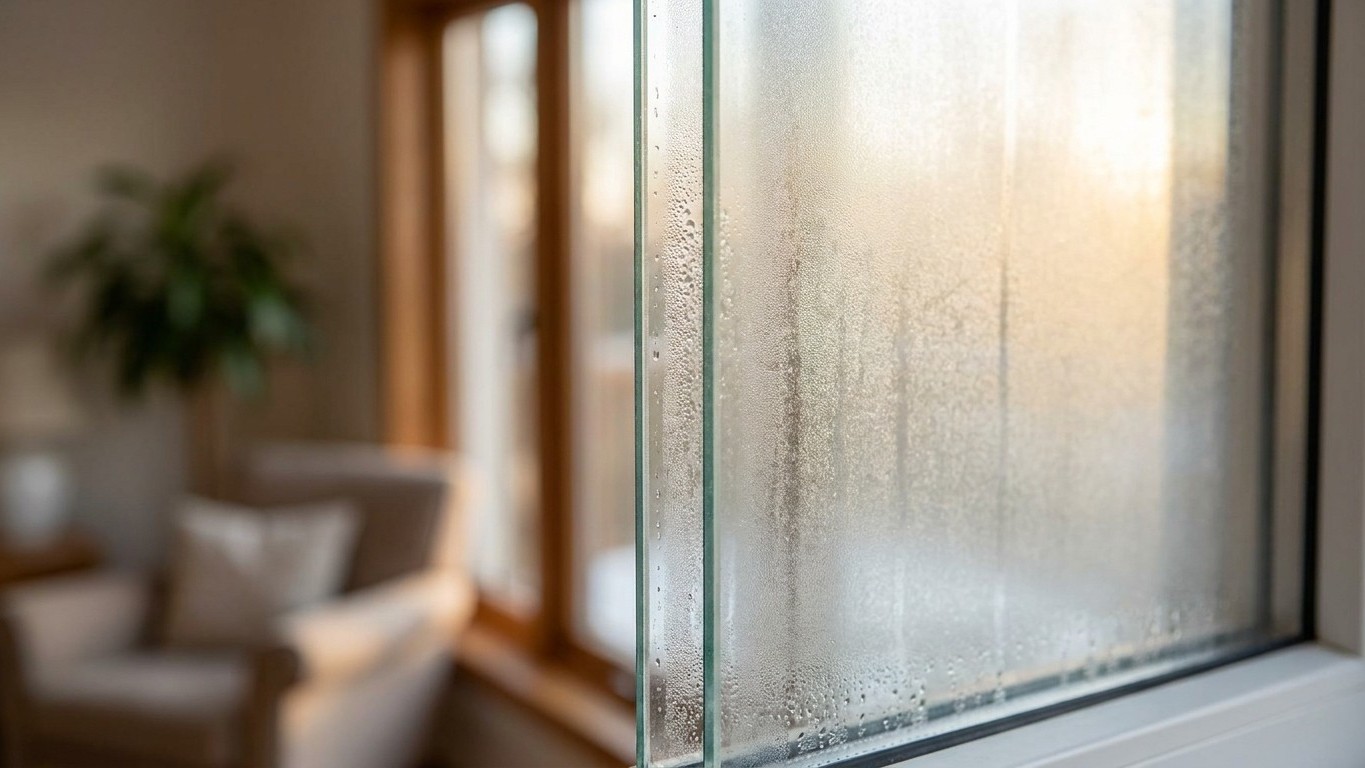
What spread across that pane wasn’t mould, not in the fuzzy black-spot sense most of us dread on a bathroom windowsill. It was something rather more stubborn: a fine, permanent mist creeping between the two panes of glass themselves, the tell-tale sign that the seal on a double-glazed unit has given up. Once that happens, no amount of wiping, spraying or muttering under your breath will shift it, because the moisture isn’t on the surface you can reach. It’s trapped inside the sealed cavity, and it’s there to stay until the unit is replaced.
Key takeaways
- Solar film doesn’t cook double-glazing seals—the physics prove the temperatures fall far short of what’s needed
- One tiny installation error creates a moisture pathway that spreads misting across the pane over weeks
- South-facing windows are the first place this damage appears, simply because they get the most intense daily sun
Heat Isn’t Usually the Villain
My first instinct, and probably yours too, would be to blame the heat. South-facing glass in summer gets properly warm, and it seems obvious that trapping a film against it would cook the seal until it gave way. The physics tell a different story. Even very dark internal solar films on double glazing achieve internal glass surface temperatures of approximately 45-55°C under standard UK conditions, while the polyisobutylene sealant used in double-glazed unit edge seals does not soften until approximately 185-200°C, a temperature the film simply cannot get anywhere near. So the film cooking the seal from the inside is largely a myth.
What actually causes the fogging is far more mundane, and far more avoidable. Condensation between double-glazed panes results from seal failure, and that failure from window film is almost always down to installation error, specifically tucking the film edge under the edge seal during fitting. It’s an understandable temptation. Tucking the edge under gives a beautifully neat, invisible finish with no visible film border sitting proud of the glass. But that little sliver of seal you’ve lifted to tuck the film beneath is the same seal keeping the argon (or plain air) gap watertight. Prise it up even a millimetre, and you’ve created a route for moisture-laden room air to creep in over the following days and weeks. Correctly installed film, cut back from the glass edge, does not cause seal failure or inter-pane condensation. The lesson, in short, is to trim generously short of the frame rather than chase a completely seamless edge.
There’s a second, related mechanism worth knowing about too. In double-pane windows, heat buildup can expand the air or gas inside the sealed space, and over time that stress can break the seal, causing foggy or hazy windows. This is more of a slow-burn risk than a dramatic crack, and it’s why the effect can genuinely take weeks to become visible rather than appearing overnight. A pinhole gap in a compromised seal doesn’t flood the cavity with moisture in one go. It lets in a little humid air each warm afternoon, which then condenses on the coolest surface inside the unit once temperatures drop overnight. Repeat that cycle daily through a sunny spell, and the misting genuinely does look as though it’s spreading, because it is.
Why South-Facing Glass Raises the Stakes
A south-facing window is precisely where this sort of installation error is most likely to show up quickly, simply because it gets the longest, most intense daily dose of sun of any aspect in a British home. Dark solar film on toughened double glazing is generally safe with correct specification, but on older annealed-glass units, dark film can approach the glass’s thermal stress threshold in high-solar-exposure conditions. If your glazing is a few decades old, or you’re not entirely sure whether it’s toughened, that’s a conversation worth having with the manufacturer or a glazier before you reach for the squeegee, particularly if you’re drawn to the darker, more heavily tinted films rather than a lighter reflective option.
It’s also worth separating this problem from ordinary window condensation, which is a completely different and far more common headache. There are two main issues that owners of homes with double glazing tend to face when it comes to condensation: moisture appearing running down the inside of the glass, and condensation in the air gap between the two glass panes that make up double glazed windows. The first kind, the misted-up glass you get on a cold morning, is simply humidity in your room meeting cold glass, and a spell of good ventilation or a dehumidifier sorts it out within the hour. The second kind, the one that’s actually between the panes, is the one caused by seal failure, and no ventilation on earth will touch it. Condensation between the panes of your double-glazed windows usually means the sealant around the two panes is deteriorating. Knowing which of the two you’re looking at saves an awful lot of wasted mopping.
Putting It Right, and Doing Better Next Time
If you’ve genuinely caused seal failure with a DIY film job, the honest news is that the sealed unit itself needs replacing rather than the whole window frame, which is a smaller and considerably cheaper job than most people fear, though it does mean calling in a glazier rather than reaching for another roll of film. Before you try again elsewhere in the house, a few checks will save you the same disappointment twice:
- Trim the film a good few millimetres back from every edge of the glass, never flush to the frame
- Never lift or tuck under the existing seal, however tidy it looks
- Check whether your glazing is toughened or older annealed glass before choosing a very dark film
- Read the small print on your window guarantee, since some manufacturers exclude cover once aftermarket film goes on
None of this means solar film is a bad idea for a glary south-facing room, quite the opposite really, since a well-fitted lighter film can take real heat and dazzle out of a sitting room for the cost of a takeaway. It simply means the fitting matters more than the film itself. Cut it too tight, tuck it where you shouldn’t, and the very thing you bought to make a room more comfortable ends up costing you a new sealed unit instead.
Sources : integritytinting.com | idealhome.co.uk