
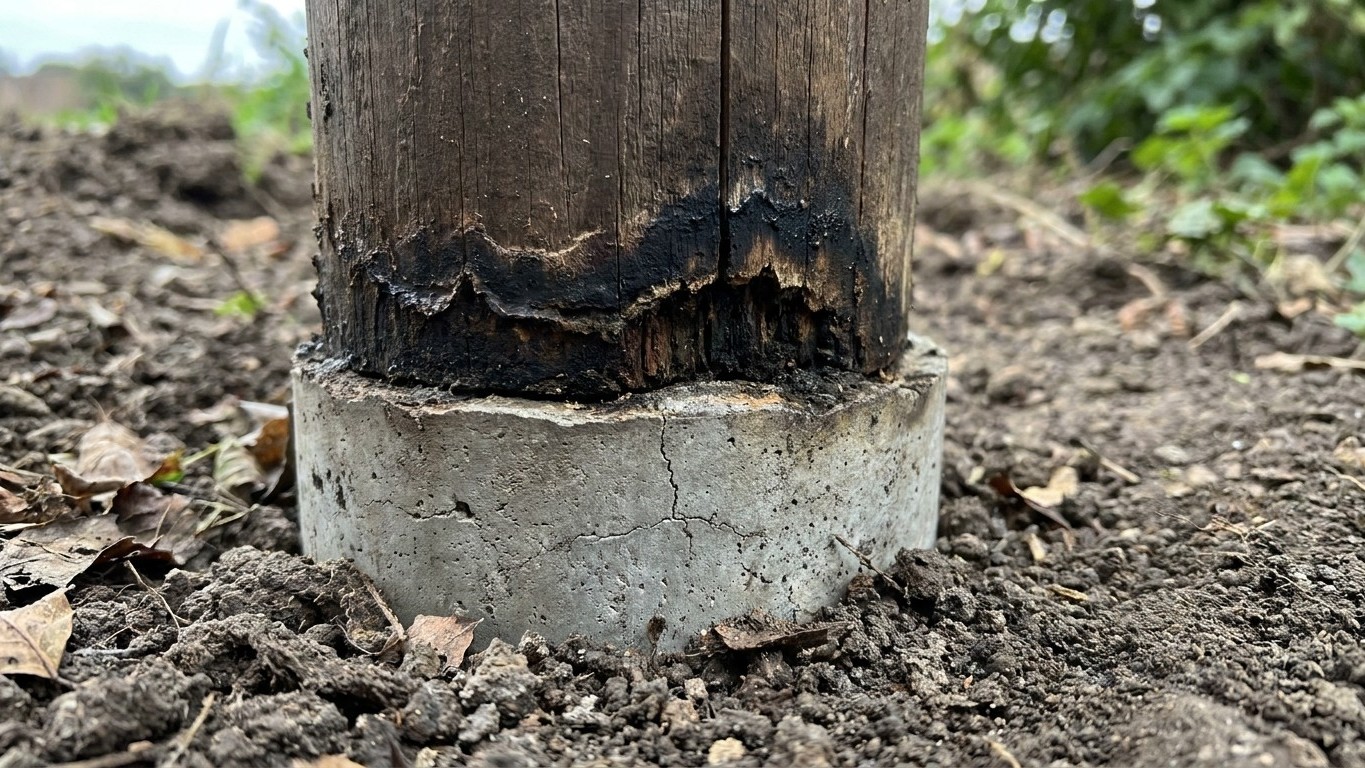
What you likely found was a soft, dark ring of rotted wood exactly where the post met the concrete, perhaps even a little pocket of standing water hiding beneath the surface. It’s one of gardening’s cruellest ironies: the very collar meant to protect your fence post can turn into the thing that destroys it.
I’ve heard this story more times than I care to count, usually from someone leaning on a garden fork with a look of genuine betrayal on their face. They did Everything by the book. Dug a proper hole, mixed the concrete correctly, waited for it to cure. And yet there it is, three winters on, a post that snaps off like a biscuit right at ground level while the bit buried deeper in the concrete looks perfectly sound.
Key takeaways
- A concrete collar can trap water against wood in the exact zone where rot thrives most
- The same freeze-thaw cycles that crack concrete create hidden pathways for moisture to reach the timber
- The real secret to fence longevity isn’t more concrete—it’s the shape, depth, and details most people get wrong
Why the Concrete Turns Against the Wood
The trouble starts with simple geometry. When concrete is poured below the top of the post and left flat or, worse, slightly dished, it forms what’s essentially a little basin around the timber. If you pour the concrete below the depth of the wooden post, it will basically form an impermeable cup around the post when it hardens, and this will fill with water and keep the wood wet for months on end. Rain falls, seeps into that gap between wood and concrete, and then has absolutely nowhere to go. Unlike open soil, which drains and dries with the seasons, that little concrete cup holds its water hostage right against the grain.
Timber experts call the danger area the “critical zone” for good reason. Fence posts are particularly vulnerable to rot at the ground level, an area often referred to as the “critical zone,” where rot tends to occur due to a combination of moisture, oxygen, and contact with soil. Go much deeper than that and the rot organisms actually struggle to survive, simply because you won’t often see a post rotted further down than 8 inches below, because oxygen is necessary for rot to exist and oxygen becomes scarce the further beneath the ground you go. So the very spot where your concrete collar sits, hovering right at soil level, happens to be exactly where wood, water and air all meet in the worst possible combination.
There’s a second culprit too, one that’s easy to overlook: the concrete itself. Concrete mixed with too much water can lead to excessive moisture levels, which can accelerate the rotting process, and concrete that is not properly cured or is exposed to freeze-thaw cycles can crack and allow moisture to penetrate. After three British winters of freezing and thawing, a hairline crack in even the sturdiest-looking collar is practically inevitable, and once that crack forms, water finds its way straight to the timber.
The Fix Isn’t Always More Concrete
Now, before you go swearing off concrete altogether, let’s be fair to it. Used properly, it’s still a perfectly good ally. The mistake most of us make isn’t using concrete, it’s shaping it wrong. A flat-topped collar invites water to sit; a domed one sends it packing. Make sure the top of the concrete slopes away from the post, so this small mound sheds rainwater instead of letting it pool, which is crucial for keeping the base of the post dry.
Depth matters just as much as shape. A post plunged too far into wet concrete never gets the chance to breathe. Setting a wooden post too deep in concrete traps moisture in, so the post should be placed at the correct depth based on the fence height, with at least a few inches exposed for airflow. Underneath, a layer of gravel does more good than an extra bag of postmix ever will, since it gives water a route down and away rather than a dead end to sit in. As one long-time fencer put it plainly, the reason most wood posts fail is because water sits at the base of the post for extended periods, and go six inches down on a rotten post and it looks brand new, which tells you Everything about where the real damage happens.
Timber choice deserves a mention too, and it’s where a lot of pound-shop savings turn into false economy. Not all pressure-treated wood is equal. The treatment is rated by retention level, and UC4A and UC4B are the ratings you want for ground contact applications. Cheaper stock at the local yard is often only rated for splash zones rather than permanent damp contact, which is a false saving if your post is going straight into a collar that holds water half the year.
Small Habits That Buy Your Fence Years
None of this means starting from scratch on every post in your garden. A bit of vigilance goes further than people expect. Keep an eye on the base each spring, before the growing season buries the evidence under grass and weeds, because regularly inspecting your fence posts for early signs of damage helps prevent minor problems from becoming bigger issues. Clear away anything that gathers moisture against the wood, since even innocent-looking mulch or fallen leaves can quietly recreate the same trap the concrete once made.
A few small, low-cost habits make a real difference over the years:
- Slope soil and mulch away from the post base rather than banking it up
- Check the collar for hairline cracks after a hard frost and reseal promptly
- Repaint or re-treat any exposed timber the moment you spot fading or greying
If you’re setting new posts this year, there’s one detail worth remembering that most people never think about: a post buried below the local frost line sits in soil that barely changes temperature, while a shallow one gets rocked by heave every winter until the collar around it cracks open. The frost heave that cracks the concrete collar and opens up gaps at the grade line is far more likely to happen to a shallow post than a properly deep one. Get that depth right from the start, and you’ll spend a lot less time three winters from now, staring in surprise at what you find at ground level.
Sources : gofulldiy.com | homegardenguides.com