
When the July heat finally hammered the country last year, I Discovered the true culprit behind my perpetually stuffy front bedroom wasn’t the window at all. It was the boxy little housing above it, the one holding the roller shutter mechanism, quietly acting as a chimney for hot air pouring straight into my home. One Saturday afternoon and about £30 in materials later, that problem was solved for good.
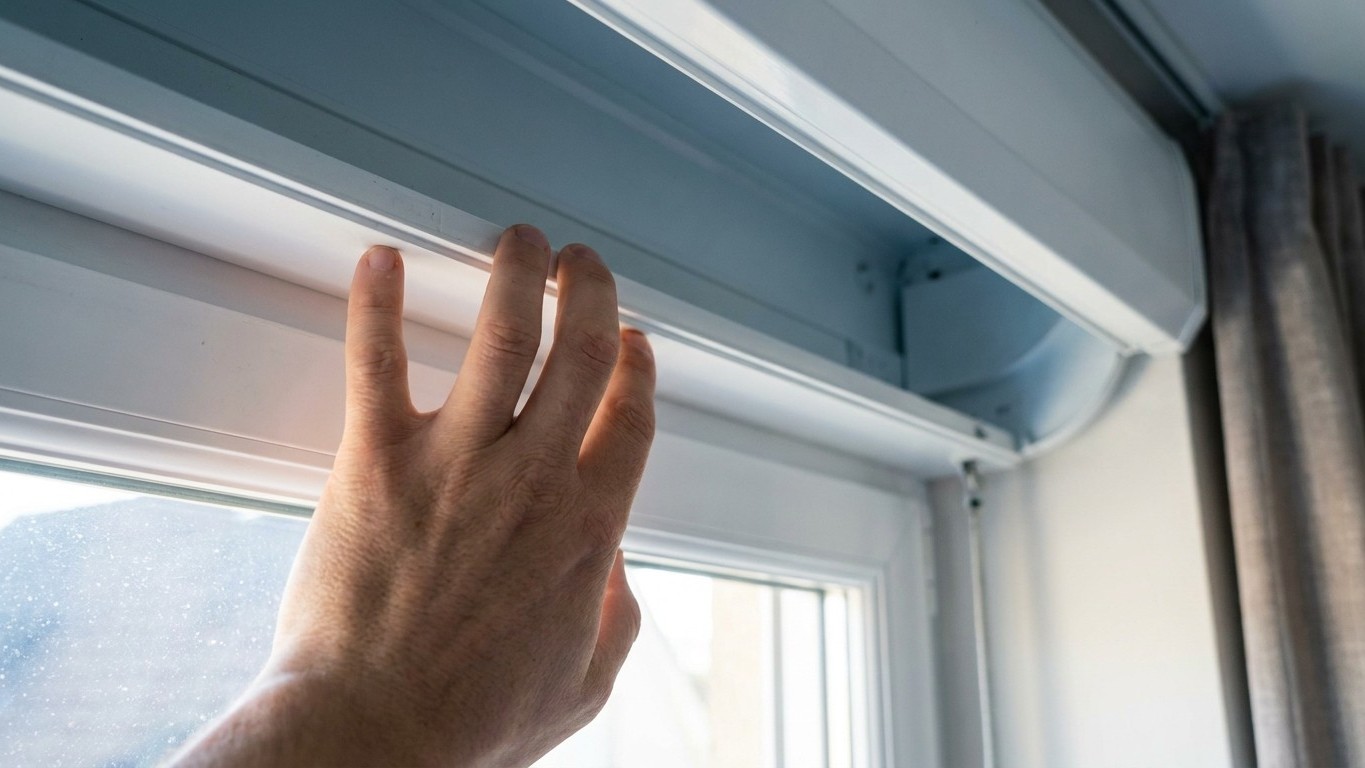
Roller shutter boxes (sometimes called shutter housings or pelmet boxes) sit above the window, hiding the rolled-up curtain of slats and the mechanism that raises and lowers them. They’re brilliant for security and for blocking out summer sun, but the gap where the shutter’s fabric or slats slide through, and the slot where the pull-strap or belt runs, are essentially holes straight through your wall. The air at outside temperature enters the roller shutter box through the sliding slot of the fabric, and the situation is aggravated by the slot where the belt runs, a real through hole that connects inside and outside. I’d never once thought about it until I did the hand test one muggy evening: window shut, shutter down, palm flat against the inside of the box. Cold as a larder shelf, even though the wall either side felt perfectly normal.
Key takeaways
- An uninsulated roller shutter box can waste 25-30% more energy than you’d expect from something so small
- This hidden leak often outperforms poor windows in terms of energy loss—your shutter housing might be your home’s real weak point
- One afternoon, £30 in materials, and a bread knife are all you need to transform your home’s thermal performance
Why That Little Box Was Costing Me a Fortune
There’s a proper bit of physics behind why these boxes punch so far above their weight when it comes to heat loss. The problem arises from the very structure of the traditional roller shutter box: to allow the shutter to move, there must be openings and gaps which, in the absence of adequate insulation, become preferential passageways for air, with warm, lighter air inside tending to rise and escape through these gaps while cold outside air penetrates. Engineers even have a name for it, the stack effect, and this phenomenon can cause energy losses of up to 25-30% through uninsulated boxes. That’s not a rounding error, that’s a proper leak.
The numbers get even starker when you look at the actual heat transfer figures. The U-value indicates how much heat is lost per square metre of a building component per degree of temperature difference, and the lower the U-value, the better the thermal insulation, with an insulated roller shutter box under 0.7 W/(m²K) losing significantly less heat than an uninsulated one over 2.0 W/(m²K). In plain English, my empty plastic box was behaving almost like an open window compared with a wall that’s meant to be doing its job.
What surprised me most, and made me feel rather less daft for having ignored it for years, is that this weak point often outperforms even a poor window in terms of wasted energy. As a result, roller shutter boxes very often waste more energy than the windows themselves. Given that windows and doors account for 25% of a home’s total energy loss already, that unassuming box above your window could be doing more damage than the glass beneath it.
The Afternoon Job Itself
I’m no builder, and I say that with some pride, because this really was a job for someone who owns a Stanley knife and not much else. The materials belong to a family everyone in the trade recognises: expanded polystyrene (EPS), extruded polystyrene (XPS), polyurethane foam, and mineral wool are the go-to choices, each valued because these materials are characterized by low thermal conductivity, making them particularly effective at reducing heat transfer through the box walls. I went for a thin rigid foam board, the sort sold in DIY sheds for exactly this purpose, cut to size with a bread knife (don’t judge me, it worked beautifully).
Before buying anything, I measured the cavity properly. This matters more than it sounds. It’s important to check whether there is enough space in the shutter box to fit the insulation panel without obstructing the winding, and since panel thicknesses usually vary between 13 and 25 millimetres, you need to check there is at least one centimetre in the space between the panel and the closed shutter. Get greedy with a thick board and you’ll jam your own shutter, which is a lesson best learned on paper rather than with the shutter halfway down and stuck.
Once the boards were cut and slotted against the inner walls of the box (a squirt of decorator’s caulk holds them fine, no fancy adhesive needed), I turned to the gaps themselves. Foam gaskets and brush strips went along the slot where the belt runs and around the edges of the access panel, because in addition to insulating materials, it’s essential to pay attention to sealing cracks and openings, with rubber or foam gaskets applied along all roller shutter passages and at the joints between the box and the surrounding masonry. A tube of good quality foam sealant dealt with any remaining holes, following the golden rule that you should first check whether the gaps are actually holes in the wall, and if they are, simply seal them with quality polyurethane foam.
What the Heatwave Actually Proved
Fast forward to that scorching stretch of days, and the difference wasn’t subtle. The bedroom that used to feel like a greenhouse by mid-afternoon stayed noticeably cooler, and the box itself no longer radiated heat when I pressed my hand against it. That’s entirely consistent with how these boxes behave once they’re sealed properly, since professional insulation for roller shutter boxes reduces energy losses, protects against draughts and improves the indoor climate in both directions, summer and winter alike. I’m not claiming scientific rigour with my palm as a thermometer, but the change was obvious enough that my husband commented on it before I’d even mentioned what I’d done.
A Word for Renters and the Terminally Busy
If pulling the box apart feels like too much commitment, there are gentler options. A simple test is to place your hand on the inside of the roller shutter box with the window closed, and if the surface feels significantly colder than the surrounding wall, that indicates a thermal bridge and missing insulation. Adhesive-backed insulating rolls exist that stick straight onto the inside of the box without any cutting of boards or foam guns, useful if you’re renting or simply short on a free afternoon. Whichever route you take, don’t overlook the belt slot and the seals around the shutter’s own guide rails, since those narrow gaps do far more damage than the flat panels of the box ever will, purely because moving air escapes through gaps far more readily than it conducts through solid material.
Sources : adesivisicurezza.it | roma.eu