
Last March, with the optimism of someone who has watched one too many home-improvement videos, I ordered a fly screen for the bedroom window, fetched my drill, and got to work. Four holes in the uPVC frame, four self-tapping screws, job done. By the time July arrived and the flies were neatly kept outside, I felt rather pleased with myself, right up until a neighbour mentioned, very politely, that she’d fitted hers in about eight minutes using expanding clips. No drill. No holes. Fully removable. I sat with that information for a long time.
The truth is that fitting a window fly screen by drilling straight into the frame is a perfectly common mistake, and one that costs more than a bruised ego. You have to be careful when drilling holes in uPVC frames so as not to cause any damage to their structural integrity. More awkwardly, uPVC window frames contain steel reinforcements inside them, which help make your windows stronger and sturdier, giving the frames a great deal of structural integrity and longevity. Hitting one of those reinforcements without warning, or worse, drifting too close to the glazing, can turn a five-pound fly screen into a three-hundred-pound repair bill. Above all else, you must maintain an adequate distance from the double-glazed panel; should your drill come into contact with glass, it can cause extensive damage. Likewise, using a hammer action drill on uPVC is asking for trouble: the vibration can cause some of the fasteners or locking systems within the frame to become misaligned.
Key takeaways
- What happens when a drill meets a uPVC frame with hidden steel reinforcements inside
- Why your summer fly problem might be entirely self-inflicted (hint: it involves your bedroom light)
- A friction-fit method so simple it feels like cheating—and why renters especially should know about it
Why we even need fly screens in the first place
Summer brings an upsurge in pest activity both indoors and outdoors. Flies, wasps, ants, mosquitoes, and bedbugs become particularly active during this season, creating a range of nuisances. And that pressure on our windows is growing. The number of mosquitoes in the UK is on the rise, especially during the summer, partly because as climate conditions change and global travel increases, mosquito populations in Britain have been increasing. Even the NHS has noticed: the NHS has reported larger numbers of people visiting their webpage on ‘insect bites and stings’ in the summers since 2021, and pest controllers and local authorities have reported increases in people being bitten in recent years.
The instinct to crack a window on a warm evening is entirely natural, and entirely hazardous without the right protection. If you’ve suddenly discovered what feels like a plague of small flies in a room on a summer evening, the most likely explanation is simple: you left the window open with the light on. Most flies are attracted to artificial light at night. The solution is not to swelter in a sealed house. It’s to get a decent screen on the window, fitted properly.
The no-drill method: what it actually involves
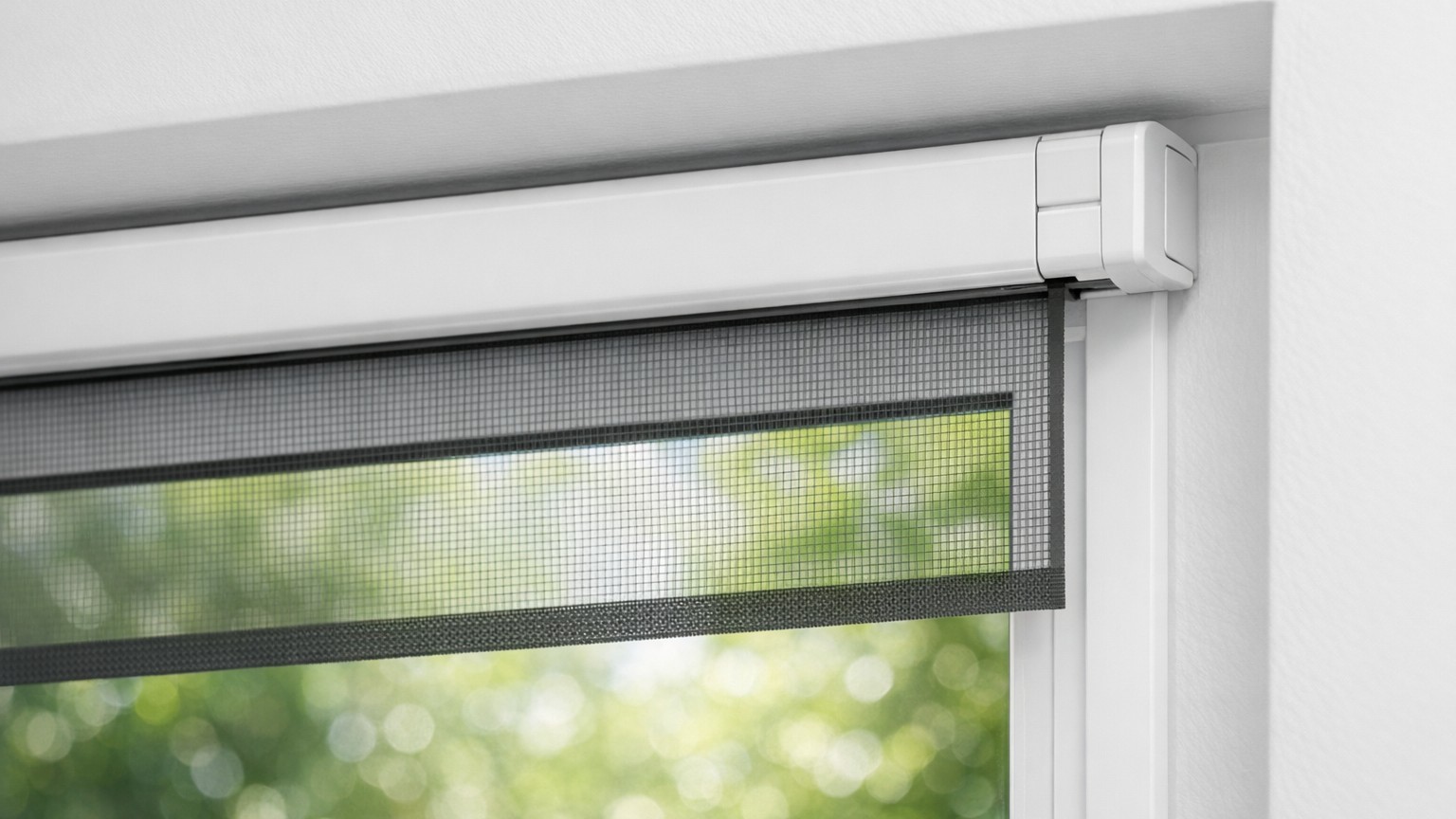
The clip, or no-drill, approach works on a beautifully simple principle. A no-drill roller fly screen fits entirely within your window recess, with no screws and no damage to frames. The cassette mounts at the top of the recess; the side channel end-caps expand to grip the sides. Pull the screen down to cover the window; it retracts when not in use. The whole mechanism holds itself in place through controlled friction, the same logic that keeps a curtain pole up in a bay window without a single rawlplug.
Installation is a simple friction-fit mechanism: you use an allen key to adjust the end caps of the cassette and the guide rails so that they push outwards into the walls and sill of the recess. That’s it. No pilot holes, no risk of cracking the glazing, no Saturday morning panic. A screw-fix screen takes under an hour. A no-drill screen takes minutes. Once fitted, these screens cause no alteration or damage to your window or door frames or recesses, and they are really easy to remove for cleaning or storage.
For those who rent, this matters enormously. No-drill screens are ideal for rented properties or anywhere you’d prefer not to drill. A tenancy agreement that forbids making holes in fittings is not a reason to spend the summer swatting, it’s simply a reason to choose the right fixing method from the start.
What to check before you order
Measure the recess, not the frame. This is where most people come unstuck, and where an otherwise well-intentioned DIY project turns into an afternoon of shims and frustration. The no-drill screen fits neatly inside the window recess, and there is a minimum recess depth of 56mm and a minimum recess width of 650mm. If your window recess is shallower than that, found occasionally in older sash windows or Victorian terraces with slim reveals — a no-drill roller screen may not be your best option, and a flat frame-mounted screen fitted with adhesive clips or magnetic edges could serve better.
The type of mesh also deserves a moment’s thought. You can select from insect, midge, pollen, or pet mesh types, depending on what you’re trying to keep out. A standard insect weave is perfectly adequate for flies and wasps, but if you or someone in the household suffers from hay fever, a pollen mesh with a tighter weave can filter out airborne particles as well as bugs, two problems solved with one screen. The no-drill option is generally available for windows with insect mesh only, so if you need midge or pollen mesh, the screw-fix route remains the right choice — done carefully, with a pilot hole and the correct short screws.
The hidden cost of getting it wrong
Drilling into a uPVC frame is not forbidden, window companies generally confirm it won’t void a guarantee as long as you avoid the glazing beading. But the margin for error is thin, and the consequences of misjudgement are disproportionate. Before drilling, you should make use of a metal detecting tool to ensure that you do not drill into an area where there are locking system or hinge components. Most homeowners fitting a fly screen on a Sunday afternoon do not own a metal detector, which is precisely why the no-drill method deserves to be the default option, not the afterthought.
There is also a less obvious cost: permanence. Holes in uPVC frames cannot be un-drilled. You can fill them with silicone, but a patched frame is a patched frame, and if you ever change the fly screen design, upgrade to a roller blind, or simply decide the screen looks wrong on that window, you are left with evidence of the first attempt. The clip-and-tension system leaves nothing behind. Expanding end-caps grip the window recess securely and release cleanly when you move out.
My four screw holes are still there, sealed now with a dab of white silicone that matches almost perfectly. Almost. The new fly screen, fitted last spring with an allen key in about nine minutes, works beautifully. What I hadn’t anticipated was the pleasure of taking it down in September, giving the mesh a rinse, and storing it flat under the bed. Permanently-exposed screens degrade in years; a retractable one, protected in its cassette when not in use, lasts decades. That, more than any measurement or fixing method, is the argument that should have persuaded me from the beginning.
Sources : residencecollection.co.uk | toolsadvisers.com