
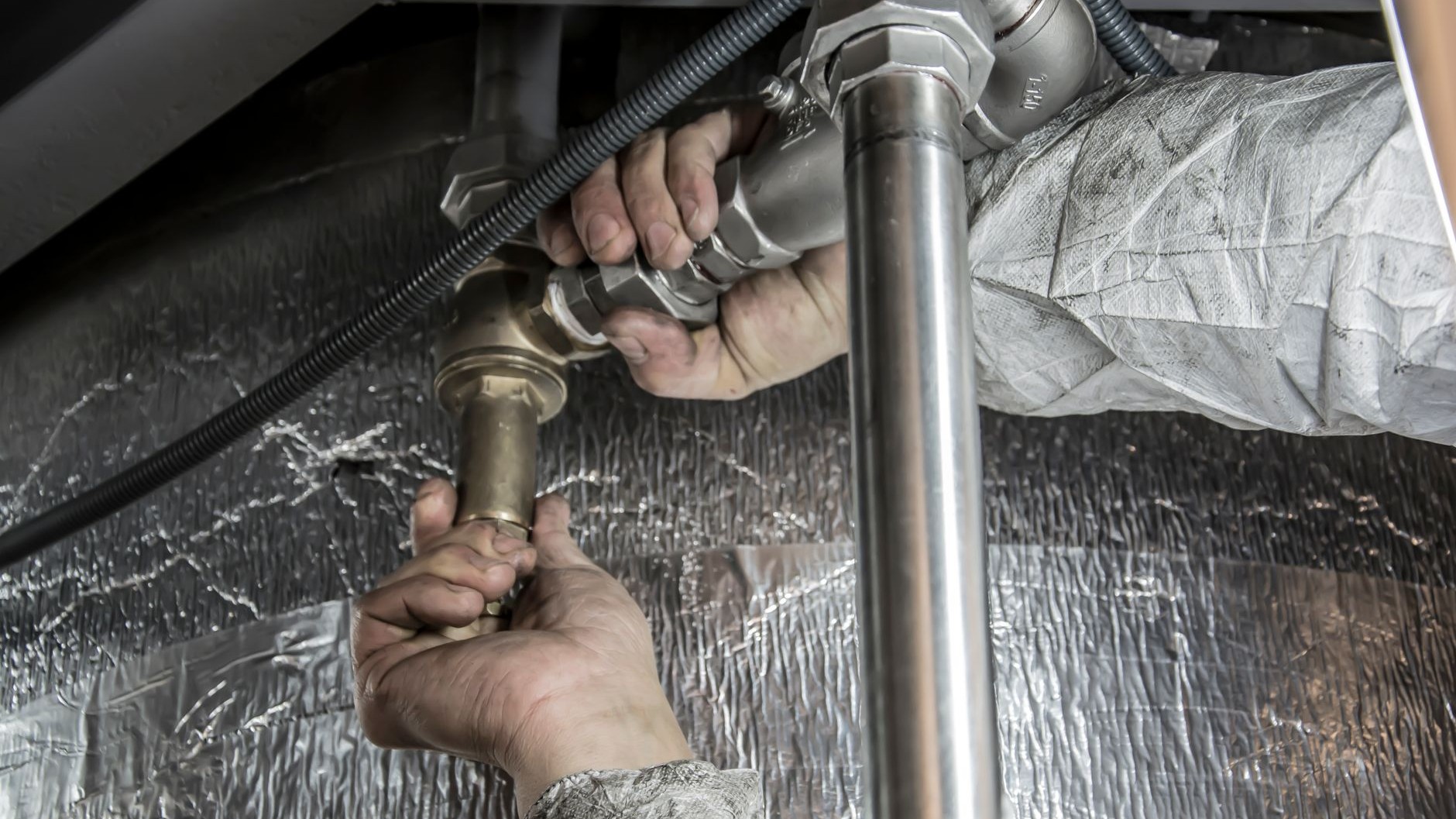
PTFE tape, that thin, white, slippery roll you can buy for a pound or two at any DIY shop — is one of those household staples that feels utterly foolproof. Wrap it round a thread, tighten Everything up, no more drip. Simple. Except that using it incorrectly is remarkably easy, and the consequences tend to announce themselves at the worst possible moment: a slow, silent seep that soaks the chipboard under your sink before you ever notice the smell of damp.
The plumber who came to sort out my under-sink disaster spent about forty-five seconds diagnosing the problem. He unwound my careful tape job, held it up, and said, “You’ve gone the wrong way, love.” I had wrapped the tape anticlockwise. Every time I tightened the fitting, the thread was unwinding my seal rather than compressing it. The tape was balling up inside the joint instead of bedding in flat, and water was finding its way through the gaps with quiet determination.
Key takeaways
- A single directional error with PTFE tape can cause water damage that goes unnoticed for weeks
- Most plumbing guides skip the one rule that determines whether your seal works or fails completely
- PTFE tape doesn’t belong on many fittings where DIYers commonly use it—and adding it can actually cause leaks
The direction rule that most DIY guides gloss over
PTFE tape must be wrapped in the same direction as the thread turns when you tighten the fitting. For the vast majority of household plumbing fittings in the UK, standard right-hand threads, that means wrapping clockwise when you’re looking at the end of the male thread (the one you’re wrapping). Hold the fitting in your left hand with the threaded end pointing away from you, and wrap the tape from left to right as you go around. When you then screw the fitting into the female part, the tightening action pulls the tape tighter into the grooves rather than dragging it backwards and bunching it up.
Left-hand threads do exist in plumbing, mostly on certain gas fittings and some older radiator valves, and those require the opposite direction. If you’re ever unsure, the thread itself will tell you: look at which way the spiral rises, and that’s the direction to wrap.
The number of wraps matters too. Two to three wraps is the standard advice for most compression fittings on water pipes, but threaded connections on tap bodies, shower arms, and supply hoses often benefit from four to five wraps. Too few and the seal won’t fill the thread valleys properly; too many and the fitting won’t tighten fully, leaving a mechanically loose joint that vibrates loose over time. The tape should sit snug in the grooves, not puffed up around them.
Where PTFE tape actually belongs, and where it doesn’t
The mistake I made wasn’t only directional. The plumber pointed out something that surprised me: PTFE tape is a thread sealant, not a leak stopper. It belongs on tapered (NPT or BSP taper) threaded joints, where the mechanical seal is formed by the threads themselves compressing as they tighten. On compression fittings, the olive-and-nut type used on copper pipes throughout most British homes — PTFE tape does absolutely nothing useful. The seal there is made by the olive deforming against the pipe; adding tape just creates a false sense of security and can actually prevent the olive from seating correctly.
Parallel threads (BSP parallel, common on many tap connectors) are a slightly more nuanced case. They don’t seal by thread compression alone, they rely on a rubber washer or O-ring at the face of the fitting. Adding PTFE tape to a parallel thread with a washer is, at best, redundant and, at worst, it can prevent the washer from seating flat, introducing the very leak you’re trying to prevent. The tape has its place; it just isn’t everywhere.
The broader category to be careful with is any fitting that already has a factory-fitted seal, be it an O-ring, a fibre washer, or a rubber cone. These components are engineered to do the sealing work. Wrapping tape over them doesn’t double the protection, it interferes with it.
Doing it properly: a practical method worth learning once
Clean the thread before you start. Any grit, old tape residue, or corrosion will prevent the new tape from lying flat. A small wire brush or even an old toothbrush works well for this. Dry the thread completely : PTFE tape doesn’t adhere to wet metal, it just slips about.
Start the tape at the first thread closest to the fitting end, not halfway along. Hold the tape end against the thread with your thumb, wrap clockwise (for standard right-hand threads), and maintain gentle tension as you go, enough to stretch the tape very slightly so it seats into the thread valleys. Overlap each pass by about half the tape width. When you’ve done your wraps, tear the tape cleanly and press the tail end down into the threads with your thumbnail so it doesn’t flap loose during assembly.
Tighten the fitting hand-tight first, then use a wrench or spanner for the final quarter to half turn. Overtightening is a separate and common error: it can crack ceramic tap bodies, distort plastic fittings, and strip threads, leaving you worse off than before. If a joint still weeps slightly after correct assembly, the answer is usually to disassemble, clean, retape with an extra wrap, and reassemble, not to force it tighter.
One detail that rarely makes it into beginner guides: PTFE tape degrades over many years, particularly when exposed to very hot water repeatedly. On fittings near a boiler or on hot supply lines, it’s worth inspecting threaded joints every few years as part of a general check rather than waiting for evidence of a problem. Old tape that has lost its elasticity can shrink slightly, and that tiny gap is enough for a slow seep to begin.