
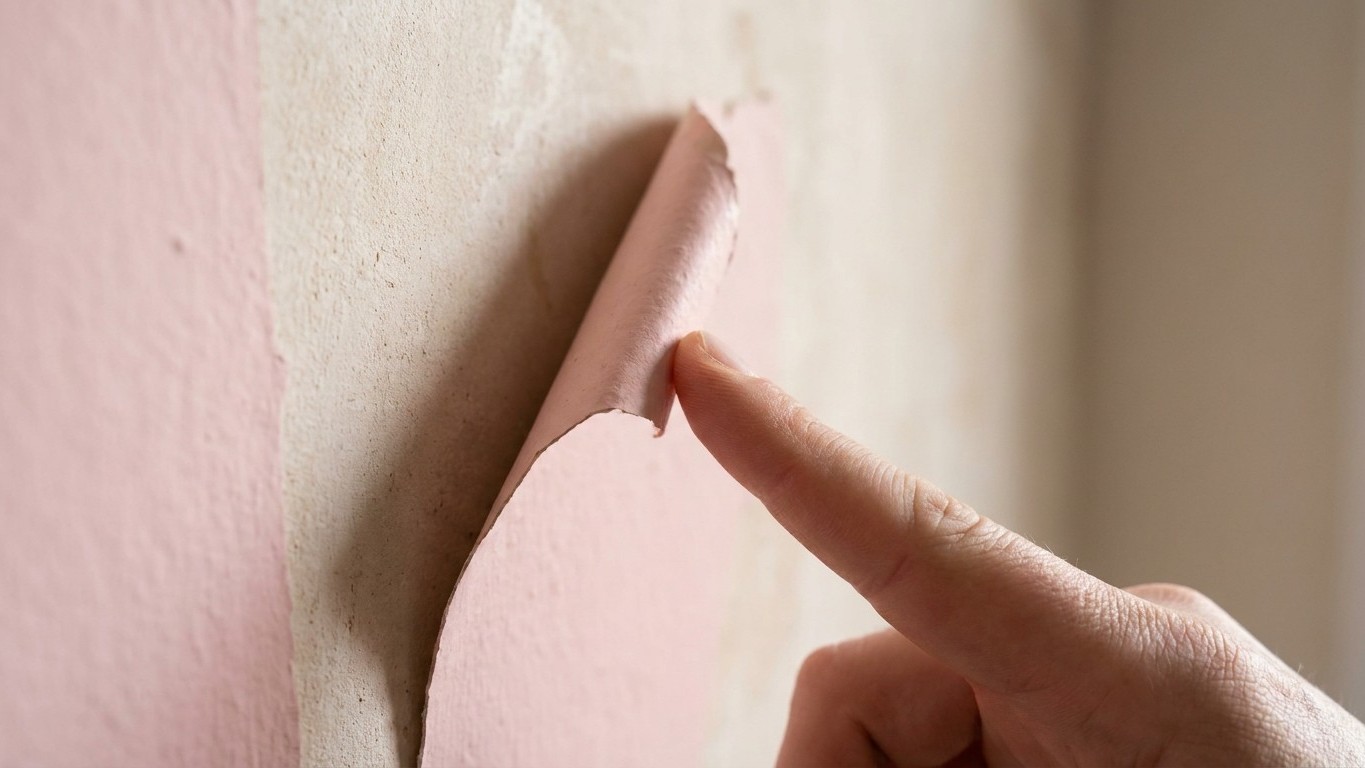
Six weeks after finishing a weekend DIY paint job, discovering you can peel the paint off your living room wall with nothing more than a fingernail is a genuinely crushing feeling. All that effort, all that satisfaction, undone by a combination of invisible problems that no one warned you about. The good news is that the causes are well understood, they are almost always preventable, and with the right preparation the next paint job can last years rather than weeks.
Key takeaways
- Moisture trapped under fresh paint is the #1 enemy—but there’s a sneaky culprit you can’t see
- New plaster requires a secret waiting period that most DIYers skip, with catastrophic results
- The difference between ‘touch-dry’ and ‘ready-to-paint’ could be the difference between weeks and years
Why paint peels: it almost always comes down to adhesion
Paint peels, bulges, or cracks when there is a loss of adhesion between the paint and the surface it is painted on. That sounds simple, but adhesion is a surprisingly delicate thing. The paint needs a clean, dry, stable surface to grip. Give it anything less, and it will eventually let go.
Water is the top driver of paint peeling inside and out. Tiny roof gaps, slow plumbing leaks, or damp walls push moisture into wall cavities, and that pressure lifts the film and breaks the bond. But moisture does not only come from leaks. Applying paint over a moist surface will trap the moisture beneath the new coat, and if your walls are wet or damp while you are painting, you will very often see peeling shortly after the project is complete. British homes in autumn and winter are particularly vulnerable to this, especially in older properties where walls retain humidity long after they appear dry.
The second great culprit is dirty walls. Dust or micro-mould building up on the wall creates a barrier between the paint and the wall. Even a living room that looks perfectly clean can harbour years of invisible grease from cooking smells drifting through, finger marks near light switches, and fine dust that settles like a film on every surface. Dirt on the surface of the wall that gets painted over leads to the paint not getting good adhesion and it will flake or chip off far quicker than expected.
Then there is the question of paint compatibility. Using latex paint over oil-based paint without a primer often leads to paint peeling and other surface problems. Latex paint expands and contracts, but old oil-based paint below it will not, and this combination can quickly lead to the top surface cracking and peeling. Many homeowners have no idea what type of paint was previously on their walls, which makes this a more common trap than you might think.
The plaster problem that catches everyone out
Here is the mistake that trips up countless enthusiastic DIYers: painting over plaster that simply has not had long enough to dry. A fresh skim coat of plaster, the thin 2–3mm finish coat, can take anywhere from 2 to 4 weeks to dry completely and be ready for painting. If you have had your walls fully replastered with several layers, you can expect to wait up to 6 weeks before painting can begin. That is a very long time when you are eager to see your new colour on the walls.
The plaster needs to dry right through to the back, not just on the surface. Being “touch-dry” is not the same as being “ready-to-paint-dry”. The most common and immediate consequence of painting too soon is peeling and bubbling paint: as the trapped moisture evaporates, it pushes against the back of the new paint layer, causing the paint to lose its bond with the plaster, leading to unsightly bubbles, blisters, and eventually the paint peeling away in sheets.
The most important indicator that plaster is ready is colour. Fresh, wet plaster has a dark brown or deep pinkish hue. As it dries, you will notice it starting to lighten, turning a much paler shade. Your goal is to wait until the entire surface is a consistent, uniform, very pale pink or light peachy colour. If any dark patches remain in the corners or where the plaster is thicker, wait longer. There are no shortcuts here.
Once dry, new plaster demands one more step before your chosen colour goes on: the mist coat. New plaster is like a giant, thirsty sponge. If you apply a standard thick coat of emulsion directly onto it, the plaster will suck the water out of the paint almost instantly. A mist coat is simply a watered-down coat of emulsion. It acts as a primer, soaking into the porous surface of the plaster and sealing it, creating a stable, less absorbent surface for your top coats to adhere to properly. The ratio to aim for is roughly 70% paint to 30% water. Skip this step on new plaster and the subsequent peeling is almost guaranteed, however expensive the emulsion you use.
How to do it properly the next time round
Before you reach for the roller, the wall needs a thorough wash. Sugar soap is used for removing grease and dirt from walls and woodwork before decorating. Despite its name, it contains no sugar and is instead made from sodium carbonate, phosphates and silicates. Most sugar soap solutions use around 50 ml of product per 4 litres of warm water. Work from top to bottom with a sponge, then rinse with clean water, if you do not wash it off, you will be left with a film of sugar soap that stops the paint from sticking properly. Allow the wall to dry completely before you do anything else.
Once clean and dry, run your hand across the entire surface. Even tiny holes from old nails or pushpins will show through a fresh coat of paint. Run your hand across the entire wall surface and you will feel dents, bumps, or loose paint that might be hard to see. Fill any cracks or holes with filler, smooth flat with a filling knife, and sand back once dry. Existing glossy or semi-gloss paint also benefits from a light sand to give the new paint something to grip, skipping this on glossy surfaces is a common mistake that leads to peeling.
Then comes primer. Primer does the heavy lifting you do not see. It bridges the surface and the topcoat for better grip. On patched drywall, raw plaster, or stained spots, it is vital, without it, absorbent areas pull the binder from the finish coat, creating uneven cure and early release. If you are changing paint type or painting over a dark colour with a light one, primer will help you achieve a much better finish.
Apply your topcoats in thin layers rather than thick ones. One bad habit is using too much paint so that it is layered on too thickly, this is especially problematic for ceilings, where the weight coupled with gravity speeds up the deterioration process. Two thin coats will always outlast one heavy one. Give each coat time to dry before applying the next, open a window for ventilation, and resist the temptation to hurry things along with a fan heater blasting directly at the wall.
One final point worth knowing: cheaper or expired paint often lacks the binders and durability for proper adhesion. It may go on fine, but it will not hold up, especially in tougher environments like sunny rooms or anywhere with fluctuating temperatures. Always check the expiry date on the tin. Paint does not last forever, and a can that has been sitting in the garage since the last decade has almost certainly lost some of its binding properties, no matter how well it stirs up.
Sources : idealhome.co.uk | roepaint.com