
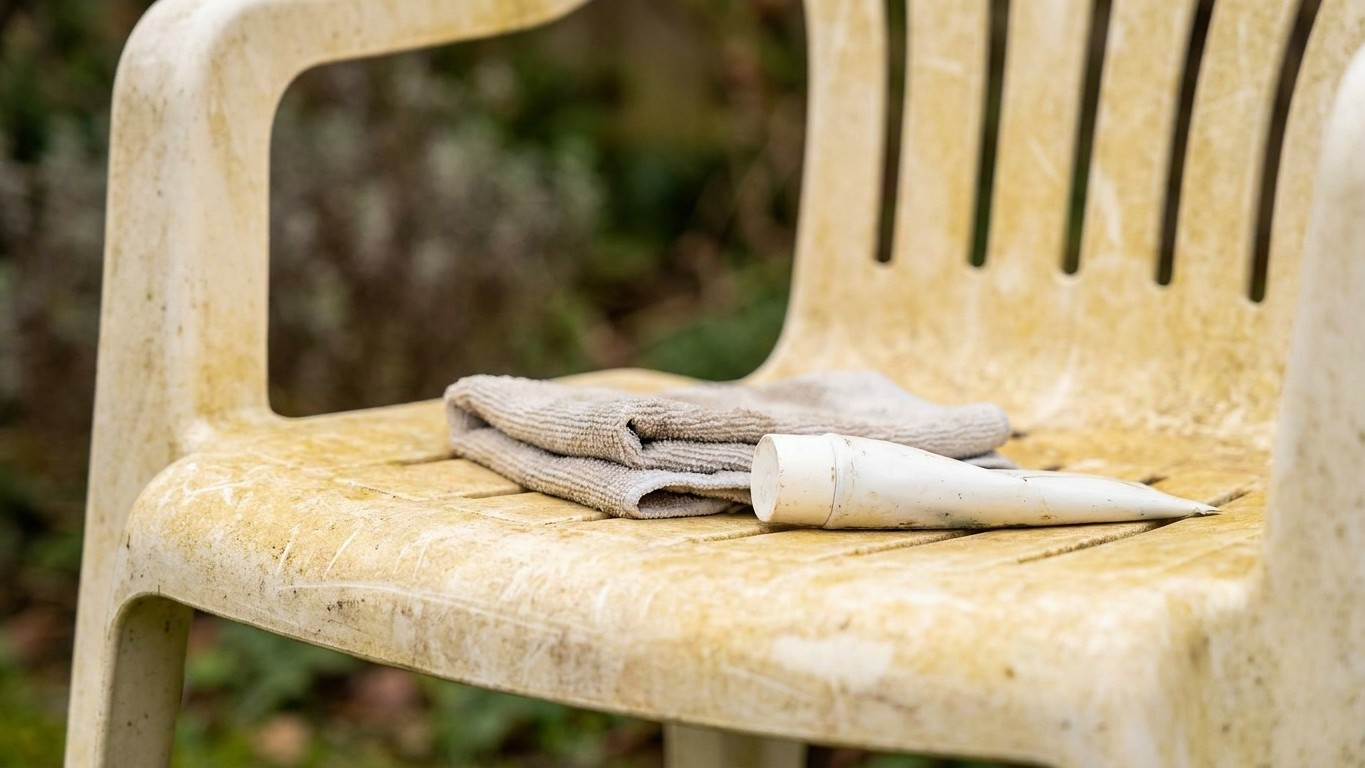
Toothpaste. That is what my neighbour Derek was rubbing onto his four garden chairs one Tuesday evening, a plain, ordinary tube of white fluoride toothpaste applied with an old cloth. I thought he’d gone quite mad, honestly. Those chairs had been sitting out in his garden for the best part of a decade, yellowed from cream to the colour of old mustard. But the following morning, I had to eat my scepticism along with my toast. They looked, well, white again. Not factory-fresh, but remarkably close. Curious, I went to find out exactly why it worked — and whether the other tricks people swear by are equally worth the bother.
Key takeaways
- One unexpected household item transformed severely yellowed chairs overnight in a way that seemed impossible
- The science behind why plastic yellows is more complex than surface dirt—and why some solutions work better than others
- Multiple methods exist for different levels of damage, each with surprising pros and cons you need to know
Why Your Plastic Chairs Go Yellow in the First Place
Plastic yellowing happens when polymer chains degrade, either in the presence of oxygen and UV light, a process called photooxidation, or under heat. The result is the creation of yellow-coloured compounds within the material itself. So when your chairs spend all summer baking on the patio and all winter sitting damp under a cover, both sunlight and temperature are steadily working against you. Oxidation occurs when UV rays and oxygen break down the outer layer of the plastic, leaving behind a faded, chalky surface that looks dull and feels rough to the touch.
The reason this matters is that the yellowing is not simply a layer of grime you’ve failed to wipe off. It’s a chemical change in the surface of the material. In the majority of plastics, yellowing is spontaneous and cannot be stopped entirely. That said, it can be dramatically slowed, and the visual damage can be largely reversed with the right approach, at negligible cost.
The Toothpaste Trick (and Why It Actually Works)
Back to Derek. Fluoride toothpaste is recommended by dentists to help clean and protect teeth, but its mild abrasive formula can also be used as a polish for many plastic surfaces around the home. The science is straightforward enough. Thanks to additions like calcium carbonate, calcium phosphate, and silica, toothpaste can be used to get stubborn scratches off glass, yes, glass, so it has no problem smoothing out rough surfaces on even tough outdoor plastic furniture. The microscopic abrasiveness gently buffs away the degraded top layer, while the cleaning agents lift ingrained grime at the same time.
The method itself takes about ten minutes per chair. Place a one- to two-inch strip of fluoride toothpaste on a soft rag, then apply it to the dirty or stained plastic in small circular motions. Apply more to particularly stubborn patches, wipe the area with the clean side of the cloth, and buff to achieve a clean and shiny finish. One thing worth knowing: it’s best to choose a non-gel, non-whitening toothpaste, as these tend to be less abrasive and work well for cleaning purposes. A whitening formula might sound more promising, but the extra abrasives could leave fine scratches on softer plastics.
Rinse thoroughly afterwards with a garden hose. The fresh, minty smell is pleasant in the bathroom, but it’s a little off-putting when sipping an iced tea on the patio after a day’s hard yard work, so do give the chairs a proper rinse and let them dry in the air before sitting back down with a cuppa.
Three Other Methods Worth Knowing
Toothpaste is brilliant for moderate yellowing, but if your chairs have been neglected for several years, you may need something with a bit more chemical clout.
White vinegar and baking soda are the natural pairing that tackles both surface grime and light oxidation. Vinegar is an excellent multipurpose cleaner that can be used to lift tough stains and loosen grime. After wetting the chairs down, create a solution by adding a quarter-cup of vinegar to a standard-sized bucket of warm water. For the chalky, oxidised patches, use a mixture of baking soda and water to form a paste, apply it directly to the affected areas, and scrub with a soft-bristle brush in circular motions, baking soda’s mild abrasiveness lifts oxidation without damaging the surface. Together, these two handle most situations that a standard soap-and-water wash can’t shift.
Hydrogen peroxide is the choice when the yellowing is deep and neither vinegar nor toothpaste makes much headway. Yellowed plastic often results from prolonged exposure to UV light, which breaks down the material’s polymers and causes discoloration. Hydrogen peroxide, a mild bleaching agent, can reverse this process by oxidising the yellow compounds, effectively restoring the plastic’s original whiteness. Apply it with a cloth to the yellowed areas and leave it in the sun for two to three hours. Use a 3% concentration, which is the standard available at most pharmacies. Do wear rubber gloves, and keep it away from any coloured fabrics nearby.
A word of caution on bleach, which is often the first thing people reach for. Bleach can actually cause yellowing on white plastic chairs if it is left on for more than 10 minutes, and you should never apply it straight, always dilute it. Using any product with bleach or chlorine can cause long-term damage because the bleach will eat away at the plastic over time. Reserve it for genuinely severe cases, and follow the dilution carefully: mix one part bleach to four parts water, apply to the yellowed parts, and leave it for no more than 10 minutes so as not to damage the material.
Keeping Them White Once You’ve Got Them There
All that effort deserves to last more than one summer. Once the chairs are clean and dry, applying a thin protective layer goes a long way. Car paste wax helps keep plastic chairs shiny. Dip a soft, dry cloth in the wax, rub it all over each chair, let it sit on the surface for about five minutes, and then buff it away with a clean, dry cloth. The wax creates a thin barrier that makes it harder for grime to embed itself and slows down the next round of UV damage. Do apply it sparingly, though, applying too much wax could trap moisture underneath, leading to mould forming, and it can also leave a greasy residue on smooth plastics that attracts dust and dirt.
Storage habits matter just as much as cleaning. Clean regularly, store the chairs covered in winter, and consider a UV-protection spray after cleaning, especially for white plastic. If you can’t bring them indoors, a breathable furniture cover draped over them between uses makes a meaningful difference, covers block UV rays and extend the life of your furniture while keeping it clean and dry in the event of rain.
One last thing, and it surprised me when I looked into it: when washing plastic furniture, avoid harsh scrub brushes or scoring pads, as these can scratch the plastic and make it harder to clean in the future. Those scratches create tiny grooves where dirt and oxidation take hold far more readily next season. A soft sponge or microfibre cloth does the job just as well, and your chairs will thank you for it the following spring.
Sources : housedigest.com | news-eng.uaportal.com