
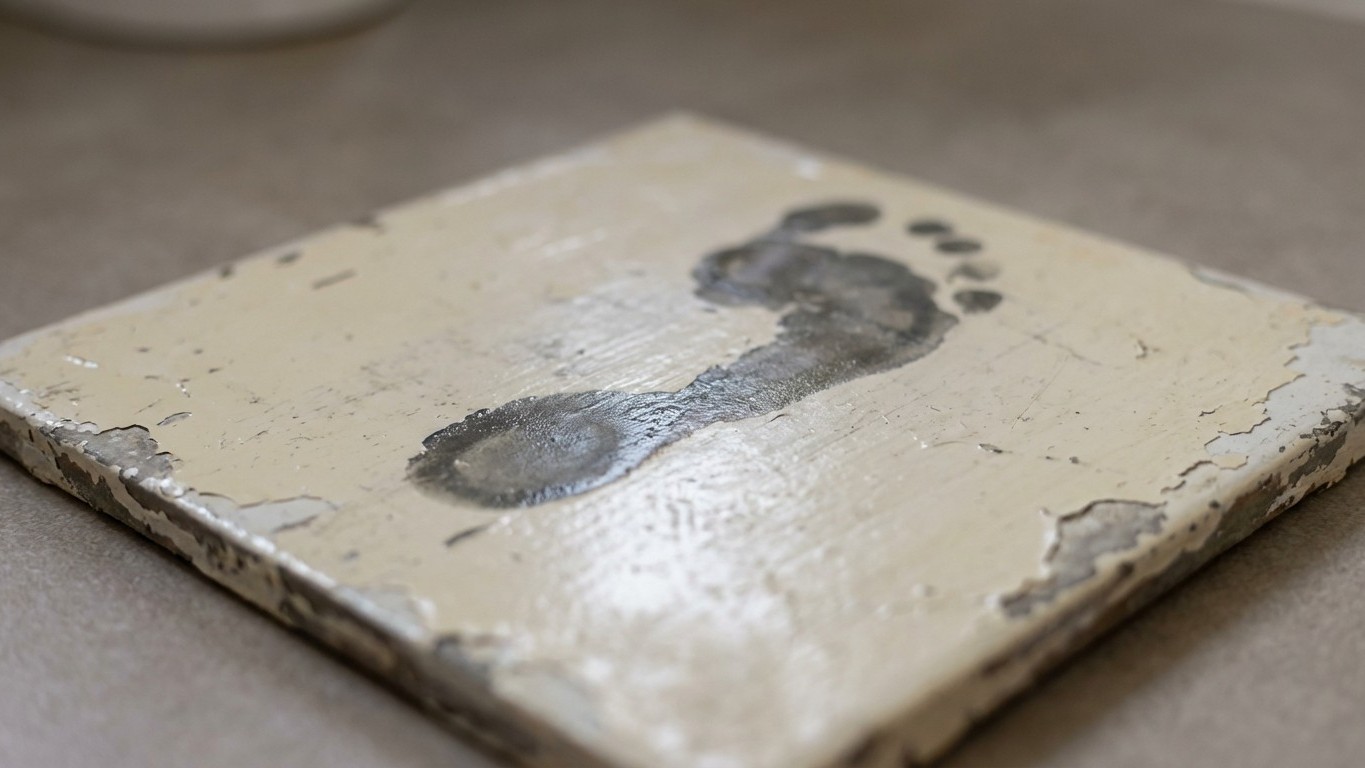
Bathroom tiles that need refreshing are one of the most tempting DIY targets in any home. A lick of paint, a weekend of effort, and that tired avocado-green floor looks almost new again. Except it doesn’t, not for long. The bathroom floor is the one place where even the most carefully applied, specialist tile paint is fighting a losing battle from day one, and the evidence from the paint manufacturers themselves is remarkably candid about this.
Key takeaways
- Paint manufacturers explicitly advise against painting high-traffic bathroom floors—but most homeowners don’t know this
- Three forces destroy painted bathroom floors simultaneously: footsteps, moisture, and the glossy tile surface itself
- Real reviews show consistent failure patterns within 1-5 years, with the heaviest wear appearing exactly where you stand daily
Why the Floor Is Different from Every Other Tiled Surface
You can get away with painting bathroom wall tiles. Backsplashes too, provided they’re away from the direct splash zone. The walls of a shower, with enough determination and the right epoxy, can hold a painted finish for a year or two. But the floor? That’s a different story altogether.
Constant foot traffic and friction will cause the paint to wear prematurely. Paint manufacturers themselves do not recommend painting over floor tile. Sherwin-Williams put it plainly in their own guidance: it’s best to avoid painting tiles in high-traffic areas, floors or locations that come in frequent contact with moisture, because ceramic tile paint lasts longer and maintains a good look when left undisturbed by touch and moisture. That phrase “undisturbed by touch and moisture” is really the key to understanding the whole problem. A bathroom floor is, by its very nature, never undisturbed.
Three forces conspire against the painted bathroom floor simultaneously. There’s the mechanical wear of feet shuffling back and forth, every morning, every evening, in wet socks and bare feet. There’s the moisture from showers and baths that settles on the floor and slowly works its way beneath the paint film. In high-moisture areas like bathrooms, direct exposure to water will cause the paint to blister and peel. And then there’s the surface itself: glossy tiles are among the more difficult substrates to prep for top coating, which means adhesion is already compromised before anyone has taken a single step.
What the Honest Reviews Actually Tell Us
Real-world experience bears this out with a consistency that’s almost poetic. There is noticeable wear and tear in the high traffic areas of the tile, especially along the edges. That pattern repeats in review after review. Touch-ups are needed especially around the toilet, whether from lack of preparation, shoes rubbing against the floor, or moisture from the shower causing the area to wear down. One particularly honest account noted that after five years, the only tile that had deteriorated was, predictably, the one exception — the tile stood on every day at the sink.
Tile paint, if applied properly, does not peel off, but it can wear off or chip off over time in more high-traffic areas. That distinction between peeling and wearing matters. Peeling suggests a preparation failure. Wearing is simply the inevitable physics of a hard, painted surface being walked on while wet, day after day. You cannot prep your way out of that particular problem.
The numbers on longevity are sobering, too. With epoxy paint and sealer, painted tiles typically last 2 to 5 years, depending on traffic and moisture. For bathroom floor tiles specifically, real-life results tend toward the lower end of that range, and in busy family bathrooms, sometimes considerably less.
The Science Behind Why Paint Simply Won’t Bond Properly
There’s more going on here than just wear. The actual chemistry of paint adhesion is working against you on a bathroom floor. Inexpensive PVA paints, when they get wet or are even in a humid environment, soften up and lose their adhesion to the substrate, the paint film comes apart and starts to peel off. Even more resilient formulas face the same underlying issue: regular wall or latex paint won’t hold up on tile; always use tile-specific or epoxy-based paint made for floors and moisture.
Preparation matters enormously too, but there are limits to how much it can help. Getting the substrate completely clean, including any cleaner residue, is paramount, because contaminants on the tile will cause paint failure sooner or later. The glossy factory finish on most bathroom floor tiles creates a slick, non-porous surface. Lightly sanding with fine-grit sandpaper roughens the surface, allowing the primer to bond properly, but that mechanical bond remains far weaker than on a porous surface like plaster or bare wood. Every time someone steps from a wet shower onto those tiles, they’re testing that bond. Eventually, they win.
Constant humidity or standing water can shorten the lifespan of any painted tile floor, which is precisely why the bathroom is the worst possible room to attempt this project. The humidity alone, even without direct contact, is enough to accelerate the breakdown of the paint film over time.
What to Do Instead, or What Will Actually Last
If the tiles on your bathroom walls need refreshing, paint away. Your best bet is painting over tile on walls and vertical surfaces that are not in high-traffic areas and do not have direct exposure to water. A well-primed, properly painted wall tile can look good for years. Bathroom or kitchen backsplash wipes off easily with satin enamel and, with no one walking on it or getting splashed with water daily, it holds up for years as long as you prime properly.
For the floor itself, the more durable alternatives are worth a frank look. Vinyl floor tiles, the self-adhesive sort, have improved enormously in quality and sit directly over existing tiles without the need for any removal. Properly installed, they can withstand bathroom conditions for a decade or more. Retiling, while a bigger upfront cost, is genuinely a permanent solution: painting tile is not necessarily a long-term solution; there’s no substitution for regular ceramic tile, which is known for its durability and can last for years.
If budget is tight and the tiles are structurally sound, painting tile floors can be a smart and budget-friendly way to refresh a bathroom, but it works best in low-traffic or guest bathrooms, or as a short-term makeover. A rarely-used downstairs loo? Fine. The main family bathroom with four people tramping through it twice a day? You’ll be repainting within a year or two, and the disappointment will outweigh the savings.
Perhaps the most useful question isn’t “how do I make this paint last?” but rather “what am I actually trying to solve?” Tiles that are discoloured can often be transformed with a thorough professional clean and re-grouting, a fraction of the cost of painting, and with none of the inevitable peeling. Sometimes the problem we think requires a creative fix is better solved by a good scrub and a tube of fresh grout. The bathroom floor has a way of reminding us of that truth, usually about eighteen months after we’ve painted it.
Sources : angelamariemade.com | ambertiles.com.au