
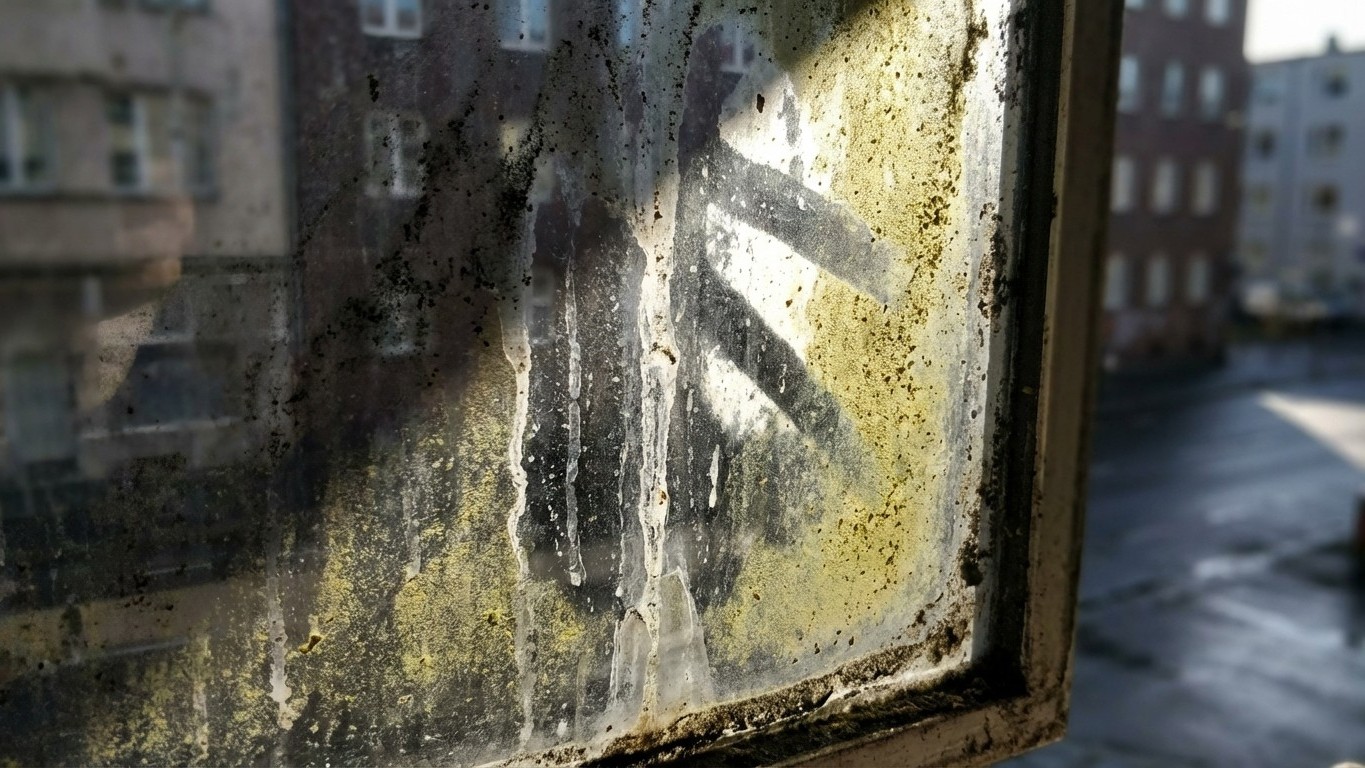
Very dirty windows are a different beast altogether. We’re not talking about the light dusty film you might wipe away on a Sunday morning, but the kind of griminess that builds up over weeks of urban pollution, rain cycles that leave chalky mineral deposits, and that sticky yellow pollen coat that descends every spring. These layers actually bond with the glass surface, and simply spraying and wiping won’t touch them. What you need is a proper strategy, the right natural ingredients, and a bit of patience. Here’s how to get it done without a drop of harsh chemical or a scratched pane.
Why Windows Get So Filthy in the First Place
Pollution and Its Invisible Deposits
If you live anywhere near a main road, a town centre, or even just a busy suburban street, your windows are collecting microscopic particles every single day. Traffic exhaust releases soot and oily hydrocarbons that cling to glass with remarkable tenacity. The surface of a window isn’t perfectly smooth at the molecular level, so these particles nestle into tiny pores and build up over time into a dark, greasy film. Rain makes things worse rather than better, because it mobilises these particles and then evaporates, leaving concentrated residue behind. In cities, studies on urban air quality have shown that fine particulate matter settles on every outdoor surface continuously, which is why windows in urban areas can look visibly grimy within just a few weeks of cleaning.
Rain and the Cycle of Stubborn Marks
Rainwater is never truly clean. It picks up airborne dust, pollen, and pollutants as it falls, then deposits everything onto your glass as the water evaporates. What’s left behind are those infuriating white ring marks and streaks, caused primarily by dissolved minerals like calcium and magnesium in hard water areas (and much of England falls into the hard water category). These mineral deposits are mildly alkaline, which is actually useful information when you’re thinking about which natural cleaning agent to reach for.
Pollen: Seasonal But Surprisingly Sticky
Pollen grains are coated in proteins and oils specifically designed by nature to help them adhere to surfaces. Brilliant for plant reproduction, rather less welcome on your sitting room window. During spring and early summer, a single heavy pollen day can leave a visible yellow-green layer across every exposed surface. Dry wiping it away simply grinds it into the glass, and water alone won’t dissolve the oily coating. You need a surfactant, which is where natural soap comes in.
Before You Begin: Sensible Preparations
Getting Your Materials Together
Rushing straight at a very dirty window with a spray bottle is how you end up with scratched glass and an afternoon of frustration. A few minutes of preparation makes the whole process far more effective. You’ll want two buckets (one for washing solution, one for rinsing), a soft-bristled brush or dry microfibre cloth for the initial sweep, a good-quality squeegee if you have one, and several clean microfibre cloths. Avoid paper towels and newspaper (yes, newspaper is still suggested in older guides, but it leaves ink residue on frames). If you’re tackling exterior windows from any height, please do make sure you’re working safely, whether that means a sturdy step stool or asking someone to hold a ladder.
For your cleaning solutions, gather white wine vinegar, bicarbonate of soda, a bottle of castile soap, and optionally some rubbing alcohol (methylated spirits work well for very greasy deposits). All of these are inexpensive, widely available, and genuinely effective.
A Step-by-Step Method for Very Dirty Windows
Step 1: Dry Pre-Cleaning to Remove Loose Deposits
Before any liquid touches the glass, remove the loose material first. Use a soft dry brush or a clean dry microfibre cloth to sweep away dust, dead insects, pollen, and dried mud from the glass and frame. Work from top to bottom. This step alone can transform how easy the rest of the process is. Skipping it means you’re pushing grit around in your cleaning solution, which is exactly how fine scratches happen.
Step 2: The First Wash with Natural Cleaners
For windows with a combination of pollution film, pollen residue, and rain deposits, a simple vinegar spray often isn’t enough on the first pass. Start with warm water and a few drops of castile soap in a bucket. Castile soap’s plant-based surfactants break down the oily pollen coating and lift the greasy pollution film from the glass surface. Wash the window generously with a soft cloth or a non-abrasive sponge, working in sections. Don’t let the solution dry on the glass.
For stubborn patches, make a paste of bicarbonate of soda and a small amount of water, apply it to the problem area with your fingertip, and leave it for two to three minutes. Bicarbonate is a very mild abrasive (softer than glass), and its slight alkalinity helps break down the acidic components of urban grime. Rub gently in small circles, then rinse thoroughly.
Step 3: The Vinegar Rinse for Mineral Deposits
This is where white vinegar earns its reputation. Mix one part white wine vinegar with two parts water in a spray bottle and apply it across the whole window. The acetic acid in the vinegar dissolves the calcium and magnesium mineral deposits left by hard water rain, the ones responsible for those chalky white marks. Leave it for a minute or so to work, then wipe off. For a detailed recipe breakdown and proportions suited to different levels of grime, the guide on making a homemade glass cleaner vinegar and alcohol is worth bookmarking.
Step 4: Streak-Free Finishing
The final wipe is where most people go wrong. Use a clean, dry microfibre cloth and work in a single direction, either straight across or top to bottom, never in circles. A squeegee is actually faster and often gives better results on larger panes. Wipe the squeegee blade with a dry cloth after each stroke. If you notice faint streaks remaining, a light buff with a dry cloth should sort them out. For more technique on achieving a truly clear finish, the piece on how to clean mirrors naturally without streaks covers the same principles and transfers directly to window glass.
Natural Cleaning Recipes Adapted to Serious Grime
The standard vinegar-and-water mix is a good starting point, but heavily soiled windows respond better to a slightly more concentrated approach. For your spray, try one part white vinegar to one part water (rather than the usual one to three ratio), with five drops of castile soap added. This gives you both the dissolving power of acetic acid and the surfactant action of the soap in a single application.
When pollen is the primary problem, add the juice of half a lemon to your bucket of warm soapy water. Lemon juice is mildly acidic and contains natural compounds that help cut through the oily pollen proteins. Some people swear by this for spring cleaning windows, and I’m inclined to agree with them.
For windows with a distinctly greasy or dark pollution film, a splash of methylated spirits (about one tablespoon per 500ml of water) added to your vinegar spray will cut through the hydrocarbons far more effectively. This is one of those cases where a small addition makes a meaningful difference. The broader world of natural cleaning hacks covers many such combinations, worth exploring once you’ve sorted the windows.
Mistakes That Make Things Worse
Dry rubbing is the biggest one. If you attack a dirty window with a cloth before wetting it, you’re dragging grit across the glass and risking fine scratches. Always wet the surface thoroughly first.
Cleaning in direct sunlight is genuinely counterproductive. The heat causes your cleaning solution to evaporate before you can wipe it off, leaving exactly the kind of streaks you’re trying to avoid. Choose a cloudy day or work in the shade. Early morning or late afternoon on a bright day is a reasonable compromise.
Using one cloth for everything is another common error. A cloth that’s already picked up dirty residue will redistribute it. Have several clean cloths to hand and change them as they become soiled.
Choosing the Right Cloth and Tools
Microfibre cloths are the clear winner for window cleaning, partly because their fine fibres trap particles rather than pushing them around, and partly because a good microfibre cloth used slightly damp leaves virtually no lint. Look for cloths with a high GSM (grams per square metre) rating, as these tend to be more absorbent and durable.
A rubber-bladed squeegee is worth the modest investment if you have large windows. It removes liquid more efficiently than any cloth, and the technique becomes second nature quickly. If you’d prefer to avoid plastic, look for squeegees with wooden or aluminium handles and replaceable rubber blades, which are widely available and last for years.
For more on tool choices and specific approaches, the roundup of natural window cleaning hacks covers a range of surfaces and situations in useful detail.
Making the Results Last Longer
Here’s something genuinely useful that most cleaning articles skip over: static electricity is a significant reason why windows attract dust so quickly after cleaning. Glass naturally builds up a static charge, which acts like a magnet for airborne particles. After your final rinse and dry, buff the glass lightly with a dry microfibre cloth in one direction. This redistributes the surface charge and measurably slows dust accumulation.
Some people apply a very thin layer of diluted glycerine (one part glycerine to ten parts water) to the glass after cleaning and buff it off. This leaves an almost imperceptible hydrophobic layer that causes rain to bead and run off rather than spreading, which reduces the mineral deposit problem considerably. It’s not a permanent solution, but reapplying it every month or two makes a real difference in how quickly your windows deteriorate between cleans.
Trimming back any plants or trees close to exterior windows also helps, as overhanging vegetation dramatically increases pollen and sap deposits on the glass below.
Frequently Asked Questions
How do I clean very dirty windows quickly with natural products? The fastest effective approach is a two-stage process: a soapy wash with castile soap to lift the grime, followed immediately by a vinegar spray to dissolve mineral deposits, then a squeegee to finish. Don’t skip the pre-dusting step or you’ll slow yourself down considerably.
What’s the best natural mix for pollution and persistent marks? A concentrated vinegar solution (one to one ratio with water) with a splash of methylated spirits and a few drops of castile soap handles most combinations of urban grime and hard water marks. For particularly stubborn spots, a bicarbonate paste applied briefly before the main wash does the heavy lifting.
How do I stop pollen and dirt coming back so fast? The glycerine trick mentioned above genuinely helps. Beyond that, the single most effective thing is to clean more frequently rather than waiting until the build-up becomes severe. Lighter, more regular cleans are faster and preserve the glass better over time than occasional intensive sessions. Which, when you think about it, is true of most things worth maintaining.