
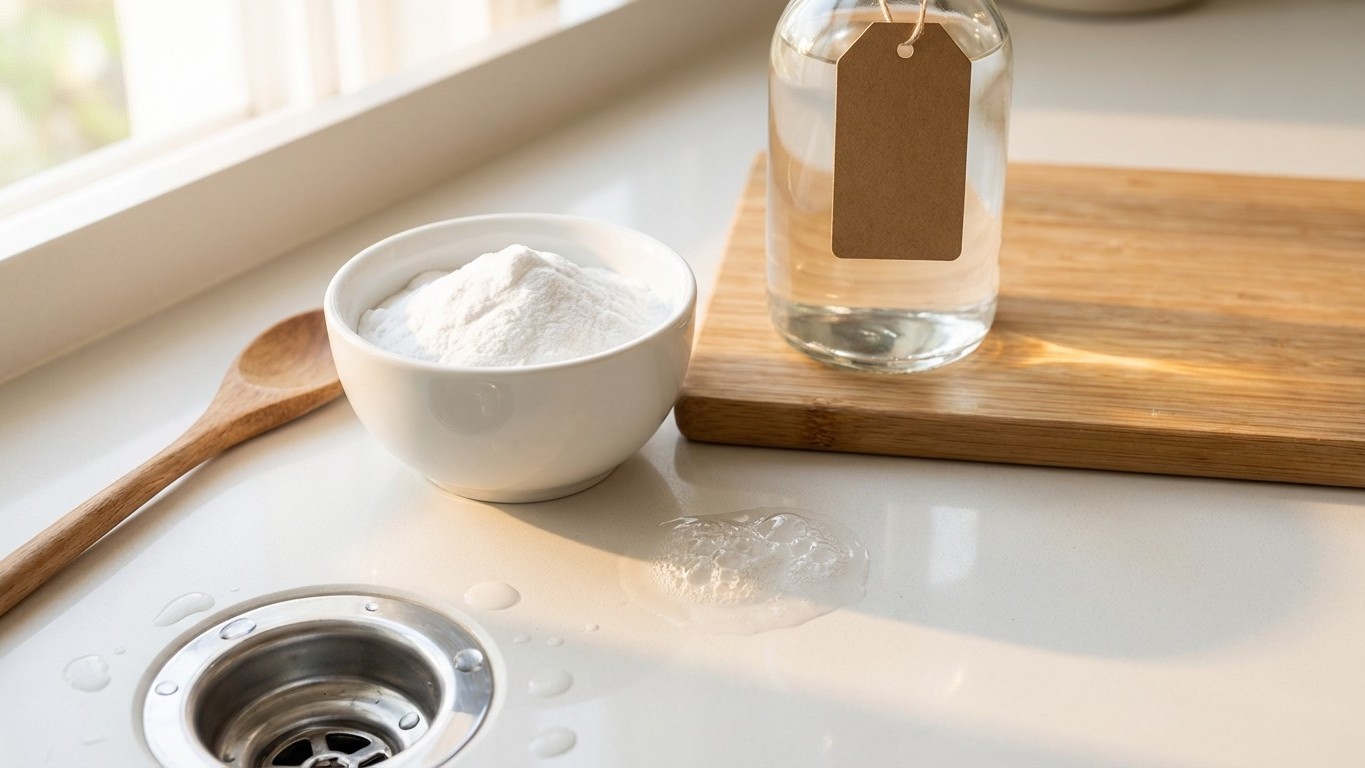
Two humble store-cupboard staples, sitting quietly in your kitchen, and yet together they can transform the state of your drains without a single drop of harsh chemical. The combination of bicarbonate of soda and white vinegar has been doing the rounds in British households for generations, and for good reason. It fizzes, it cleans, it deodorises, and it costs next to nothing. But there’s a right way and a wrong way to go about it, and knowing the difference can save you both frustration and plumbing bills.
Why Clean Your Drains Naturally?
Most of us reach for a bottle of chemical drain cleaner the moment the sink starts draining slowly. It’s understandable, those products promise instant results, and when you’re standing in a puddle in the shower, patience wears thin. The trouble is, many commercial drain unblockers contain sodium hydroxide (lye) or sulphuric acid. These are genuinely aggressive substances. They can corrode older pipework, particularly the rubber seals in joined pipes, and they don’t simply vanish once they’ve done their job — they flow into the water system and, eventually, the wider environment.
The Risks of Chemical Drain Cleaners
Beyond the environmental concern, there’s the question of safety in the home. Chemical unblockers can cause serious burns on skin contact, release toxic fumes in enclosed bathrooms, and become genuinely dangerous if accidentally mixed with other household cleaners. Households with children, pets, or anyone with respiratory sensitivities have every reason to think twice before keeping these products under the sink.
The Case for Natural Solutions
White vinegar costs roughly the same as a cup of tea to buy. Bicarbonate of soda is even cheaper. Together, they handle the most common causes of slow drains, grease buildup, soap scum, and minor organic blockages, without risk of harm to your family, your pipes, or the rivers downstream. For anyone already exploring natural cleaning hacks around the home, maintaining clean drains naturally is a logical, satisfying extension of that approach. Zero waste, zero toxicity, genuine results.
How Bicarbonate and Vinegar Actually Work on Drains
The Chemistry, Simply Explained
When bicarbonate of soda (an alkaline powder) meets white vinegar (an acidic liquid), they react to produce carbon dioxide gas, water, and a sodium acetate solution. That dramatic fizzing you see isn’t just theatrical, it creates physical agitation inside the pipe, which helps to loosen soft deposits clinging to the walls. The mild acidity of the vinegar then works on grease and soap residue, helping to break them down enough to be rinsed away.
What this method does well: it shifts slimy organic buildup, neutralises odour-causing bacteria, and keeps regularly-used drains flowing freely. What it cannot do is dissolve a solid blockage, a clump of compacted hair, a fragment of food waste, or anything non-organic. Think of it as a maintenance treatment rather than an emergency rescue operation.
Limits and Precautions Worth Knowing
One thing to be aware of is frequency. The acidity of white vinegar, used very often, could theoretically affect certain materials over time, particularly old lead pipes or some older rubber seals. For most modern plumbing, this isn’t a concern with occasional use, but it’s sensible to avoid treating the same drain more than once a fortnight. Also, never combine this method with a commercial drain cleaner, even if a previous attempt with chemicals has just been made. Mixing substances in a confined pipe is never a good idea.
The Complete Step-by-Step Method
What You’ll Need
The shopping list here is wonderfully short. You’ll need bicarbonate of soda (the plain baking variety, not baking powder), white wine vinegar or distilled malt vinegar, boiling or very hot water, a kettle, and optionally a drain cover or old cloth to loosely block the drain opening during treatment. That’s genuinely everything.
Preparing the Drain
Before anything goes down the plughole, take a moment to clear what you can see. Remove the drain cover or plug strainer and, wearing a pair of rubber gloves, pull out any visible hair, soap fragments, or debris. It’s not the most pleasant minute of your day, but it makes a real difference to what follows. Then pour a full kettle of hot water slowly down the drain. This softens grease deposits and gets things moving before the main treatment begins.
Precise Dosages and Detailed Steps
Start with 4 tablespoons (approximately 60g) of bicarbonate of soda. Pour it directly down the drain, trying to get as much of the powder into the pipe as possible rather than leaving it pooled around the plughole. Follow immediately with 250ml (a large mugful) of white vinegar. You’ll hear and see the fizzing reaction start almost at once.
Now, and this is the step most people skip, place something loosely over the drain opening. An old flannel, a folded cloth, even the plug itself will do. The idea is to direct the fizzing action downward into the pipe rather than letting it all escape upward and dissipate into the air. Leave this in place and don’t disturb the drain.
How Long to Leave It
Give the mixture at least 20 to 30 minutes to work. For particularly stubborn odours or a slow-draining sink, leaving it for a full hour is better still. Some people treat problem drains before bed and rinse them through in the morning, perfectly safe, and the extended contact time does help with grease.
Rinsing and Post-Treatment Tips
Finish by pouring another full kettle of very hot water down the drain in a steady, slow stream. This flushes away everything that’s been loosened. If the drain smells significantly better but is still a little slow, a second treatment a week later often does the trick. For ongoing freshness, a squeeze of lemon juice left to sit for ten minutes, followed by a hot water rinse, is a gentle way to maintain things between treatments. You’ll find more ideas for keeping the whole home naturally fresh in this guide to natural disinfecting cleaning hacks.
How Often Should You Treat Your Drains?
Frequency by Room
Kitchen sinks deserve the most attention, simply because cooking grease is relentless. A monthly treatment keeps fat from building up in the pipes and stops that unpleasant rotten-food smell developing. Bathroom and shower drains, which accumulate hair and soap residue, benefit from treatment every six to eight weeks. The bath, which tends to be used less frequently than the shower, can usually manage with treatment every two months or so. WC drains are a slightly different case, the bicarbonate and vinegar method is less suited here, and a dedicated natural drain maintenance routine using hot water and a small amount of washing soda is more appropriate.
Preventing Blockages and Bad Odours: Simple Natural Routines
Weekly and Monthly Maintenance Recipes
Once a week, simply pouring a full kettle of boiling water down the kitchen sink after washing up costs nothing and prevents grease from solidifying in the upper section of the pipe. Once a month, the bicarbonate and vinegar treatment described above keeps things properly clear. If you’re keen to explore a broader range of natural home maintenance approaches, the ideas collected in natural cleaning hacks cover everything from worktops to washing machines.
Daily Habits That Make a Difference
The most effective prevention is simply stopping the problem before it starts. A cheap mesh drain strainer over the kitchen plughole catches food scraps before they enter the pipe. Wiping greasy pans with kitchen paper before washing them reduces the amount of fat going down the drain considerably. In the bathroom, a hair catcher in the shower takes seconds to empty and can prevent a proper blockage forming over months. These small habits compound over time into a system that practically maintains itself.
When Bicarbonate and Vinegar Isn’t Enough
Sometimes a drain is simply too blocked for a fizzing mixture to shift. Compact hair tangles, built-up limescale, or foreign objects require a different approach entirely.
A plunger is the obvious first step, straightforward, cheap, and surprisingly effective when used correctly (seal around the plughole fully before pushing). Boiling water poured repeatedly in stages can shift pure grease blockages that have hardened in the pipe. A drain snake or flexible wire tool, available from any hardware shop, can physically break up or retrieve a solid mass further down the pipe. For kitchen drains with serious grease accumulation, washing soda crystals dissolved in very hot water is a stronger natural option than bicarbonate.
If the drain remains completely blocked after all of the above, or if you notice water backing up in multiple fixtures at once (which can signal a problem with the main stack or sewer connection), calling a qualified plumber is genuinely the right call. No home remedy should be a substitute for professional attention when the situation warrants it. You can find further guidance on naturally maintaining clean, healthy surfaces throughout the home in this article on natural ways to disinfect surfaces at home.
Practical FAQs: Answers to Common Questions
Does Baking Soda and Vinegar Really Clean Drains?
Yes, with an important qualifier. It cleans and deodorises effectively by loosening organic buildup, grease, and soap scum. It is not a chemical solvent and will not dissolve a solid obstruction. Used regularly as a maintenance treatment, it genuinely keeps drains fresher and flowing well.
How Much Do You Need?
The quantities that work consistently are 60g (about 4 tablespoons) of bicarbonate of soda followed by 250ml of white vinegar. Doubling the quantities doesn’t double the effectiveness, what matters more is good contact time and the hot water rinse afterwards.
How Often Can You Use It Safely?
For most modern plastic or copper pipework, once every two to four weeks is comfortable. More frequently than fortnightly isn’t necessary for maintenance purposes and, with very old pipework, it’s better to err on the side of caution and keep it to monthly.
Is It Safe for All Types of Pipes?
For standard modern plumbing (plastic PVC or copper), occasional use presents no problem. If your home has very old cast iron pipes or visible rubber joints in an older property, reduce frequency and avoid letting the vinegar sit for longer than 30 minutes. If in any doubt, a hot water flush alone is still beneficial.
What Types of Blockages Can It Treat?
Grease buildup, soap scum, light limescale coating, bacterial slime, and organic odours respond well. Solid blockages caused by hair tangles, food debris, or objects require physical removal first.
Keeping a bag of bicarbonate and a bottle of vinegar under the kitchen sink is, in a way, a small act of household wisdom passed down through generations, one that happens to align rather neatly with how we want to live now. If you’re curious about extending this approach to other overlooked corners of the home, the ideas for how to how to clean bin naturally and remove smell are well worth a look. Sometimes the oldest remedies really are the best ones.