
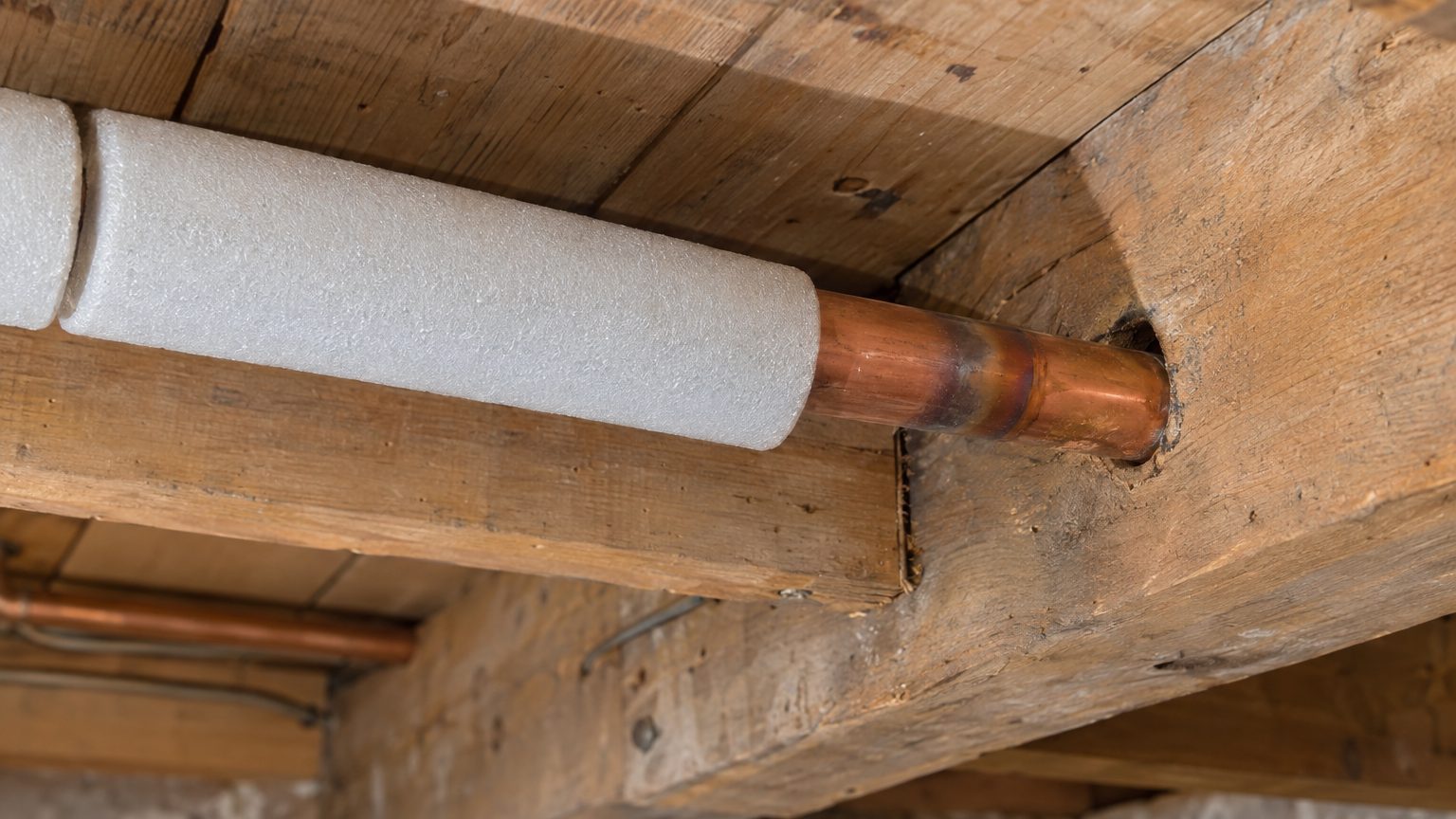
Radiator ticking is almost always metal on the move. When hot water surges through a cold pipe, the pipe grows slightly longer, and wherever it rubs against a clip, a joist or a floorboard it sticks, slips and ticks. The sound is the pipe creeping forward in tiny jerks.
Annoying, yes, but rarely dangerous.
- A 10-metre copper pipe expands by roughly one centimetre when heated from 15°C to 75°C, causing friction ticks.
- Pipes wedged in floor joists or pressed against wood are the usual culprits, creating the characteristic stick-slip sound.
- Foam pipe insulation and thin felt padding between pipe and wood are the cheapest and most effective solutions.
Why the ticking starts the moment the heating fires up
The sums are surprisingly large. A 10-metre run of copper pipe heated from a chilly 15°C to 75°C lengthens by roughly a centimetre. That is plenty of travel for a pipe wedged tightly in a notch in a joist. Add a floorboard pressing down on top and you have the perfect set-up for a tick.
The noise tends to come in the first few minutes of a heating cycle, then again as everything cools. Pipes running under floors, through joists or tight behind the radiator itself are the usual suspects.
Not every noise in a heating system is ticking, mind. Gurgling usually points to trapped air, a rumble or bang like a kettle coming to the boil suggests sludge or limescale, and a high whistle is often a thermostatic valve or water flowing too fast. Ticking, by contrast, follows the pipes.
That is the easy one to cure.
Tracking down where the tick lives
Ask someone to switch the heating on while you walk slowly around the house with your ears open. A cardboard kitchen roll tube held against a pipe, with the other end at your ear, makes a decent homemade stethoscope. Ticking that travels along the floor between rooms means pipes in the joists. Ticking that stays put at the radiator suggests the brackets, or the spot where the pipe rises through the floor.
Lift the carpet edge and look at where the pipes disappear into the boards. Often a bare copper pipe is pressed straight against the edge of a hole, and that alone is the culprit.
Notice the timing too. A tick that begins a minute or two after the boiler fires, and returns as the pipes cool, is thermal expansion. A noise that carries on steadily whatever the temperature is a different problem altogether.
Cheap fixes, starting with the gentlest
Where pipes are within reach, slip foam pipe insulation over the section touching wood, and add a small felt pad wherever a radiator rests on its brackets. Both cushion the metal as it slides, and the lagging keeps a little more heat in the water.
Under floorboards, the job takes patience rather than skill. Mark the boards with chalk or take a phone photo before lifting, check for cables and pipes before using any tool, and use a flat bolster chisel rather than a crowbar. Once the pipe is exposed, tuck a strip of felt, thin rubber or folded foam lagging between pipe and joist notch. Refit the boards with screws, not nails, so you can get back in next winter.
Do not enlarge notches in joists, since they carry the weight of the floor, and cushioning is the safer route. Loose or missing pipe clips are worth checking too, because a pipe that swings freely will knock as well as tick. Clips roughly every metre on straight runs keep things steady.
My mother’s cure was a folded tea towel, and it worked.
Turning down the boiler’s flow temperature helps as well. Many condensing boilers run more efficiently with the water at around 60°C or below, and a gentler rise in pipe temperature means gentler movement and less ticking. If the dial is not obvious, check the manual before fiddling, and leave the hot water settings alone.
When ticking is a symptom of something else
Noise alongside cold patches at the bottom of radiators, or a boiler that rumbles like a kettle, points to sludge or limescale. Bleeding a radiator with the key at the top corner, until water rather than air hisses out, sorts trapped air but does nothing for sludge. A system that has not been cleaned for years may need a chemical flush, with inhibitor added afterwards to slow corrosion. Anything involving the boiler itself belongs with a Gas Safe registered engineer.
Pipework is another matter, and a competent plumber can re-clip or re-route a stubborn run without much fuss. Ask them to look at it while they are in the house for something else.
One last wrinkle: plastic heating pipe expands several times more than copper per degree, yet it tends to be quieter, because it is softer and flexes rather than snags. That is why a house re-piped in plastic can feel hushed while a copper one ticks away. Stubborn copper under old floorboards, though, usually needs nothing more than that bit of felt.