
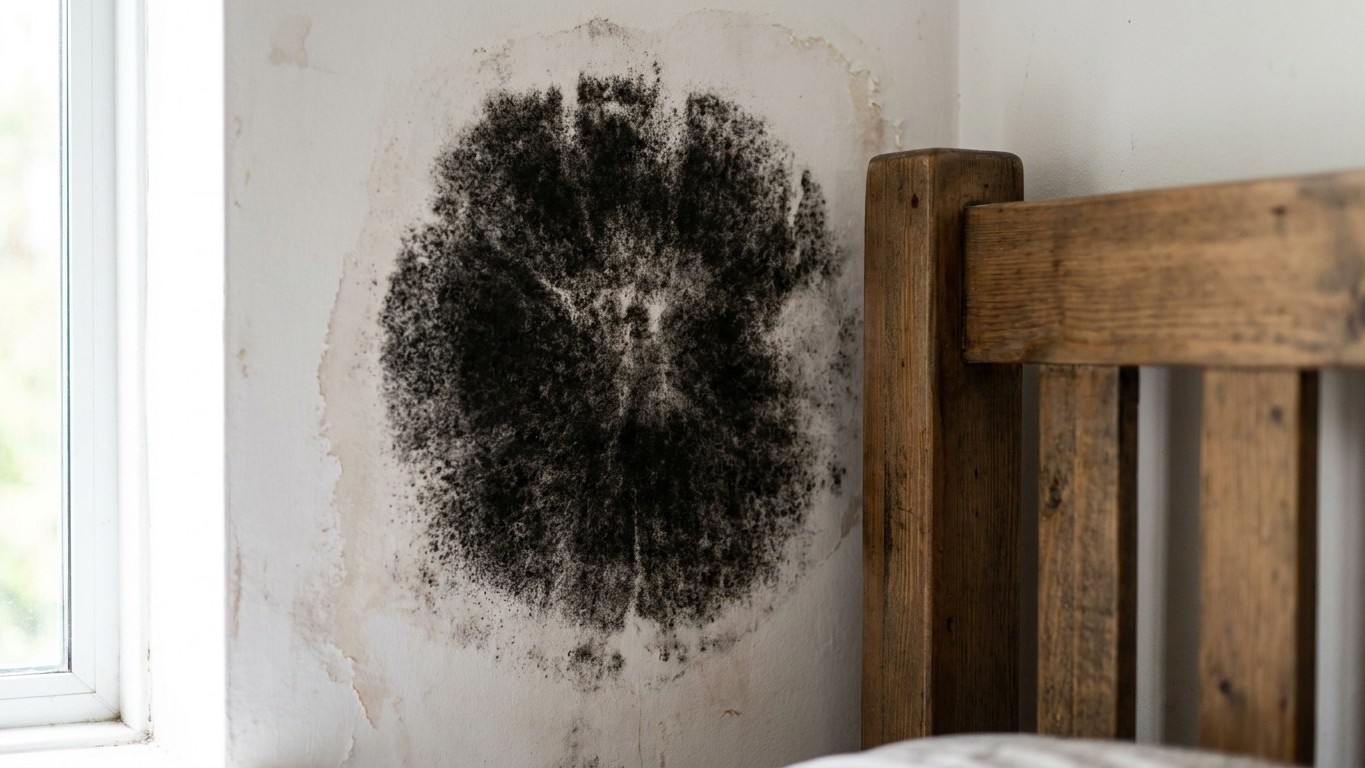
Six weeks of taping over that little slotted vent at the top of my bedroom window seemed like a triumph over the British winter. No more icy trickle sneaking down the back of my neck at 3am. Then I pulled the bed away from the wall to hoover underneath, and found a patch of fuzzy black spots the size of a dinner plate creeping up the plaster, with a smell like wet cardboard that had been there far longer than I’d realised.
Key takeaways
- What happened when one person decided to tape shut their bedroom window vent during a cold snap
- The surprising scientific reason why two people breathing in a sealed room creates a perfect storm for black mould
- A simple 10-centimetre adjustment that stopped the problem dead—and cost absolutely nothing
What that little vent was actually doing
That slim opening at the head of my window frame is called a trickle vent, and it isn’t there to annoy you. It’s a small, manually adjustable opening integrated into a window or door frame that provides constant background ventilation, allowing fresh outside air to circulate naturally into a room while letting stale, damp air escape. Under current building regulations, they’re compulsory on most replacement windows precisely because trickle vents are now a legal requirement on most replacement windows to prevent indoor condensation and dangerous black mould.
Here’s the bit Nobody Tells You when you’re shivering in bed: every breath you take overnight adds moisture to the air in that room. When we cook, shower, dry clothes indoors, or even just breathe, we release moisture into the air. Two adults sleeping in a sealed room for eight hours produce a genuinely surprising amount of water vapour, and with nowhere to escape, it goes looking for the coldest surface it can find. In my case, that was the external wall directly behind my headboard, a spot the sun never reaches and the radiator never quite warms.
Why the bed against the wall made everything worse
I’d unknowingly created a perfect storm. Sealing the vent stopped the air exchange, and shoving the bed flush against an outside wall stopped the air circulation too. Condensation is also found in areas of little air circulation such as behind wardrobes and beds, especially when they are pushed up against external walls. Councils up and down the country say the same thing in almost identical words, which tells you how common this exact scenario is: it is also found where there is poor air circulation, such as behind wardrobes and beds, especially if they are against external walls.
The mechanism is straightforward once you see it. When walls are cold, moisture in the air will condense on the surface, making them damp to the touch, and in extreme cases beads of water will run down the wall. Trap that damp air behind a solid headboard with no vent to draw it away, and you’ve essentially built a little greenhouse for mould spores, minus the tomatoes. Behind furniture, when air can’t circulate properly moisture gathers, and this often happens behind wardrobes, beds or sofas placed against walls. I’d done both wrongs at once without realising either one on its own.
What really surprised me was the mould species doing the damage. It’s often Aspergillus and Cladosporium, which thrive in areas with poor ventilation such as behind furniture. These aren’t exotic invaders; they’re common household fungi just waiting for a cold, still, damp patch to colonise, and mine had had two full weeks of undisturbed peace to get established.
Dealing with what I found, and stopping it coming back
Health-wise, this isn’t something to shrug off. Local authority guidance is blunt about it: black mould produces allergens, irritants, and sometimes toxic substances, and inhaling or touching mould spores may cause an allergic reaction such as sneezing, a runny nose, red eyes, and a skin rash. Longer exposure has been linked to physical health impacts such as fatigue, weak immune systems, loss of cognitive function and headaches. Sleeping a foot away from that wall every night for a fortnight wasn’t my finest hour of household management.
First job was cleaning it properly, and gently. I carefully removed the excess mould with a damp cloth and disposed of it, and made sure not to brush mould as this releases spores into the air. A wipe-down with a proper mould and mildew spray followed, and once the wall had dried out fully, I gave it a fresh coat of paint. Councils recommend going further if you’re redecorating a problem spot: after treatment redecorate using a specialist bathroom or kitchen paint, and if wallpapering the area make sure to use a good quality paste with an anti-fungicidal additive.
The vent went back to doing its job immediately, tape peeled off and binned. But I didn’t stop there, because the vent alone wasn’t going to fix a bed jammed against an external wall. I shifted the frame out by about ten centimetres, roughly a hand’s width, which is all it takes. Leaving a gap between furniture and the wall allows for better airflow, and leaving a small gap between furniture and walls allows ventilation and reduces the chance of hidden mould growth. It cost nothing beyond a bit of elbow grease and mild embarrassment at how much dust had gathered back there.
I’ve also started opening the curtains and giving the room a proper airing first thing, rather than leaping straight into the shower. One council’s advice stuck with me: open bedroom windows for up to one hour after you wake. Heating habits mattered too. Instead of blasting the radiator on and off, I now keep a low, steady background warmth running, because in cold weather the best way to keep rooms warm and avoid condensation is to keep low background heat on all day rather than short bursts of high heat. A steadily warm wall simply can’t get cold enough for water vapour to condense on it in the first place.
None of this cost me a penny beyond the tin of mould-resistant paint, which was money far better spent than the roll of tape I’d used to seal that vent shut in the first place. If you’ve done something similar, and I suspect plenty of us have during a cold snap, it’s worth checking behind the headboard before the second cold week turns into the second cold month. The vent was never the enemy. The draught was just doing its job rather too well for my liking, and the wall behind my bed was quietly paying the price for my quick fix.
Sources : slimbridgebnb.com | bpfonline.co.uk