
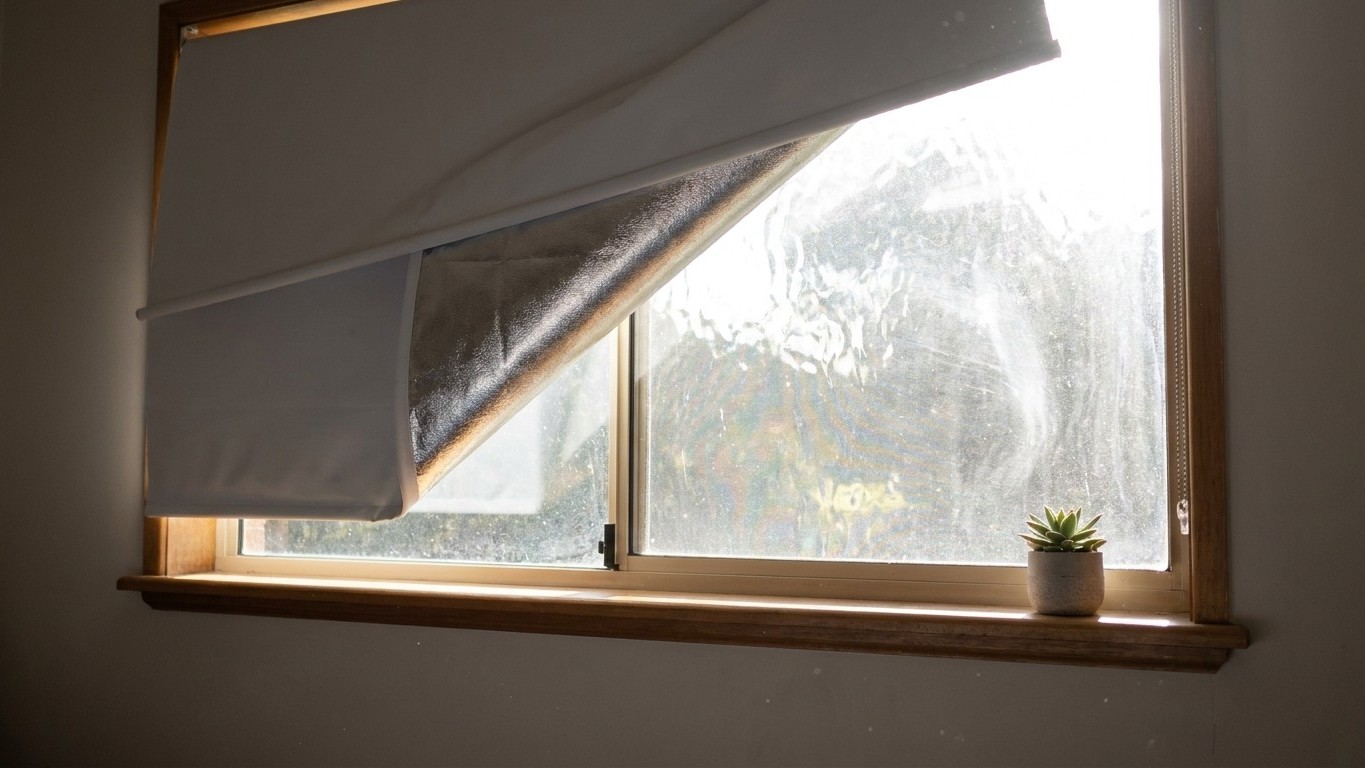
Fit a thermal blackout blind with the reflective backing facing into your bedroom instead of the glass, and you’ve built yourself a very effective heat trap. That’s precisely what I did last summer, and it took a scorching Tuesday afternoon, my palm pressed flat against the windowpane behind the fabric, to work out why my “cooling” blind was doing the opposite.
The blind looked perfectly sensible from the shop floor. Cream on one side, a slightly shiny pale grey on the other. I hung it with the pretty cream side facing the room, because, well, that’s the side you look at, isn’t it? Weeks later, with the blind drawn against the worst of the afternoon sun, the bedroom was still baking by four o’clock. When I finally lifted the fabric to check the window itself, the glass was properly warm to the touch, almost uncomfortably so, and the penny dropped. I’d hung the thing back to front.
Key takeaways
- A seemingly simple installation error turned a ‘cooling’ solution into a heat trap that made afternoons unbearable
- The science behind thermal blinds involves a reflective coating that does something completely different than you’d expect
- A five-minute fix and a seasonal hack can transform your south-facing bedroom from greenhouse to sanctuary
The coating has to face the glass, not the room
Thermal blackout blinds aren’t just a thick curtain fabric with a fancy name. Tucked away in the middle is a dense, completely opaque layer, which is where the “blackout” name comes from, as it’s designed to block all incoming light. But the clever bit, the bit that actually deals with heat rather than just darkness, is a separate layer entirely. The final and most crucial layer is a special coating on the back of the blind, the side facing the glass.
Usually a reflective silver or white, this coating is designed to do two things: bounce the sun’s heat away in the summer and reflect your home’s heat back into the room in winter. The whole idea only works if that shiny, reflective surface is the one pointed towards the window. It has to meet the incoming sunlight head-on and send it straight back out through the glass before it ever gets the chance to warm the air in your room. Hang the blind the wrong way round, as I did, and you’ve put your dense, dark, absorbent fabric right up against the glass instead.
That’s a proper schoolboy error, because lighter colours tend to reflect heat while darker colours absorb heat, since darker colours have a higher absorbance and take in more energy from the sun. My cream side facing outward wasn’t nearly reflective enough, and the coated side, tucked uselessly against my own eyeline, was doing nothing for the glass at all.
Why a warm windowpane is such a giveaway
The glass itself is the tell. A dark-coloured blind facing the wrong way will actually absorb the sun’s energy, becoming hot itself, and that heat is then radiated into your bedroom, often making the room feel stifling by mid-afternoon. When I felt that warmth on the pane, I was essentially feeling the evidence of a job half done. A correctly fitted blind, reflective side out, works quite differently: on a hot day, the aluminium-style backing can lower the temperature of the window’s interior glass by 4 to 6°C. That’s not a trifling difference when you’re trying to sleep on a July night with the sun still baking the brickwork outside.
There’s a second layer to this, and it’s one I hadn’t given much thought to before. The second part of the equation is convection: when the blind is fitted snugly, it traps a pocket of still air between the fabric and the windowpane, and that still air is a poor conductor of heat, making it a fantastic insulator that slows the movement of warm air towards the cold glass. A blind that’s gaping at the sides doesn’t just let light leak round the edges, it lets warm air circulate freely behind the fabric, undoing much of the good work. If you seal the side edges of the roller shade, for example by using side tracks, you can reduce heat exchange by up to 45%. My own blind had a good two centimetres of daylight showing at either edge, which I’ve since sorted with a simple pair of side channels from the same shop.
Getting the orientation right, room by room
South-facing rooms in Britain get a longer, steadier baking than most people expect, not the sharp blast of a west-facing window at teatime, but a slow, persistent warming through the whole day. South-facing windows receive direct sun for the longest duration, most of the day in summer. That makes getting the blind the right way round even more worthwhile, because you’re not just fighting off an hour or two of glare, you’re up against sunshine from mid-morning right through to early evening.
The good news is that this is genuinely a five-minute fix rather than an expensive one. If your blind is reversible, or if you bought it with the wrong side facing out by mistake as I did, most roller and roman blinds can simply be unhooked from their brackets and reversed, no new purchase required. When you’re shopping for a new one, run your hand across both sides in the shop: the reflective, often slightly cooler-feeling surface is the one that wants to face outward. The most effective shades feature a highly reflective white side and a heat-absorbent darker side, and should be reversed seasonally so the darkest side faces the heat. That’s the bit that genuinely surprised me, the idea that you might want to flip the same blind round again come winter, so the pale reflective side faces inward instead, bouncing your radiator’s warmth back into the room rather than letting it escape through the glass.
Worth remembering too that a blind alone rarely does the whole job. When closed and lowered on a sunny window, reflective blinds capable of reducing heat gain by around 45 percent are your baseline expectation, not a guarantee, and how snugly they’re fitted makes all the difference. I’ve since added a second, smaller fix that cost me nothing: I draw the blind before I leave for work each morning rather than waiting until the room already feels like a greenhouse, since a blind fighting to cool a room that’s already hot has a much harder job than one keeping the heat out from the start.
Sources : direct-fabrics.co.uk | consumerreports.org