
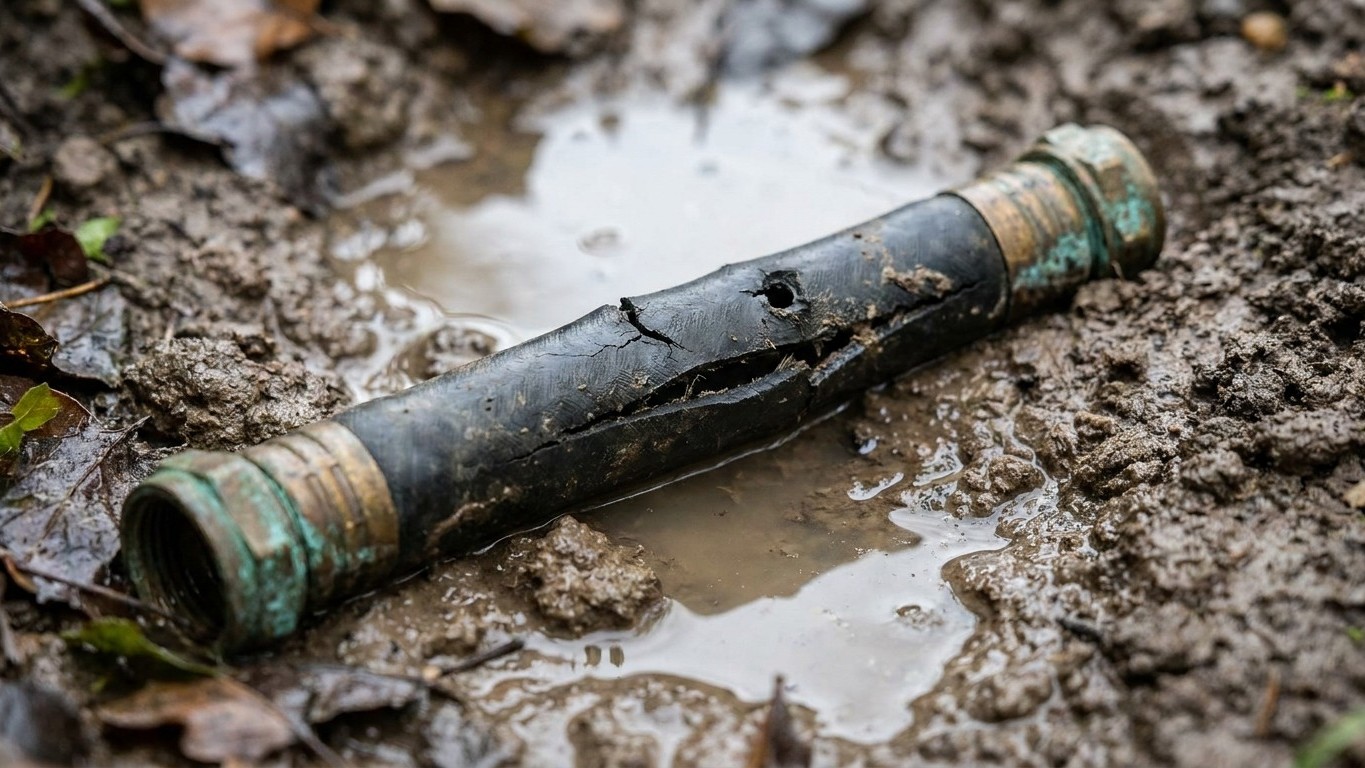
Six months in the ground turned my garden hose into a soggy, split ruin with a green corroded brass fitting that crumbled the moment I tugged on it. What had seemed like a clever time-saving shortcut in spring left me kneeling in a muddy trench in autumn, staring at a pipe that leaked water into the soil rather than onto my thirsty runner beans. Lesson learned the expensive way: not every hose is built to live underground, and mine certainly wasn’t.
I’d done what plenty of impatient gardeners do. Rather than faff about with a proper irrigation system, I dug a shallow channel across the lawn, laid my ordinary rubber-look garden hose in it, and covered it over so I wouldn’t have to keep hauling the thing out of the shed every evening. Job done, I thought. Except it wasn’t done at all, it was just quietly falling apart where I couldn’t see it.
Key takeaways
- A standard garden hose buried for six months emerged as a split, corroded ruin with crumbled fittings
- Rodent teeth marks, soil pooling, and metal corrosion worked silently against the hose where it couldn’t be seen
- Discover what actually survives underground—and why ordinary hoses should never be buried long-term
Why an Ordinary Hose Was Never Built for This
The trouble starts with materials. Standard hoses, especially the cheaper vinyl ones, simply aren’t engineered to sit in damp soil month after month. Vinyl hoses degrade faster when buried, resulting in leaks and reduced lifespan unless enclosed in a protective pipe. Mine was exactly that sort of hose, bought years ago for general watering duties, never intended for a life underground.
Then there’s the fittings, and this is the bit that really caught me out. Hose connections are usually metal of some type, and that means they can corrode and rust, especially when constantly exposed to damp soil. Every joint is also a weak point regardless of what it’s made from, and every connection point is a potential point of failure, and there’s nothing worse than realising your underground hose has sprung a leak only to dig it up and find the connection has come loose. That’s precisely what greeted me when I finally lifted mine. Sensible advice, which I wish I’d followed, is that if you must connect two hoses, your best bet is to bring them together above ground, making it much easier to troubleshoot connection issues should they arise.
Depth mattered too, and I hadn’t given it nearly enough thought. I’d scraped out barely a few inches, when insufficient depth leaves a line vulnerable to freezing, physical damage from digging, and UV degradation over time, so you should always aim for below the frost line for permanent installations. A shallow trench offers next to no protection, it’s really just cosmetic camouflage rather than genuine burial.
What Six Months of Silence Actually Did
Rodents were part of my downfall too, something I genuinely hadn’t considered when I was merrily shovelling soil back over the hose. Rodents can be drawn to water and may gnaw through the hose underground, with squirrels, voles, and moles attracted to a buried garden hose, nibbling at it until they puncture it to get access to water. When I dug mine up, there were two distinct puncture marks near the far end, small enough that they’d have gone unnoticed for weeks while the surrounding soil turned into a permanent bog.
Beyond the teeth marks, the soil itself had been working against me. Because I hadn’t bothered checking for a slope or drainage, water had been pooling around sections of the hose rather than draining away, softening and weakening the material from the outside while whatever leaked from the inside made things worse still. It’s a bit like leaving wellington boots stood in a puddle for half a year, except in this case the boots were also carrying pressurised water. Nobody had warned me, but frankly it’s obvious once you picture it: damp plus stagnation plus time is rarely kind to rubber or vinyl.
What Actually Belongs Underground
Here’s what I should have used from the start. If you genuinely want an irrigation line living beneath your borders, reach for something purpose-built rather than whatever’s coiled up by the back door. Drip irrigation delivers water precisely to plant roots through a network of tubing and emitters, conserving water, reducing runoff, and preventing hose damage, offering a flexible and efficient alternative to buried hoses. Soaker hoses have their place too, though curiously not fully underground; you should not bury soaker hoses underground in the soil, as the soil may enter the hose and interfere with its functioning, so a light dusting of mulch is as far as they should go.
For anything more permanent, proper pipe wins every time. Rigid pipework, laid at a sensible depth with joints kept to a minimum and marked clearly on a simple sketch of the garden, will outlast any recycled garden hose by years, not months. And before anyone reaches for a spade at all, it’s worth remembering the basics: proper installation matters to avoid damage to the hose or interference with other underground utilities, and you should always check with local regulations and utility companies before digging. In Britain that means ringing your local utility search service, LinesearchbeforeUdig, or simply checking with your water company, particularly if you’ve no idea where existing pipes or cables run through your own garden.
None of this needs to cost a fortune. A length of proper drip line from a garden centre isn’t dramatically pricier than a decent hose, and it will save you the far greater cost of ripping up a border twice, which is exactly what I ended up doing. My advice, learned the hard way in a puddle of my own making: if you’re burying anything for longer than a season, buy the tool made for the job. Ordinary hoses belong coiled by the tap, not tucked away where nobody, including you, can keep an eye on them.
Sources : gardenhosezone.com | outwardlab.com