
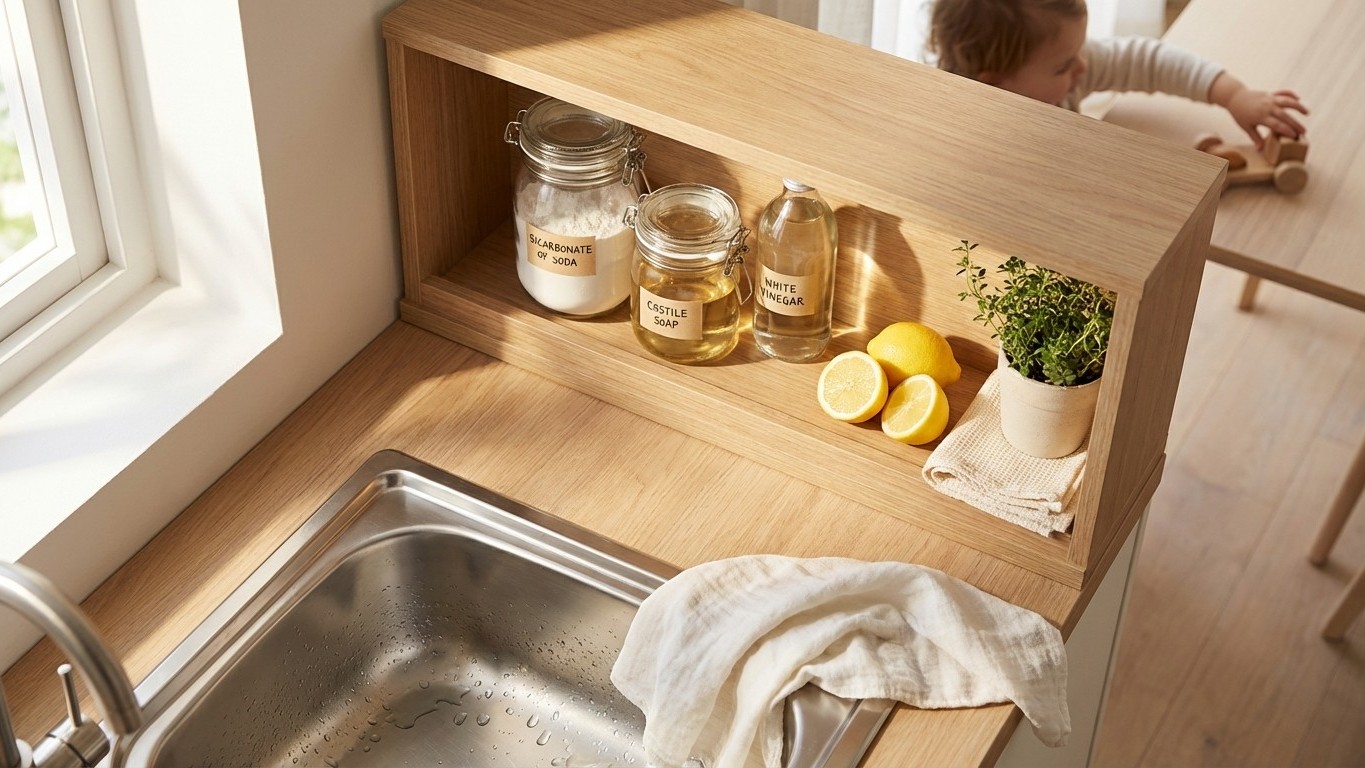
Reach for a bottle of bleach and the job feels done. But that sharp chemical smell lingering in the kitchen, the worry about small children crawling on freshly-mopped floors, the cost of buying separate products for every surface, there’s a better way, and most of the ingredients are probably sitting in your cupboard right now. Natural disinfecting cleaning hacks have come a long way from old wives’ tales; some genuinely kill pathogens, freshen the air, and break down the grease that harbours bacteria. Others, frankly, just smell nice. Knowing the difference is everything.
Why Clean Naturally? Real Benefits, Honest Limitations
Health, environment, and your purse strings
Switching to natural cleaning products isn’t merely a lifestyle choice, it has measurable effects on indoor air quality. Many conventional disinfectant sprays release volatile organic compounds that can irritate airways, and in a sealed modern home, those compounds have nowhere to go. Natural alternatives, used correctly, dramatically reduce that chemical load while also providing a natural air freshener cleaning hack for home. For households with asthma, young children, or pets (cats in particular are sensitive to many synthetic fragrances), this matters enormously.
The environmental argument is equally straightforward. Phosphates, synthetic surfactants, and preservatives from standard cleaning products end up rinsed down drains and eventually into waterways. White vinegar, bicarbonate of soda, and Castile soap biodegrade rapidly and leave no lasting trace. And the cost? A 5-litre bottle of white vinegar from any UK supermarket typically costs under £2. A box of bicarbonate of soda, even less. These simple ingredients can tackle various household cleaning tasks, from how to clean bin naturally and remove smell to clean drains naturally baking soda vinegar and even how to clean dishwasher naturally deodorise with countless other applications. Compare that to the parade of specialist sprays most of us keep under the sink.
Limits you genuinely need to know
Here’s where honesty matters. “Natural” does not automatically mean “as effective as a registered disinfectant.” In a clinical or food-preparation context, the difference is significant. White vinegar, beloved of so many cleaning blogs, is acetic acid at roughly 5% concentration, it will reduce certain bacterial loads on surfaces, but it does not meet the standard required to be classified as a disinfectant. For comprehensive guidance on effective natural ways to disinfect surfaces at home, it’s important to understand that these methods won’t reliably eliminate norovirus, Salmonella on raw chicken juice, or resistant pathogens.
That caveat isn’t a reason to abandon natural methods, it’s a reason to use them wisely. For everyday maintenance cleaning, freshening, and deodorising, they’re superb. For genuinely high-risk situations (someone ill in the house with a stomach bug, raw poultry contamination on a worktop), a food-safe disinfectant or a properly diluted hydrogen peroxide solution is the more prudent choice. You’ll find a fuller exploration of this in our guide to natural ways to disinfect surfaces at home.
Understanding What Natural Agents Actually Do
Disinfectant versus cleaner, the difference that changes everything
A cleaner removes dirt, grease, and debris. A disinfectant kills micro-organisms. Many products do a bit of both, but not all do both well. Bicarbonate of soda, for instance, is a wonderful cleaner and deodoriser, it scrubs gently, absorbs odours, and leaves surfaces gleaming. It is not, however, a meaningful disinfectant. Mixing it with vinegar produces a satisfying fizz, but that reaction neutralises both substances into water and sodium acetate. Spectacular to watch. Less useful than using either one separately.
The practical upshot: clean first, then disinfect. Dirt and organic matter physically protect bacteria from whatever agent you apply on top. A surface visibly clean is more susceptible to whatever antimicrobial treatment follows.
The agents that genuinely earn their place
Hydrogen peroxide at 3% concentration (the brown-bottle variety sold in UK pharmacies) has solid evidence behind it as a disinfectant. Left on a surface for ten minutes before wiping, it will kill many common household bacteria and viruses. It breaks down into water and oxygen, leaving no residue. The catch: it degrades quickly once exposed to light, so keep it in its original opaque bottle and don’t expect a decanted spray to remain effective for weeks.
Isopropyl alcohol at 70% concentration is the most reliable natural-category disinfectant for hard surfaces. It’s the same principle used in hand sanitisers. Fast-acting, effective against a broad range of pathogens, and it evaporates cleanly without streaking. The limitation is flammability and fumes in confined spaces, always ventilate.
Essential oils deserve nuanced treatment. Tea tree oil (melaleuca) has genuine antimicrobial properties at concentrations of around 1-2%, backed by a reasonable body of laboratory research. Thyme and oregano oils contain compounds (thymol, carvacrol) shown to inhibit bacterial growth. But “inhibit” in a laboratory setting and “disinfect a kitchen worktop” are not the same thing, essential oils are best used as a complement to a primary cleaning agent, adding fragrance and some antimicrobial support, rather than as a standalone disinfectant. They’re also not appropriate around cats without careful ventilation, and should always be properly diluted before contact with skin or food surfaces.
The vinegar misconception, and how to use it well
Vinegar’s reputation as a cleaning superstar is well-deserved in some respects and wildly overstated in others. Its mild acidity makes it excellent for dissolving limescale, cutting through grease films, and deodorising. It genuinely does reduce surface bacterial counts, just not to disinfectant levels. Think of it as a competent everyday cleaner rather than a germ-killer. Never use it on natural stone surfaces (marble, granite) where the acid will etch and dull the finish, and avoid it on cast iron. For everything else, glass, stainless steel, sealed tiles, plastic, it’s a workhorse worth keeping.
Disinfecting and Deodorising Every Surface in the Home
High-touch contact points: handles, switches, worktops
Door handles, light switches, tap fittings, these are touched dozens of times a day and rarely cleaned thoroughly. A spray made from 250ml of water, 250ml of isopropyl alcohol (70%), and 10 drops of tea tree oil will clean and provide genuine antimicrobial action. Spray, leave for 30 seconds, and wipe with a clean microfibre cloth. Microfibre matters here: it physically lifts bacteria rather than just spreading them around, and it works dry or damp without streaking.
For a broader range of natural cleaning hacks covering every corner of your home, it’s worth bookmarking a thorough reference, the small details (which cloth, which direction to wipe, when to rinse) genuinely affect outcomes.
The kitchen: worktops, chopping boards, the fridge
Wooden chopping boards are a particular concern, their porous surface harbours bacteria in a way sealed plastic doesn’t. Rub the board with half a lemon after each use, leave for a few minutes, then rinse. For deeper treatment, sprinkle coarse salt over the surface, scrub with the lemon half, leave ten minutes, and rinse thoroughly. The salt acts as a mild abrasive, the lemon’s citric acid inhibits bacterial growth. This won’t sterilise a board contaminated with raw chicken, but for regular maintenance it’s genuinely effective and won’t warp the wood as bleach can.
Fridge interiors benefit enormously from a wipe-down with a solution of 1 tablespoon of bicarbonate of soda dissolved in 1 litre of warm water. It cleans without leaving a scent that transfers to food, the perennial problem with any strongly-fragranced cleaner used in a fridge — and neutralises odour-causing compounds at the same time.
Bathroom: sinks, toilets, and damp surfaces
Bathrooms are naturally humid, which means mould and bacteria find them very welcoming. A spray of undiluted white vinegar on tiled surfaces, left for five minutes before scrubbing, tackles soap scum and early mould effectively. For toilet bowls, pour in 100ml of white vinegar and leave overnight, limescale dissolves, odours reduce, and a brief scrub in the morning leaves things fresh without chemical residue.
For persistent mould on grout or silicone seals, a paste of hydrogen peroxide and bicarbonate of soda (mixed to a thick consistency) applied with an old toothbrush and left for 20 minutes has a good track record. Rinse thoroughly and ensure ventilation afterwards.
Tackling Bins: Odour, Bacteria, and the Weekly Reset
The kitchen bin is, without exaggeration, one of the most bacterially active spots in most homes, and one of the most neglected. A bin that simply smells unpleasant is one thing; a bin that’s harbouring E. coli or Listeria on its inner walls is quite another, and the two often go together.
Quick deodorising recipes that actually work
Sprinkling two tablespoons of bicarbonate of soda in the bottom of the bin liner each time you replace it is probably the simplest and most effective odour-prevention habit you can adopt. Bicarb absorbs volatile acidic compounds, the ones that cause that sour, unpleasant smell, before they have a chance to build up. Add five drops of tea tree oil to the bicarb before sprinkling and you get mild antimicrobial action alongside the deodorising.
For a quick between-washes spray, combine 200ml of water with 50ml of white vinegar, 10 drops of lemon essential oil, and 5 drops of tea tree oil in a spray bottle. Spritz the inside walls of an empty bin, leave for two minutes, and wipe down. The vinegar cuts through any residue; the essential oils leave a clean scent and inhibit microbial growth on the surface.
The proper monthly clean
Once a month, bins deserve a full wash. Take the bin outside or into the bath, rinse with hot water, then scrub inside and out with a brush and a solution of Castile soap (about one tablespoon per litre of warm water). Rinse well, then spray with a 3% hydrogen peroxide solution and leave for ten minutes before a final rinse and air-dry in sunlight when possible : UV light has its own germicidal properties, modest but real. More detail on this process, including how to deal with particularly stubborn smells, is covered in our dedicated guide on how to clean bin naturally and remove smell.
Drains: The Forgotten Hotspot
Drains collect everything, food debris, grease, hair, soap scum, and then warm, damp conditions do the rest. That sulphurous smell rising from a kitchen drain is not merely unpleasant; it signals a biofilm of bacteria growing on the pipe walls.
The bicarbonate and vinegar method, done properly
The classic combination of bicarbonate of soda and vinegar does have genuine value in drains, though perhaps not for the reason most people think. The fizzing action mechanically dislodges loose debris from pipe walls; the acetic acid in the vinegar then helps break down grease films. The method: pour 4 tablespoons of bicarbonate of soda down the drain, followed immediately by 250ml of white vinegar. Allow it to fizz for 15-20 minutes, do not run water during this time. Follow with a kettle of just-boiled water poured slowly to flush everything through.
For odour specifically, a simpler weekly maintenance trick works well: pour 4 tablespoons of bicarbonate directly down the drain and leave overnight without flushing. It absorbs the gases producing the smell. Add a few drops of eucalyptus or lemon essential oil to the bicarb before pouring for a pleasant scent trail through the pipes. The full step-by-step process, including what to do for partial blockages, is laid out in the guide on clean drains naturally baking soda vinegar.
What not to do, protecting your pipes
Boiling water is fine for metal pipes but should not be used in PVC pipework, where very high temperatures can cause softening at joints over time. Stick to hot water from the tap if you’re unsure. Salt and lemon juice, a popular combination in some recipes, can be useful for deodorising but shouldn’t be used regularly in older copper or chrome pipes where repeated acid exposure causes pitting. And please, never mix bleach with vinegar or any acid-based cleaner. The chlorine gas produced in that reaction is genuinely dangerous.
DIY Recipes: A Practical Reference
Multi-surface disinfecting spray
Combine 300ml of water, 150ml of isopropyl alcohol (70%), 1 teaspoon of liquid Castile soap, 10 drops of tea tree oil, and 5 drops of lavender essential oil. Shake before each use. Suitable for sealed hard surfaces: tiles, appliance exteriors, plastic, glass. Avoid on natural stone, raw wood, or painted surfaces where the alcohol may strip the finish.
Bathroom mould and mildew paste
Mix 3 tablespoons of bicarbonate of soda with enough 3% hydrogen peroxide to form a thick paste (roughly 2 tablespoons). Apply to affected grout or silicone with a stiff brush. Leave 20 minutes. Scrub and rinse. This is more aggressive than a vinegar spray and genuinely worth reaching for on stubborn mould rather than immediately going to bleach.
All-purpose deodorising spray for rooms and bins
This doubles as both a bin spray and a room freshener: 200ml of distilled water (or cooled boiled water), 1 tablespoon of vodka or witch hazel (both fix scent and carry the essential oils), 15 drops of your chosen essential oil, orange, peppermint, and eucalyptus all work beautifully. Shake well before each use. Safe around children once dry; avoid spraying directly near cats. For more ideas on keeping rooms smelling genuinely fresh, the natural air freshener cleaning hack for home guide is packed with variations.
A note on essential oil safety
Always dilute. Essential oils are highly concentrated plant extracts; a few drops in 200ml of water is not the same risk as applying them undiluted to a surface a child will touch. Eucalyptus and peppermint oils should not be used around children under three. Tea tree oil is toxic to cats and dogs if ingested. These aren’t reasons to avoid them, just reasons to use them sensibly, with adequate ventilation and dilution.
FAQ: Your Questions, Answered Plainly
Which natural products genuinely disinfect? Hydrogen peroxide at 3% and isopropyl alcohol at 70% are the most reliable. Tea tree oil provides useful antimicrobial support when properly diluted. Vinegar and bicarbonate are excellent cleaners and deodorisers but do not meet disinfectant standards.
Does white vinegar kill bacteria on surfaces? It reduces bacterial counts, yes, but not to the level required to be classified as a disinfectant. For routine cleaning of low-risk surfaces, it’s perfectly adequate. For high-risk situations (illness, raw meat contamination), reach for hydrogen peroxide or alcohol instead.
How do I deodorise a bin without chemicals? Bicarb in the liner base every time you change the bag is your best daily habit. For a deeper reset, a wash with Castile soap followed by a hydrogen peroxide spray, then air-drying in sunlight, tackles both odour and bacteria.
What’s the best natural recipe for drains? Bicarbonate of soda followed by white vinegar, left 15-20 minutes, then flushed with hot water. Weekly overnight bicarb treatments prevent odour build-up between deeper cleans.
Are essential oils safe to use for cleaning around children and pets? With proper dilution and ventilation, yes, for most. Exceptions: eucalyptus and peppermint around very young children, and all tea tree products around cats. Always dilute in water or a carrier before applying to surfaces.
Natural cleaning is less about following rigid recipes and more about understanding what each ingredient actually does, then combining them with intention rather than habit. Once you know that bicarb deodorises but doesn’t disinfect, that vinegar cleans but doesn’t sterilise, and that a splash of hydrogen peroxide is your best ally when genuine germ-killing is needed, the whole approach becomes satisfyingly logical. The question worth sitting with is this: how many of the products currently under your sink are doing a job that a £1.50 bottle of something already in your pantry could handle just as well?