
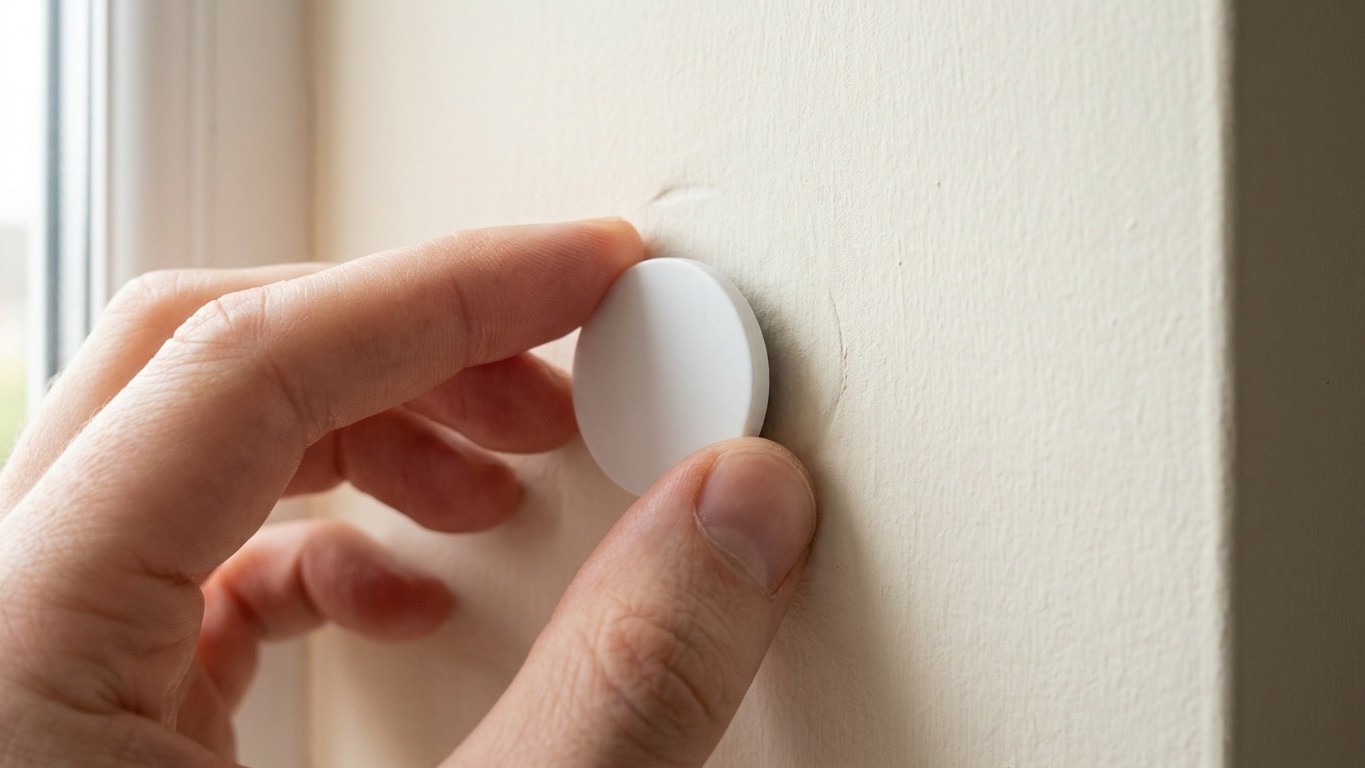
Dad wasn’t being eccentric. He was using a genuinely clever bit of physics that plenty of professional decorators still swear by: a small, ordinary magnet dragged along a wall will snag onto the metal screws or nails holding your plasterboard to the timber studs behind it. Find those fixings, and you’ve found the sturdy bit of wall that will actually hold a shelf, a mirror or a heavy picture frame without the whole lot ending up on the carpet six months later.
I spent years thinking it was one of those funny little rituals older people have, like checking the oven three times before leaving the house. Turns out he’d worked out, probably through trial and error rather than any manual, exactly what tradespeople and DIY writers still recommend today.
Key takeaways
- A simple fridge magnet can find the hidden metal fixings in plasterboard walls—but there’s a catch most people miss
- This trick has limits: it fails on older lath-and-plaster walls, brick, and masonry, yet professionals still swear by it
- The spacing between studs varies by country and building era—measure yours before you drill, or risk hanging everything in thin air
Why a fridge magnet beats guesswork every time
Plasterboard walls (what our American cousins call drywall) aren’t solid. Behind that smooth painted surface sits a timber or metal frame, and the boards are fixed to it with screws or nails, spaced at regular intervals. Tap the wall and you’ll hear a difference between the hollow bit between studs and the slightly duller sound over a stud itself, but that’s never been reliable enough for me. A magnet removes the guesswork entirely, because a neodymium magnet can’t detect the wood itself, but it easily locates the steel screws that hold the plasterboard to the studs.
Drag it in a slow, sweeping motion (some people like an S-shape, others just work in horizontal lines) and the moment it tugs or clicks against the wall, you’ve found a fixing point. Magnetic stud finders use strong magnets to locate the metal nails or screws driven into studs, taking a little patience as you run them along a wall until you feel the magnet stick or tug toward a metal fastener. That little jolt is exactly the sensation Dad was chasing every single time, and exactly why he never bothered lugging out an actual stud finder for a quick picture hook.
It’s not just folklore, either. One popular tip from renovators is to swipe a magnet off the fridge, ideally something small, about the size of a button cell battery, and tape it to a length of string so it dangles freely and finds the nail on its own. Kitchen twine, a bit of wool, even dental floss will do the job. It’s the kind of frugal, make-do-and-mend thinking that feels very British, even if the trick seems to have spread from American DIY circles first.
Where the trick shines, and where it lets you down
Here’s the bit Dad never explained properly, and the bit I only worked out myself once I started renovating my own place. The magnet trick is brilliant on modern stud partition walls with plasterboard, because the metal fixings are shallow and close to the surface. It’s considerably less reliable on the lath-and-plaster walls common in older British houses, terraces and cottages built before the 1960s. Plaster walls are a different story: long, narrow strips of wood called lath run lengthwise across the studs, supporting the plaster on top, and the small nails or tacks holding the lath in place are buried under a thick layer of plaster, sometimes an inch or more, which puts them well beyond the reach of a fridge magnet’s pull.
It also won’t help you a jot on solid masonry or brick walls, which are still common in Victorian and Edwardian homes, and in many external walls regardless of the property’s age. There’s no timber frame to find there at all; you’re drilling straight into brick or block and need proper wall plugs rated for the weight, not a stud.
And here’s a nuance that trips up a lot of people trying this for the first time: stud spacing isn’t universal. Studs are typically spaced at regular intervals, so once you’ve found one, you can measure to locate the next. In the UK, building regulations and standard timber lengths mean studs in newer partition walls are commonly spaced around 400mm or 600mm apart, rather than the 16-inch spacing you’ll read about in American guides, so measure your own wall rather than assuming a figure from an overseas article.
Getting it right without wasting your afternoon
If you fancy trying Dad’s method properly, a few small tweaks make it far more effective than blind luck. Start near a light switch or socket, since electrical outlets and switches are almost always fixed to a stud, with a stud found on at least one side of the box. That gives you a known starting point before you even pick up the magnet.
Once your magnet catches on something, don’t just mark that single spot and start drilling. Hang a string from the magnet to help make the vertical line of the stud more obvious, because fixings are driven in a vertical row along the timber, and you want your screw or hook landing in the middle of that timber, not at its edge where it could split. A cheap fridge magnet is a fine starting point, but it isn’t always strong enough to work through thicker paint, textured coatings or tiles. Magnets are more reliable than many stud finder tools as long as there’s ferrous metal hardware in the wall, they’re more cost effective, find the exact location of screws and nails, need no batteries and give no false readings, but if yours isn’t cooperating, a small rare-earth magnet from a hardware shop, costing barely more than a bag of nails, will usually push through where a fridge magnet gives up.
One thing worth remembering before you reach for the drill: even once you’ve found a stud, that timber itself might only be around 38mm wide. Miss it by a centimetre either side and you’re back to fixing into thin air, which is precisely why Professional installers still mark, measure and double-check with a second pass of the magnet before committing to a hole. Dad never explained the physics to me over the years, he just handed me the magnet and told me to feel for the click. It turns out that was the whole lesson.
Sources : housedigest.com | youtube.com