
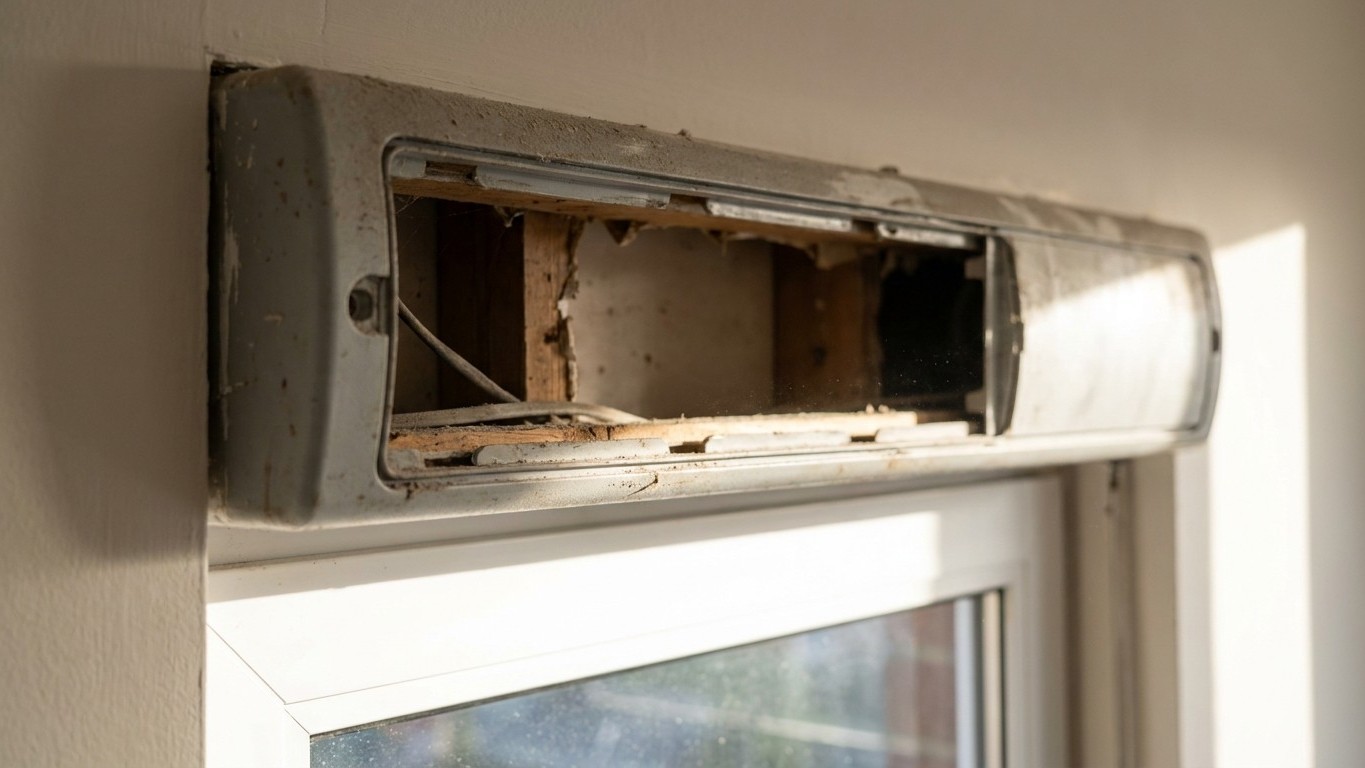
That gap of dead air behind the little plastic or metal box above your windows, the one holding the rolled-up shutter, is often the real culprit when a house turns into an oven every July. Mine certainly was. I’d spent years fussing over draught excluders and thicker curtains, convinced my ageing double glazing was letting the sun’s heat pour straight through. Then, one sweltering afternoon, I unscrewed the little inspection panel on the shutter box above my kitchen window and found nothing but bare plastic casing and a finger’s width of empty space between it and the brickwork. No insulation. No seal. Just a hollow chamber baking away in the sun and radiating straight into my kitchen.
It turns out I’m far from alone in overlooking this. Roller shutter boxes, whether the compact ones sitting above the frame or the bulkier types built into the wall, are notorious weak points in a home’s thermal envelope, and most people never think to check them because the window itself gets all the blame.
Key takeaways
- A hollow, uninsulated box above your windows can radiate more heat than the glass itself
- Tiny gaps where the shutter box meets the wall are perfectly sized for hot air to infiltrate all day
- Closing shutters completely in summer actually traps heat—leaving a small gap lets it escape
Why the box turns into a heat trap
The mechanism is fairly simple once you picture it. A shutter box sits proud of the wall, often made from thin PVC or aluminium, and it takes the full force of the sun for hours on end, especially if your windows face south or west. Poorly insulated roller shutter boxes create thermal bridges through which heat is lost and cold air can penetrate, and that street runs both ways: in winter your heating leaks out through it, in summer the sun’s energy leaks in through exactly the same weak spot. Roller shutter boxes in particular are often not sufficiently insulated in older buildings, and cold air flows in through the thin box walls while heat is lost at the same time. Reverse that logic for July and August, and you’ve got a metal or plastic box slowly cooking in the sun, passing its warmth straight through into the room below.
What surprised me most was how much difference a thin barrier makes. Even thin insulation panels reduce energy loss by up to 60 percent, which for a box that costs almost nothing to line felt like an outrageous bargain compared to what I’d already spent trying to fix my “window problem”. I’d been buying reflective film and heavier curtains for years, quietly ignoring the actual source above my head.
The gaps you can’t see are often worse than the box itself
A Spanish study using infrared thermography on residential buildings found that the main leakage paths were located using infrared thermography, with turbulent flows through cracks located around windows and rolling shutters concentrating the main leakages. The researchers pointed to the inadequate design of the constructive solutions, as well as the careless workmanship of the joints between different elements, as the main causes that prevent airtight envelopes. In plain English: it’s rarely the box material itself letting you down, it’s the sloppy gap where it meets the wall, the frame, or the strap opening where the shutter cord passes through. Those tiny slits are perfectly sized for hot air to seep through all day, then keep radiating that stored heat into the evening, long after the sun’s gone down and you’re wondering why the bedroom still feels like a sauna at bedtime.
I found exactly this in my own box: a gap around the strap mechanism you could slide a beer mat through, and a seam along the top where the casing had warped slightly with age. Neither looked dramatic. Both were doing real damage.
Fixing it without spending a fortune
You don’t need a builder for most of this. Self-adhesive foam or polyethylene insulation strips, sold specifically for shutter boxes, can be cut to size and pressed inside the casing in an afternoon; this type of panel is engineered for roller shutter box insulation, cutting heat loss, blocking draughts and dampening outdoor noise, and it’s ideal for quick retrofits that boost comfort without masonry work. Pair that with a simple brush seal or silicone bead around the strap opening and the frame joint, since combining insulation with brush seals or gaskets helps maximise air-tightness. Before you buy anything, though, have a proper look inside: open the box and check internal clearances, including the shutter’s travel and the strap or motor mechanism, so you don’t jam anything up.
Here’s the bit that genuinely changed my afternoons, though. I’d been closing the shutters fully whenever the sun hit, thinking I was blocking every ray. Wrong move. Many people make a classic mistake in summer when they leave shutters all the way down to keep out as much sun as possible, but when the sun protection is completely closed, a closed air space is created between the window and the roller shutter curtain, and the sun’s rays heat this gap without the warm air being able to escape. Leaving even a small gap, or using the ventilation slits if your shutters have them, lets that trapped heat vent back outside instead of building up and radiating through the glass.
What I’d tell my neighbour over the fence
Grab a torch, unscrew that inspection hatch above your worst window on the hottest day you can find, and just look. If you can feel warmth radiating off the inside of the casing itself, not the window, you’ve likely got the same problem I did. It cost me under a fiver in foam strip and a wasted Sunday morning, not the new windows I’d been half-heartedly saving up for. One more thing worth remembering: box position matters too, and west and south-facing windows receive the most direct sunlight and heat gain during the day, making closing shutters on these exposures the most impactful move you can make. Start there, and work your way round the house from the worst-affected side inward.
Sources : roma.eu | adesivisicurezza.it