
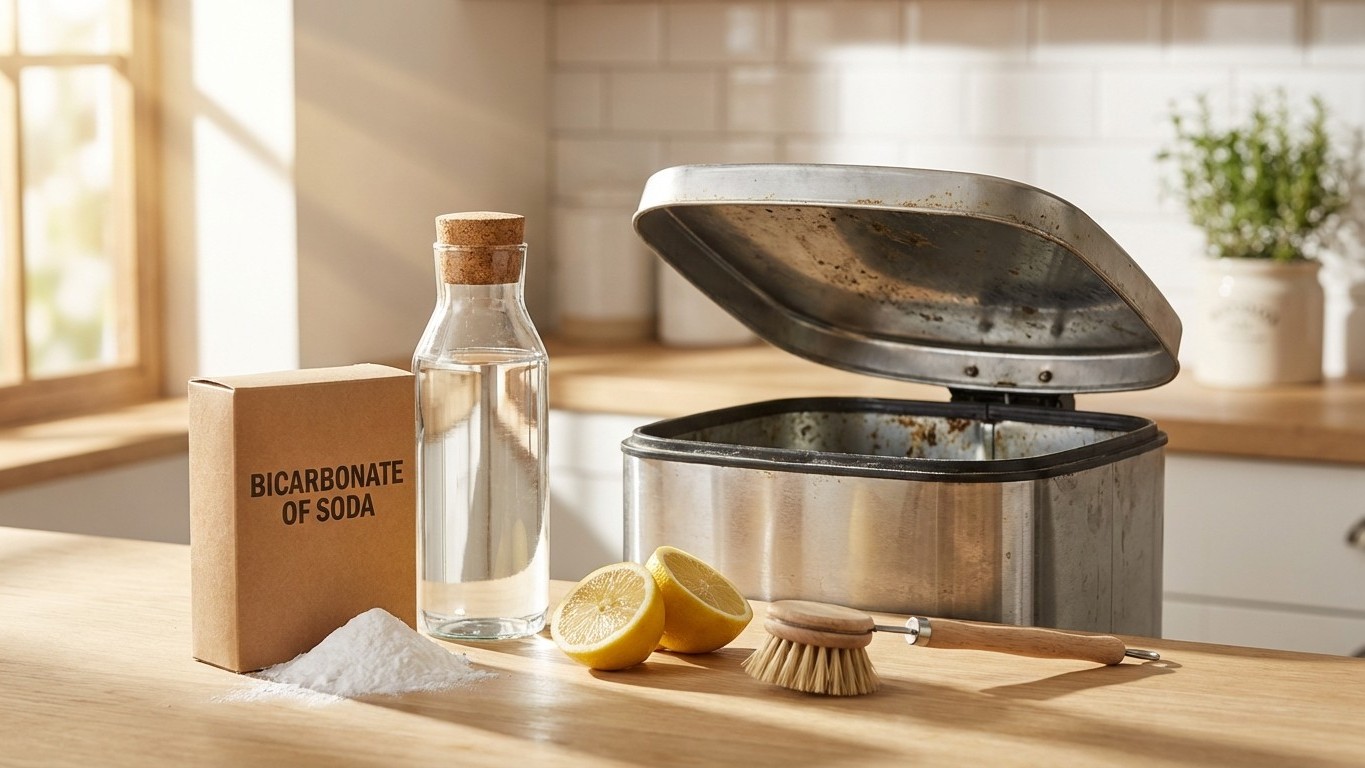
The bin lurks in the corner of the kitchen, doing its thankless job day after day. We toss scraps, packaging, and all manner of household waste into its depths without much thought, until that unmistakable smell hits us. You know the one. That warm, humid weather smell that greets you the moment you lift the lid.
I’ve spent decades testing natural cleaning methods, and I can tell you with certainty: commercial bin deodorisers and harsh chemical cleaners aren’t necessary. Your kitchen cupboard likely contains everything you need. Bicarbonate of soda, vinaigre blanc, and a few other simple ingredients can transform even the most pungent bin into something remarkably fresh. Let me walk you through exactly how to do this properly.
Why regular cleaning and deodorising matters
A bin isn’t just a container for rubbish, it’s a breeding ground. Warmth, moisture, and organic matter create perfect conditions for bacterial growth. Within 24 hours of food waste entering your bin, bacterial colonies begin multiplying. After a week without cleaning, you’re looking at millions of microorganisms calling your bin home.
Health risks beyond the smell
Those unpleasant odours signal something more significant than aesthetic displeasure. Rotting organic matter releases ammonia and hydrogen sulphide gases. In enclosed spaces like kitchens, these can irritate airways and trigger headaches. For households with young children, elderly members, or anyone with respiratory sensitivities, a neglected bin poses genuine health concerns. Fruit flies and other pests follow the smell too, creating secondary hygiene problems throughout your kitchen.
Matching your approach to your bin type
Not all bins deserve identical treatment. A bathroom bin collecting tissues and cotton pads requires different care than a kitchen bin receiving fish skins and vegetable peelings.
Kitchen, bathroom, and outdoor bins: different beasts
Kitchen bins work hardest and smell worst. Wet food waste, meat packaging, and dairy residues combine to create potent odours quickly. These need weekly deep cleaning and daily odour management. Bathroom bins accumulate less organic matter but can still develop musty smells from damp tissues and cotton products. A fortnightly clean usually suffices. Outdoor wheelie bins face different challenges, they’re exposed to weather but also to the most putrid household waste. Monthly attention keeps them manageable, though summer months demand more frequent care.
Step one: emptying and preparing your bin
Before any cleaning begins, you need a clear workspace. This sounds obvious, but I’ve watched people attempt to clean bins while rubbish bags still lurk at the bottom. Remove everything. Check corners and beneath any removable inner buckets.
Safety first: gloves, ventilation, and waste sorting
Rubber gloves aren’t optional here, they’re necessary protection. Even natural cleaning involves handling surfaces coated with bacterial residue. Work outdoors if possible, or open windows wide. If you’re dealing with a particularly neglected bin, a simple face covering prevents you inhaling concentrated fumes when you first lift that lid. Before cleaning, scrape any stuck-on residue into your rubbish bag. Dried-on food becomes much harder to remove once wet.
Step two: natural cleaning ingredients that actually work
The natural cleaning hacks that genuinely perform against bin grime rely on understanding what each ingredient does. Let me break down your options clearly.
Bicarbonate of soda: your odour-absorbing ally
Bicarbonate of soda (baking soda) excels at neutralising acidic odours, exactly the type produced by decomposing food. For bin cleaning, mix three tablespoons into one litre of warm water. This creates a mildly alkaline solution that lifts grease while tackling smell at a molecular level. Don’t exceed this concentration; more isn’t better here, and excess bicarbonate leaves chalky residue that attracts dirt.
White vinegar: cutting through grease and germs
Does white vinegar actually kill bacteria in bins? The answer is yes, but with caveats. Undiluted white vinegar (at least 5% acetic acid concentration) eliminates many common household bacteria including E. coli and Salmonella. However, it needs contact time, at least five minutes on the surface before wiping. For stubborn greasy patches, vinegar breaks down lipids more effectively than water alone. Apply it neat to problem areas, let it sit, then scrub. The smell dissipates as it dries, leaving no residue behind.
For deeper insights into natural ways to disinfect surfaces at home, including what vinegar can and cannot achieve, I’ve written more extensively elsewhere.
Lemon juice and essential oils: worth the fuss?
Lemon juice offers mild antibacterial properties and leaves a pleasant scent. Half a lemon rubbed around a bin interior adds freshness after cleaning. However, it doesn’t match vinegar’s disinfecting power. Essential oils, tea tree, eucalyptus, lavender, smell lovely and some possess antimicrobial properties. Tea tree oil shows the strongest evidence for germ-killing ability. My caution: use them sparingly. Two or three drops maximum in your cleaning solution. More creates sticky residue and can irritate skin. If you have cats, avoid tea tree and eucalyptus oils entirely, as these are toxic to felines.
DIY spray recipe for regular bin maintenance
Combine 200ml water, 100ml white vinegar, one tablespoon bicarbonate of soda, and two drops of tea tree oil in a spray bottle. Add the bicarbonate slowly, it fizzes when meeting vinegar. Shake gently before each use. This spray handles weekly wipe-downs between deep cleans and keeps odours suppressed.
Step three: the actual cleaning technique
Fill your bin with the hottest water your tap produces, adding your bicarbonate solution. Let this soak for fifteen to twenty minutes. Stubborn residue loosens considerably during this time. Using a long-handled brush (an old toilet brush dedicated to this purpose works brilliantly), scrub the interior thoroughly. Pay attention to the rim, the hinge area, and the inside of the lid, these spots collect grime but often get overlooked.
Drain the dirty water outside on soil or grass if possible; it actually benefits plants. Spray the entire interior with undiluted vinegar and leave for five minutes. Rinse with clean water and tip the bin upside down to drain completely.
A crucial warning about mixing products
Never combine vinegar with bleach or ammonia-based products. The chemical reaction produces chlorine gas or other toxic fumes. Even in natural cleaning, certain combinations cause problems. Bicarbonate and vinegar together create dramatic fizzing but actually neutralise each other’s cleaning power, use them sequentially, not simultaneously, for best results.
Removing stubborn smells: long-term solutions
Sometimes cleaning alone doesn’t eliminate persistent odours. Porous plastic absorbs smells over time, and certain foods leave their mark despite thorough washing. This is where natural disinfecting cleaning hacks become invaluable.
Bicarbonate at the bottom, activated charcoal, coffee grounds
Sprinkling two tablespoons of dry bicarbonate beneath your bin liner absorbs moisture and neutralises odours as they develop. Replace weekly. Activated charcoal, available from pet shops or online, offers even more powerful odour absorption. Place a small cloth pouch containing a handful at the bin base; it remains effective for about a month before needing replacement.
Coffee grounds work differently. They don’t absorb odours so much as mask them with their own strong scent. Some people find this helpful; others simply end up with bins smelling of stale coffee mixed with rubbish. For bins processing particularly strong-smelling waste (fish especially), activated charcoal outperforms both alternatives.
Essential oils: when and how to use them safely
A few drops of eucalyptus or peppermint oil on a cotton pad at the bin’s base can deter insects while adding freshness. Replace the pad every few days. Avoid applying oils directly to plastic, some formulations can degrade certain plastics over time. Pregnant women and households with pets should research specific oil safety before use.
Preventing odours from returning quickly
The best-cleaned bin will smell again within days without proper habits.
Daily practices that make a difference
Empty bins before they overflow, obvious but frequently ignored. Wrap wet food waste in newspaper before binning; the paper absorbs moisture that accelerates decay. Compost vegetable scraps separately if possible. Rinse food containers before throwing them away—that yoghurt pot seems empty but contains enough residue to create tomorrow’s smell. In warm weather, take kitchen bins out every two to three days regardless of fullness. The same techniques apply to keeping drains clean naturally with baking soda and vinegar—regular small efforts prevent larger problems.
Frequently asked questions
How do I clean a very dirty, encrusted bin without bleach? Fill with hot water and add four tablespoons of bicarbonate plus a generous splash of washing-up liquid. Soak overnight if possible. The combination loosens even dried-on grime. Scrub with a stiff brush, then treat with neat vinegar to disinfect.
What natural product should I put at the bottom of my bin to prevent smells? Bicarbonate of soda remains the most reliable, affordable option. Sprinkle beneath the liner and replace with each bag change. Activated charcoal absorbs more aggressively but costs more.
Does white vinegar really eliminate bacteria in a bin? At full strength with adequate contact time (minimum five minutes), vinegar kills many common bacteria. It won’t sterilise like hospital-grade disinfectant, but for household bin cleaning, it provides sufficient sanitation alongside physical scrubbing.
Taking your natural cleaning further
Your bin represents just one element of a chemical-free home. The same principles, understanding what each ingredient does, using correct concentrations, allowing adequate contact time—apply throughout your house. Shall we tackle the drain next, or perhaps those kitchen surfaces that seem to attract every germ going? The natural cleaning journey doesn’t end at the bin lid.