
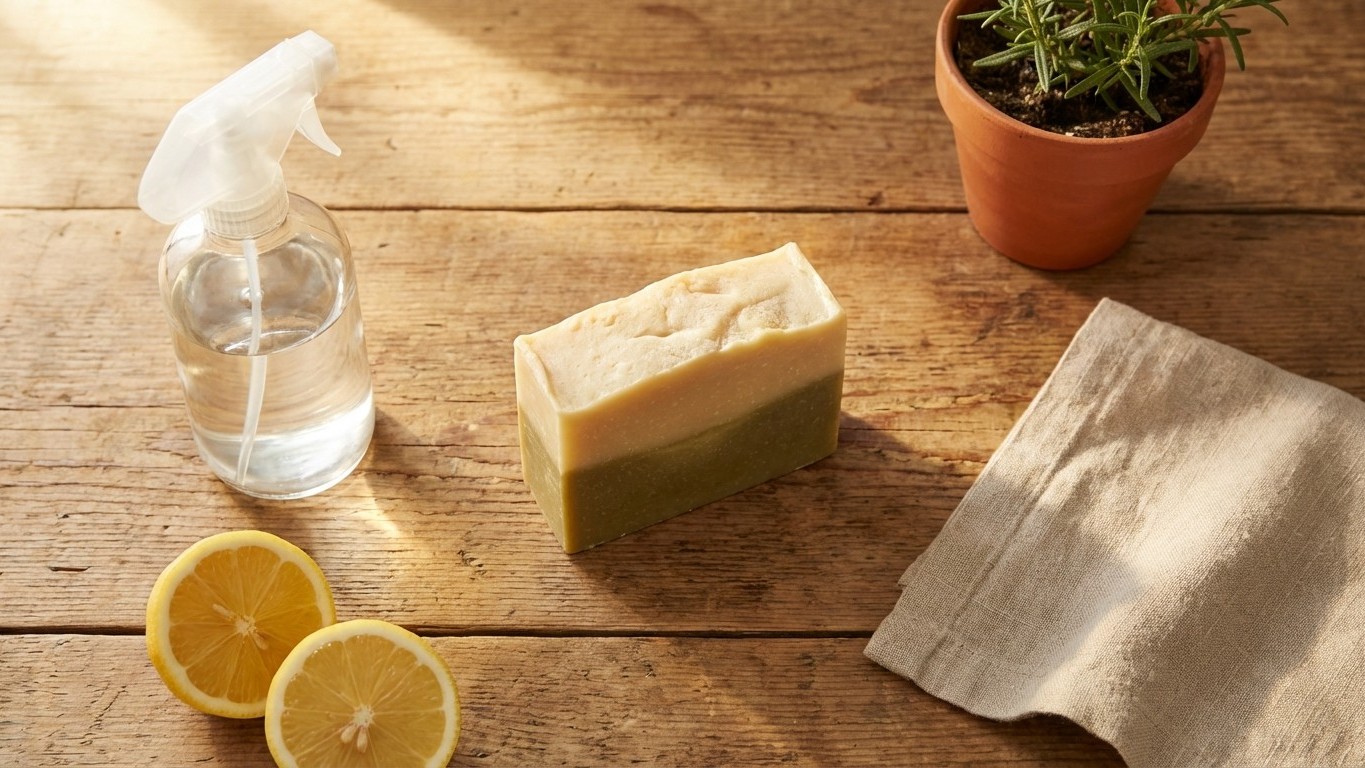
A bar of castile soap sitting quietly on your kitchen shelf holds more cleaning power than most people realise. Made from plant oils, free from synthetic detergents and petrochemicals, it can tackle greasy hobs, bathroom grime, scuffed floors and limescale-edged taps, all without the cocktail of chemicals that come with conventional cleaners. If you have young children crawling across the kitchen floor, a cat that insists on licking every surface, or simply a desire to reduce the number of plastic bottles under the sink, this is a genuinely useful ingredient to master.
The catch? Castile soap is brilliant when used correctly and surprisingly ineffective when used wrong. More on that shortly.
Why Castile Soap Earns Its Place in Your Cleaning Cupboard
Where It Comes From and What It Contains
Castile soap takes its name from the Castile region of Spain, where olive oil was traditionally the base ingredient. Today, most castile soap is made from a blend of vegetable oils, commonly olive, coconut and hemp, saponified with sodium or potassium hydroxide. The result is a true soap, meaning the oils have been chemically transformed into a cleaning agent, rather than a synthetic surfactant mixed with stabilisers and fragrance. Liquid castile soap, the kind sold in bottles, uses potassium hydroxide, which keeps it soft and pourable. Bar versions use sodium hydroxide.
The ingredient list is refreshingly short. A good quality castile soap contains saponified oils, water, and sometimes a small amount of vitamin E or essential oil. No sulphates, no parabens, no optical brighteners. For households trying to reduce their toxic load, that simplicity is the whole point.
Genuinely Eco-Friendly, Not Just a Label
Biodegradability is one of castile soap’s strongest credentials. Plant-derived soaps break down readily in water treatment systems and won’t linger in waterways the way some synthetic surfactants do. The packaging tends to be minimal, and because you dilute it heavily before use, one bottle goes a very long way, often lasting months in a busy household. That makes it budget-friendly as well as kind to the environment.
For families with young children or pets, the safety profile matters enormously. Castile soap is non-toxic at the concentrations used for cleaning. A small amount accidentally ingested by a child or a dog who laps a freshly mopped floor is not a medical emergency. Compare that to some conventional bathroom cleaners and the difference is stark.
Before You Start: Dilutions, Compatibility and Common Sense
Getting the Concentration Right
Castile soap is concentrated, and the instinct to use more is almost always wrong. Using it neat or at high concentration leaves a filmy residue that streaks surfaces and, on floors, can make tiles slippery. The general rule is less than you think.
For a general all-purpose spray, add one tablespoon of liquid castile soap to 500ml of water in a spray bottle. For mopping floors, half a tablespoon per bucket of warm water is usually plenty. Washing up by hand requires about a teaspoon in a bowl or sink of warm water. Heavy-duty degreasing, say a very greasy hob, might warrant a slightly stronger mix, two tablespoons per 500ml, but start dilute and adjust rather than the other way round.
Which Surfaces Play Nicely (and Which Don’t)
Castile soap works beautifully on ceramic tiles, porcelain, glass, sealed stone, stainless steel, painted surfaces and most laminates. It is gentle enough for baby toys, food preparation surfaces and sealed wooden floors with a durable finish.
However, unsealed or waxed wood is a different matter. Castile soap can strip wax finishes and penetrate unsealed grain, potentially raising or discolouring the wood over time. Treat it with care on antique wooden furniture. Natural stone, such as marble or limestone, is also worth approaching cautiously: while dilute castile soap is generally safe, always rinse thoroughly, as any residue left on porous stone can dull the surface. If you’re working on delicate parquet or heritage floors, a specialist guide on sealed versus unsealed finishes is worth consulting before you experiment.
Castile Soap Cleaning Hacks for the Kitchen
An All-Purpose Degreasing Spray
The kitchen is where castile soap genuinely shines. Grease responds well to soap, which is, after all, what soap was invented to tackle. For worktops, the splashback behind the hob, the outside of cupboard doors (that mysterious sticky film that accumulates) and the kitchen sink, mix one tablespoon of liquid castile soap with 500ml of warm water in a spray bottle. A few drops of tea tree oil adds mild antibacterial action if you like.
Spray, leave for thirty seconds on greasy areas, then wipe with a damp cloth. For baked-on residue around hob rings, apply a slightly stronger concentration, allow a minute or two to work, then use a non-scratch scourer. Rinse the surface with a clean damp cloth afterwards to avoid streaking.
A Homemade Washing-Up Liquid
This won’t foam as dramatically as commercial washing-up liquid, and that’s fine. Foam is cosmetic; it doesn’t clean. Mix 250ml of liquid castile soap with 250ml of water, add two teaspoons of vegetable glycerin (which helps condition your hands and improves the texture) and a few drops of lemon or lavender essential oil if you like. Pour into an old pump bottle. Use roughly a teaspoon per washing-up bowl. It cuts through everyday food residue well, though very greasy pans may need a pre-soak.
Mopping the Kitchen Floor
For ceramic tiles, vinyl, lino or sealed concrete, add half a tablespoon of castile soap to a full bucket of warm water. Mop as usual, then rinse with a second pass of plain water. That second pass is non-negotiable: skipping it leaves a faint film that attracts dirt faster than a clean floor would. On very dirty floors, you can add a tablespoon of washing soda (not baking soda) alongside the castile soap for extra cleaning power.
Floors Throughout the House: What Works Where
Castile soap is a reasonable choice for most sealed hard floors, but the approach needs adjusting by surface type. Ceramic and porcelain tiles tolerate it well at the half-tablespoon-per-bucket dilution. Vinyl and lino floors respond similarly. For sealed parquet or engineered wood flooring with a hardwearing lacquer finish, use an even more dilute solution, a teaspoon per bucket, and wring the mop out almost dry before it touches the floor. Standing water and wood are never friends.
Natural stone floors, including slate, travertine and flagstone, need particular attention. While castile soap is less acidic than vinegar or lemon juice (more on that shortly), a thorough rinse is still important to avoid any build-up in the surface texture. Polished marble floors are best left to specialist products entirely.
For a light fresh scent and a gentle boost on hard floors, ten drops of lavender or eucalyptus essential oil added to the mop bucket is a pleasant addition. Eucalyptus in particular has some evidence behind its antimicrobial properties. Pine essential oil is another traditional choice that smells wonderfully clean without being harsh.
Bathrooms and Sanitaires: Recipes That Actually Work
Sinks, Baths, Basins and Loos
The bathroom is where castile soap works hard. For the sink and bath, a simple spray of one tablespoon per 500ml of water, combined with a microfibre cloth, handles everyday soap scum and toothpaste splashes without effort. For a more thorough clean, make a soft scrub by mixing castile soap with bicarbonate of soda to a paste consistency. Apply to the basin or bath, leave for a few minutes, then scrub and rinse. The bicarbonate provides mild abrasion without scratching.
For the toilet, add two tablespoons of castile soap directly into the bowl, leave for several minutes, then scrub with the loo brush. A spray of the diluted solution on the outer surfaces, seat and rim, then wiped down, handles the rest. Ten drops of tea tree oil in the bowl adds genuine disinfecting properties.
Grout, Shower Curtains and Taps
Grout lines and shower curtains tend to harbour mildew. For grout, apply the castile and bicarbonate paste directly, scrub with an old toothbrush and rinse well. For fabric shower curtains, add 60ml of castile soap directly to the washing machine drum alongside the curtain, on a cool gentle cycle. For plastic curtains, soak in a bucket of warm water with three tablespoons of castile soap for twenty minutes, then rinse.
Limescale on taps and showerheads is the one area where castile soap alone won’t get you far. Limescale needs an acid to dissolve it, and castile soap is alkaline. For those stubborn chalky deposits, you’ll want to reach for lemon juice or white vinegar instead. There are excellent methods for this covered in our guide to cleaning hacks with lemon for limescale.
The Mistakes That Make Castile Soap Useless (or Worse)
Here is where most natural cleaning guides let you down. They tell you what to do with castile soap but skip over the combinations that actively undermine it.
The biggest mistake is mixing castile soap with vinegar or lemon juice in the same spray bottle. This one comes up constantly in DIY cleaning circles, often as a “super cleaner” formula. The reality is almost comic: vinegar and lemon juice are acids, castile soap is alkaline, and when you combine them, they neutralise each other. The soap unsaponifies, leaving a grey, curdled, greasy mess that is harder to clean up than what you started with. Use them separately. Vinegar after castile soap, once you’ve rinsed, works fine. Mixing them in advance does not.
Hydrogen peroxide is another ingredient to keep away from castile soap. Mixed together, they can reduce the effectiveness of both and may produce unwanted byproducts on certain surfaces. Similarly, bleach and castile soap should never be combined. The mixing of soap with chlorine bleach creates chlorine gas, which is genuinely dangerous. To explore how other natural ingredients interact in a cleaning context, the overview at cleaning with vinegar and baking soda hacks covers the broader picture well, as does this more focused look at cleaning with vinegar and baking soda hacks which addresses dosing and when to avoid certain combinations.
Hard water is a subtler issue. In areas with very hard tap water (much of southern England and the Midlands), castile soap can react with the calcium and magnesium in the water to leave a white film. This doesn’t mean castile soap is useless in hard water areas, just that a rinse with plain water is more important, and you may need to use slightly more soap than you would in a soft water region.
Your Questions Answered
Is castile soap actually antibacterial? Soap works against bacteria and some viruses through a mechanical action: it disrupts cell membranes and helps lift microbes from surfaces so they rinse away. It is not a registered disinfectant in the way that products containing specific biocidal agents are, but regular cleaning with castile soap removes the majority of everyday germs effectively. Adding tea tree or eucalyptus essential oil strengthens this. For clinical-grade disinfection, you’d need a different product entirely.
Does it work against limescale? No. Castile soap is alkaline and limescale is an alkaline mineral deposit. You need an acid to tackle it. Castile soap will clean around limescale and help with general bathroom film, but for the crusty white scale on a showerhead or around taps, lemon juice or white vinegar are your tools. Use them separately, after any castile soap cleaning and a good rinse.
Is it safe around children and pets? At household cleaning dilutions, yes. Castile soap is non-toxic and breaks down quickly. It’s one of the reasons it’s popular with families trying to reduce chemical exposure at home. Don’t use undiluted soap on pet skin without checking with a vet, but mopped floors and wiped surfaces are perfectly safe once dry.
Ten Quick Reminders to Keep on the Fridge
- Always dilute: one tablespoon per 500ml for sprays, half a tablespoon per bucket for floors
- Never mix castile soap with vinegar, lemon juice or hydrogen peroxide in the same bottle
- Rinse surfaces after cleaning to avoid filmy residue
- Use bicarbonate of soda as a separate scrub, never pre-mixed with the soap
- Test on sealed versus unsealed stone before committing to a whole floor
- For limescale, switch to an acidic cleaner after rinsing away the soap
- Add tea tree oil for extra antibacterial action in bathrooms
- Hard water areas may need extra rinsing or slightly more soap
- Bar castile soap can be grated and dissolved in water for a DIY laundry liquid
- One bottle of concentrated liquid castile soap can genuinely replace several conventional products
Castile soap won’t solve every cleaning challenge in your home, and anyone who tells you otherwise is overselling it. But used thoughtfully, with proper dilutions and an understanding of what it can and cannot do, it earns a permanent place in any home that values simplicity, safety and a lighter environmental footprint. For a broader view of how it sits alongside other natural cleaning ingredients, the comprehensive collection at natural cleaning hacks is worth a long browse on a quiet afternoon.