
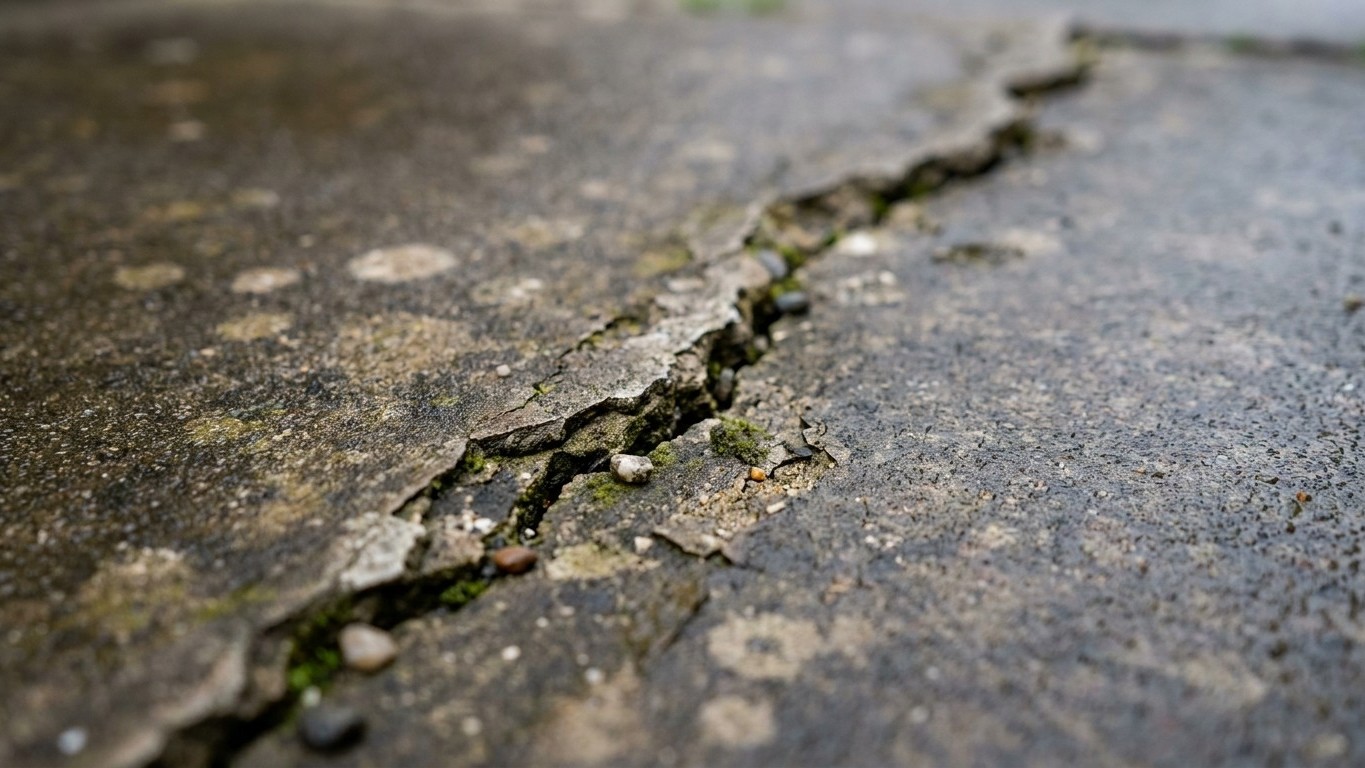
Last summer I tipped a bag of ready-mix concrete straight into the cracks running across my patio and smoothed it flat with a float, feeling rather pleased with myself. By the following spring, every single crack had reopened, some wider than before. The scraping I did that chilly April morning was not just frustrating; it was educational. What I found beneath the surface told me Everything I had done wrong, and why plain concrete poured into a crack is almost guaranteed to fail.
Key takeaways
- Why two different concretes refuse to bond together, no matter how well you smooth them
- How British winters weaponize your repair against itself through invisible physics
- The single preparation step that separates lasting repairs from cosmetic disasters
The fundamental problem: concrete versus concrete
The mistake seems logical on the face of it. Cracks in concrete, fill them with concrete. The trouble is that the existing slab and a fresh mix are two entirely different materials at that moment, and they do not bond naturally to each other. More than half of repaired concrete structures fail due to re-cracking of the repair material itself or delamination and peeling from the concrete matrix. That statistic stopped me in my tracks when I first read it, because it means most DIY patch-ups are fighting a losing battle from day one.
Cracks and joints in concrete are dynamic, they move. Because standard cement lacks flexibility, it cannot accommodate this movement, and even slight shifting can cause the repair to crack, separate, or fail prematurely. The old slab expands in the summer heat and contracts on cold nights, and a rigid plug of new concrete simply cannot keep up. The seam between old and new becomes a stress point, not a bond.
There is also the shrinkage problem. As concrete hardens and dries it shrinks, due to the evaporation of excess mixing water. The wetter the mix, the greater the shrinkage, and concrete slabs can shrink as much as half an inch per 100 feet. So the very moment my patched-in concrete began to set, it was already pulling slightly away from the walls of the crack it was supposed to fill. I had essentially created a new, thinner crack inside the old one.
What the British climate does to make things worse
Here in the UK, our winters are not Siberian, but they are relentlessly damp and peppered with freeze-thaw cycles, and those cycles are a concrete patio’s worst enemy. Freeze-thaw deterioration happens when water infiltrates the pores or cracks in concrete. As temperatures drop, the water freezes and expands, increasing internal pressure. When temperatures rise, the ice melts, but the cycle repeats again, causing micro-cracking, delamination, and eventually major surface breakdown.
My repair had left tiny gaps at the edges, invisible to the eye, but wide enough for rainwater to seep in. Every frost from November to March had been working away at those margins like a slow chisel. The volume of ice is greater than the volume of an equivalent amount of water, and the thermal expansion of ice is approximately five times larger than that of hardened cement paste, resulting in cracking of the concrete upon thawing. That is a brutal physics lesson written right there on your patio surface.
British Standard BS 8500 requires air-entrained concrete with 4–7% air content by volume for exposed external applications including patios, paths, and external floors. These microscopic air voids act as relief valves that accommodate the expansion of freezing water, preventing the internal pressures that cause cracking and spalling. My bag of ready-mix from the hardware shop had no such specification, and I had made no attempt to check.
How to do it properly the next time
After my springtime reckoning, I spent some time getting the repair right. The single most important lesson: preparation is the whole job. Before fixing a crack, the area needs to be ready. Skipping prep often leads to poor results that don’t last, the better the prep, the better the repair will stick.
Start by clearing the crack thoroughly. Remove any dirt, debris, and loose concrete pieces, a wire brush or a pressure washer can be useful for this task, and ensuring the area is clean will help the repair materials bond effectively with the existing concrete. Then, and this is the step I skipped entirely, you need to open the crack up slightly rather than try to pour into a tight, dusty slot. You need to widen the crack to provide a better surface for the filler to adhere to. Use a grinder or a chisel and hammer to grind open the crack — this removes weak or crumbling concrete and creates a groove that the filler can grip onto.
The choice of filler matters enormously. Once the crack is prepared, fill it with a high-strength, waterproof epoxy or polyurethane product rather than plain mixed concrete. Polyurethane or latex-based fillers are flexible, easy to apply, and good for minor cracks. That flexibility is the key property, the filler moves with the slab rather than fighting it. Using concrete bonding adhesives helps the new material adhere to the old one, increasing the bonding strength up to two times. A small tube of bonding agent, applied to the sides of the crack before filling, costs very little and makes an enormous difference.
Temperature matters too. Apply crack filler when temperatures are above 10°C for better adhesion, which in Britain means waiting patiently for a decent dry spell between April and October rather than rushing the job on a chilly weekend. The curing time for patch material is at least 24 hours before using the patio, so do not let the dog out onto it overnight.
After the repair: sealing and preventing recurrence
Once the filler has fully cured, sealing the whole patio surface is the most protective step you can take. Water is the archenemy of concrete and the primary cause of cracks. By applying a good concrete sealer every three to five years, you can prevent moisture from soaking into porous concrete, helping to keep it crack-free. A penetrating sealant is a modest outlay compared to a full re-lay.
Cracks that reopen after being filled usually indicate movement in the ground beneath the patio. If your patio shows the same crack reopening repeatedly in the same place, or if one side has dropped lower than the other, no filler on earth is going to hold permanently. Settling ground shifts over time, especially in newer construction where fill soil has not fully compacted, areas that were excavated and backfilled often settle unevenly for years afterward. In that case, a contractor who can address the sub-base is the only lasting answer.
One thing worth knowing: most patio cracks are cosmetic rather than structural, but ignoring them allows water to penetrate beneath the slab, exacerbating the underlying issue and accelerating the damage cycle. The crack itself is rarely the crisis, it is what happens inside that crack over the following winters that eventually forces a costly repair. My summer of misguided ready-mix taught me that concrete is not simply a single, passive material. It breathes, it moves, it reacts to temperature and water with surprising force — and any repair that ignores those facts will not survive its first British winter.
Sources : ncbi.nlm.nih.gov | lapispatios.com