
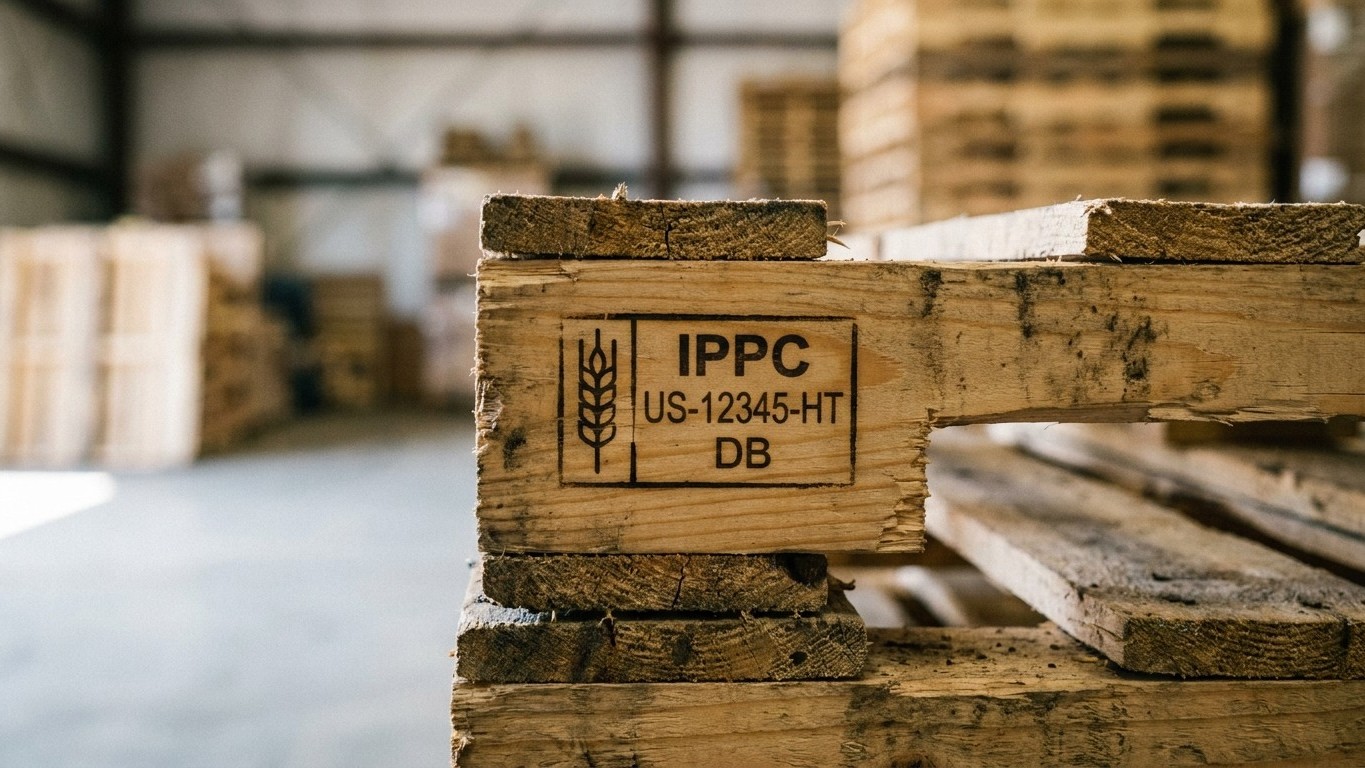
Pallet shelves are everywhere right now, stacked in living rooms, propped against kitchen walls, photographed on interiors blogs from Bristol to Dundee. Free, rustic, and charming, they seem like the perfect budget upcycle. But before you drag that pallet in from the car park and reach for the sandpaper, there’s one small stamp you really must check first. Two letters. They matter more than you’d think.
Key takeaways
- A banned chemical from 20+ years ago is still showing up on pallets imported from abroad
- Two letters on a pallet stamp determine whether it’s safe for your home or a health hazard
- Even ‘clean’ pallets can carry invisible contamination from their shipping history
The Chemical That Was Banned Over Twenty Years Ago : And Is Still Turning Up
Methyl bromide is a highly toxic colourless gas that was once widely used as a fumigant and pesticide for timber, soil, and agriculture. Its fumigation use was banned in Europe in 2005 because of its damaging effects on the environment, under the Montreal Protocol on Substances that Deplete the Ozone Layer. So far, so reassuring. The problem is that pallets have long lives and cross many borders. Methyl bromide treatment for pallets was banned as far back as 2005, but people are still receiving MB-stamped pallets from abroad.
Methyl bromide was classified as a “controlled substance” under the Montreal Protocol in 1992, a decision arising from growing concerns about its contribution to ozone depletion. Also, its toxicity, safety risks, negative impacts on biodiversity, and potential for water pollution. The health picture is equally troubling. Methyl bromide is a neurotoxicant. It also causes respiratory, cardiovascular, reproductive, and developmental toxicities in animals. The gas is especially insidious because it is odourless and can accumulate in the human system before its effects are noticed. First symptoms are often due to damage to the nervous system and may be delayed from 48 hours to as long as several months after exposure, a delay that, combined with the lack of odour, means a person may not realise exposure has occurred until much time has passed.
That said, context matters. The most significant health concerns surrounding methyl bromide treatment are for the operatives who applied the gas, who risked inhaling it directly. Whilst there may be residual traces on MB-stamped pallets long after treatment, the risk of emission from pallets in general circulation is described by the pallet industry as “likely to be insignificant.” Still, the precautionary principle applies firmly here, the consensus across safety bodies, pallet suppliers, and extension programmes alike is consistent: do not use pallets with an “MB” stamp for any purpose.
Learning to Read the Stamp (It Only Takes Ten Seconds)
Pallets for international use must comply with ISPM 15 regulations. These pallets must be treated either using heat or chemicals to ensure they don’t harbour any pests, and they carry a stamp mark to confirm this has been carried out. That stamp is your most important piece of information. The IPPC logo and treatment code are stamped or branded directly onto the pallet, usually on one of the stringers or blocks. It includes the IPPC symbol (a stylised ear of grain), a country code, and a unique registration number assigned to the manufacturer.
The treatment codes break down simply: HT indicates heat treated, MB shows that the pallet has been treated with methyl bromide, DB means the wood has been debarked, and KD means kiln-dried. Using heat-treated pallets in your recycling projects is perfectly fine; they’ve undergone a process of heating in a kiln to eliminate any pests in the timber. This process involves placing pallets in specialised kilns where they are heated to a core temperature of at least 56°C and maintained at that temperature for a minimum of 30 minutes. No chemicals, no residue, no worry.
Newer British, Canadian, and American pallets are largely safe, as most are heat- or pressure-treated rather than fumigated with chemicals. If you’re sourcing pallets locally, from a DIY warehouse, a garden centre, or a trusted UK business — you’re very likely to find an HT stamp. The riskier pallets tend to arrive from further afield. If you find an MB pallet, likely from Asia or Oceania, please do not use it for your craft projects or as firewood; find a waste-removal company that can dispose of it properly.
Beyond the Stamp: The Cargo Problem Nobody Mentions
Here’s the part that even attentive crafters tend to overlook. The treatment stamp tells you how the wood was processed before it left the factory. It tells you nothing whatsoever about what has been stacked on it since. Pallets can become contaminated with chemicals spilled on them during the shipping process. If there are any spills, oil, food, or unknown substances, do not use the pallet. Pallets are frequently used to transport dangerous or toxic chemicals and liquids.
Some pallets have been used for shipping dangerous goods and are often contaminated with toxic chemicals from containers leaking, especially CP-marked pallets that were specifically produced to ship chemical products. Wood is very porous, and you’re really never sure if you’ve gotten Everything-worse/”>Everything out of there. That’s a sobering thought when the shelf in question will sit next to your kitchen herbs or your children’s books. Heavy metals such as lead, cadmium, or chromium may be present in pallets due to old industrial coatings. These metals are persistent and toxic: lead damages the nervous system, cadmium accumulates in the kidneys and is carcinogenic, and chromium can be highly irritating. The danger lies in their potential release into dust or food when in contact with the wood.
The practical rule, then, is to treat visual inspection as seriously as stamp-reading. Inspect the pallet for any signs of stains, odours, or spills, which can suggest previous exposure to chemicals. Greenish or glossy patches may indicate chemical treatment. Strong chemical smells are also a red flag. If you’re not sure, walk away, there are usually plenty more where that came from.
Using Pallets Safely: A Practical Guide for Your Project
The good news is that a genuinely safe pallet project is entirely achievable. The aim is simply to stack the odds firmly in your favour before you pick up the drill.
- Look for HT, KD, or EPAL — these are your green lights. The EPAL (European Pallet Association) mark assures compliance with stringent manufacturing and safety standards, and pallets with these certifications are generally safer and less likely to contain toxic substances.
- Avoid any pallet stamped MB — MB-treated pallets should not be used in DIY projects, and the wood should not be burned. They should be taken to an approved waste disposal site for safe handling.
- Skip unmarked pallets for indoor use — when you cannot establish whether a pallet is safe or not, do not use it for indoor projects such as a headboard, coffee table, or other pallet furniture unless it comes from a trusted source.
- Wear a dust mask when sanding — sanding pallet wood can create dust with harmful substances, so it’s important to wear respiratory protection.
- Seal the finished piece — a good coat of wax, oil, or varnish forms a physical barrier between any residual contaminants in the wood and the people living alongside it.
One final thought worth tucking away: research has found more than 30,000 cases of emergency room visits for pallet-related injuries between 2014 and 2018, suggesting the need for a higher level of knowledge about pallet hazards. Most of those were physical injuries from dismantling, nails, splinters, the sheer stubborn weight of the things, rather than chemical exposure. The chemical risk is real but manageable. The DIY risk, oddly enough, is statistically the bigger hazard. Two letters on a stamp, a careful eye for stains, and sensible PPE when sawing: that’s really all that stands between a beautiful homemade shelf and one you’d quietly rather not have.
Sources : ozone.unep.org | watrex.com