
A small, stubborn problem that loves to show itself
Underarm marks have a talent for appearing at the worst moment: a crisp white shirt for work, a pale blouse for dinner, a favourite T-shirt you thought was “still fine”. The good news, love, is that you can remove sweat stains naturally Without chasing them round the fabric or leaving those dreaded yellow halos behind. A little chemistry, a little patience, and the right method for the right textile will beat most sweat stains on a sensible budget.
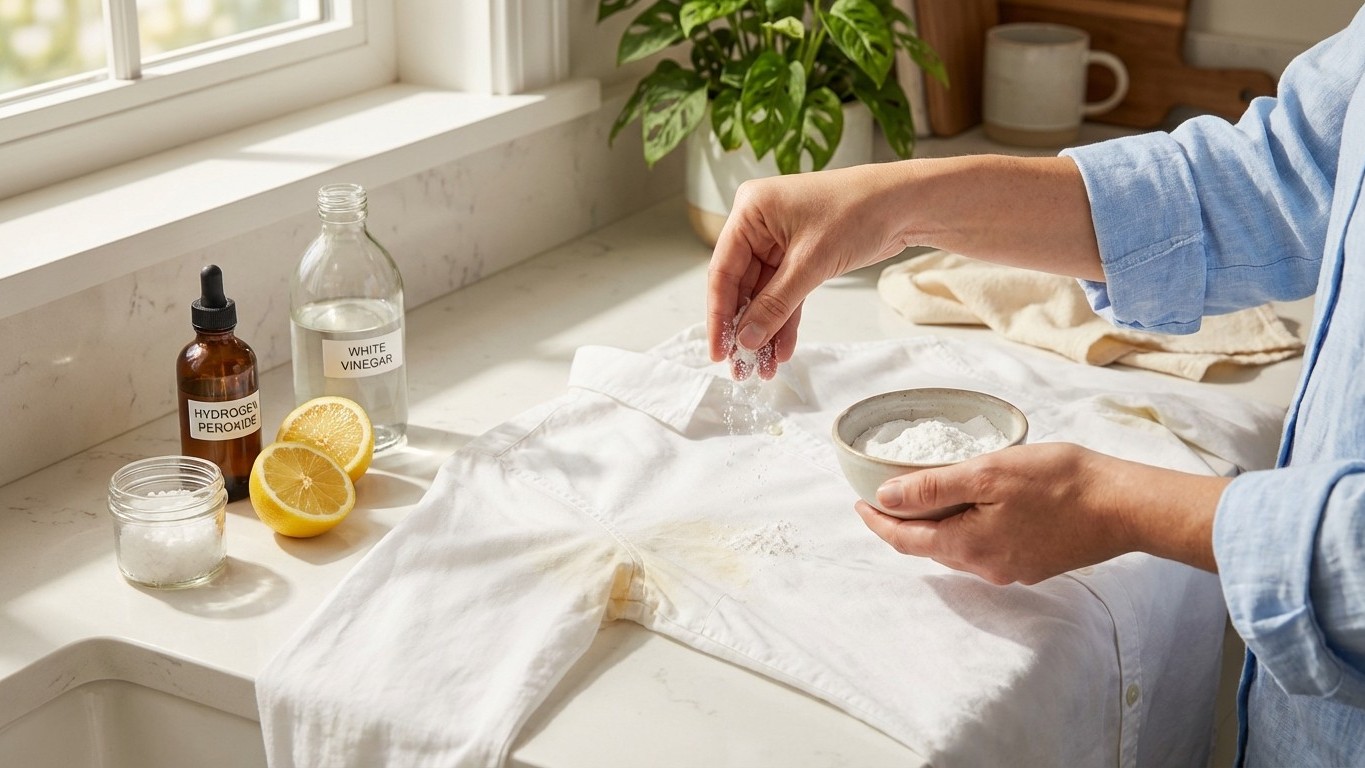
This guide focuses on practical, home-friendly ingredients: bicarbonate of soda, white vinegar, lemon, hydrogen peroxide (a pharmacy staple in the UK, usually sold as dilute solution), and plain salt. I will also show you how to prevent the stains in the first place, because prevention is cheaper than replacing shirts in February 2026 and beyond.
Why do sweat stains appear?
Understanding what sweat actually contains
Sweat is mostly water, but it carries a mix of salts, skin oils, and tiny amounts of proteins and other compounds from your body. On its own, fresh sweat can dry almost invisibly on many fabrics. Trouble starts when those components build up, get warmed by body heat, and then meet deodorant or antiperspirant ingredients in the fibres.
Odour is a separate issue. It comes largely from bacteria on skin breaking down sweat and oils. That means you might have a garment that smells but shows no staining, or one that looks yellow but does not smell strongly. The treatment can overlap, but it helps to know what you are fighting.
Aggravating factors (fabric, deodorants, and washing habits)
- Antiperspirants often contain aluminium salts that can react with sweat components and detergents, helping stains “set” into fabric, particularly under heat.
- Heat is a big culprit. Tumble drying or ironing before a stain is fully removed can lock it in.
- Hard water (common in many parts of the UK) can reduce detergent performance and encourage residue build-up.
- Fabric type matters. Cotton absorbs and holds onto residues. Synthetics can trap oils and odour. Delicates like wool and silk dislike harsh alkalines and acids.
- Too much detergent can leave residue that clings to sweat and deodorant, making the underarm area dingy over time.
If you want a broader set of laundry-friendly routines, have a look at Natural laundry hacks : taches, blanc, odeurs et textiles fragiles”>natural laundry hacks, it pairs nicely with the stain methods below.
A closer look at yellow underarm halos: myth or fate?
The chemistry behind the yellowing
That yellow tone is rarely “just sweat”. It is often a reaction between sweat components and antiperspirant salts, plus oxidation over time. Add warm washing, tumble drying, and the occasional overdosed detergent, and the underarm area becomes a little chemistry project stitched into your shirt.
Whites show it first, but pale colours can go dull too. Some fabrics also yellow simply from ageing and repeated heating, even when the garment looks clean.
Can you really prevent yellow marks?
Most of the time, yes. You cannot change the fact you perspire, and you should not try, but you can reduce build-up and prevent “setting”:
- Let deodorant dry fully before dressing. It sounds small, but it reduces transfer into fibres.
- Wash sweaty items promptly, or at least rinse the underarms in cool water if laundry day is tomorrow.
- Avoid high heat until stains are gone: no tumble dry, no hot iron on the underarms.
- Use a targeted pre-treatment rather than stronger and stronger main washes.
For white laundry care in general, you may also like whiten clothes naturally without bleach, it covers brightening methods that work alongside sweat-stain removal.
Natural methods to remove sweat stains: step-by-step guide
Before you start: fabric precautions (cotton, wool, silk, synthetics)
Take 60 seconds to check the care label and do a tiny patch test inside a hem or seam. Natural ingredients are gentler than many commercial stain removers, but “natural” can still be reactive.
- Cotton and linen: usually tolerate bicarbonate, vinegar, lemon, and dilute peroxide well. Great candidates for paste treatments.
- Synthetics (polyester blends, sportswear): respond well to vinegar soaks for residue and odour, plus gentle rubbing. Avoid very hot water, it can trap odour.
- Wool: avoid bicarbonate pastes and long vinegar soaks. Use cool water and mild soap, spot clean briefly.
- Silk: be cautious with acids and peroxide. Spot clean quickly with cool water and a tiny amount of gentle soap. When in doubt, a specialist cleaner is kinder than experiments.
General rule: never mix vinegar and hydrogen peroxide in the same bowl or bottle. Use one method at a time, rinse well, then move to the next if needed.
Natural stain-remover recipes (bicarbonate, vinegar, lemon, hydrogen peroxide, salt)
Here are my budget staples and what they do:
- Bicarbonate of soda: mild alkaline cleaner, helps lift residues and lightly deodorise, best as a paste for cotton.
- White vinegar: mild acid, helps dissolve mineral and deodorant residue, excellent for synthetics and build-up.
- Lemon juice: acidic and can help brighten, but may lighten dyes and can be photo-reactive in sunshine.
- Hydrogen peroxide (dilute solution): gentle oxidiser that can help with yellowing on whites, but may fade colours.
- Salt: mild abrasive and helps draw moisture and residue, handy for fresh stains and as a support ingredient.
Bicarbonate paste method (best for cotton underarms)
Good for: fresh to moderate sweat stains, grey underarm build-up, odour.
Avoid on: wool, silk, leather trims.
- You will need: 2 tablespoons bicarbonate of soda (about 30 g), 1 to 2 tablespoons cool water (15 to 30 ml), a soft toothbrush or clean nail brush, a bowl.
- Step 1: Make a paste. Start with 2 tbsp bicarbonate and add water slowly until you get a spreadable paste, like thick yoghurt.
- Step 2: Turn the garment inside out. Wet the stained area lightly with cool water.
- Step 3: Spread the paste over the stain, about 2 to 3 mm thick.
- Step 4: Gently work it in with the brush for 30 to 60 seconds. You are persuading the fibres, not sanding the shirt.
- Step 5: Leave for 30 minutes. For heavier build-up, leave up to 2 hours, keeping it slightly damp.
- Step 6: Rinse thoroughly in cool water. Check the stain in good light.
- Step 7: Wash as normal. Air dry and re-check before any heat.
If the underarms feel stiff after washing, it is usually residue. An extra rinse or a short vinegar rinse (see below) can help.
White vinegar soak (excellent for deodorant build-up and synthetics)
Good for: odour, residue, sportswear, and early yellowing caused by build-up.
Use with care on: wool and silk, keep contact brief.
- You will need: 250 ml white vinegar, 1 litre cool or lukewarm water, a basin.
- Step 1: Mix 1 part vinegar to 4 parts water (for example, 250 ml vinegar + 1 litre water).
- Step 2: Submerge the underarm area. If soaking a whole garment, ensure it is fully covered.
- Step 3: Soak 30 minutes for synthetics, up to 60 minutes for sturdy cotton.
- Step 4: Rinse well. Smell the fabric, vinegar scent fades as it dries.
- Step 5: Wash as usual using your normal detergent amount, not extra.
A vinegar rinse can also replace commercial softener for many households. If that interests you, natural fabric softener alternative goes into what helps and what is just wishful thinking.
Lemon and salt spot treatment (for fresh marks and brightening whites)
Good for: fresh sweat marks on whites, light staining on cotton.
Avoid on: dark colours, silk, and anything you cannot risk lightening.
- You will need: 1 tablespoon lemon juice (15 ml), 1 tablespoon fine salt (about 15 g), 1 tablespoon cool water (15 ml).
- Step 1: Mix lemon juice, salt, and water into a loose paste.
- Step 2: Dab onto the stain. Do not rub aggressively, salt can be scratchy on finer weaves.
- Step 3: Leave 15 to 20 minutes.
- Step 4: Rinse very well in cool water, then wash.
Keep treated items out of direct sunshine while wet with lemon juice, as light can amplify bleaching effects.
Hydrogen peroxide method (best for yellow halos on white cotton)
Good for: set-in yellowing on white cotton and sturdy blends.
Avoid on: coloured garments, wool, silk, elastane-heavy fabrics, and anything labelled “do not bleach”.
- You will need: dilute hydrogen peroxide solution, cool water, a white cloth, optional bicarbonate.
- Option A, gentle dab: Pour a small amount of peroxide onto a white cloth and dab the stain from the inside of the garment. Leave 10 minutes, then rinse.
- Option B, boosted paste for stubborn yellow: Mix 2 tablespoons bicarbonate (30 g) with 1 tablespoon peroxide (15 ml) and 1 tablespoon water (15 ml). Apply, leave 20 minutes, rinse thoroughly, then wash.
Peroxide is effective, but it is still a bleaching agent in practice. Patch test, ventilate the room, and keep it away from children and pets. Store it in its original container, away from light, because it breaks down over time.
Salt-only first aid (when you cannot treat properly yet)
Good for: fresh sweat marks while travelling or at work, before you can wash.
- You will need: 500 ml cool water, 1 tablespoon salt (15 g), a clean cloth.
- Step 1: Dissolve salt in cool water.
- Step 2: Blot the underarm area from the inside, then the outside.
- Step 3: Air dry. Wash properly as soon as you can.
How to prevent sweat stains in future
Eco-friendly, effective laundry routines that actually help
Prevention is mostly about reducing residue, avoiding heat-setting, and washing with intention rather than intensity.
- Pre-rinse the underarms in cool water when you take the garment off. Thirty seconds can prevent a week of annoyance later.
- Use the right amount of detergent. Too much leaves a film that holds odour and grime.
- Add an extra rinse if you live with hard water or notice stiffness in underarms.
- Air dry when possible, at least until you know the stain is gone. Heat is wonderful for toast, less so for stains.
- Rotate garments. Giving fibres a rest between wears helps sweat salts and oils dissipate with a wash, rather than building up day after day.
If you are building a whole-house routine, natural cleaning hacks gathers sensible, low-cost ideas beyond the laundry basket.
Fabrics to choose (and those to treat with caution)
- Breathable natural fibres (cotton, linen) often show stains more, but they also respond well to treatment and hot washing when appropriate.
- Performance synthetics wick moisture but can hold odour and deodorant residue. Vinegar soaks and cooler washes help.
- Delicates (silk, wool) look lovely, but they reward gentle care and fast spot treatment. Keep deodorant fully dry before wearing.
- Underarm shields or washable liners can be an old-fashioned trick that still earns its keep, especially for work shirts you want to last.
FAQ: sweat stains and tricky cases
What about coloured clothes?
Start with the least colour-risky option: a diluted vinegar soak (1:4) or a small bicarbonate paste test on an inside seam. Avoid peroxide and lemon on colours unless you are prepared for possible fading. For coloured cotton, a short bicarbonate paste treatment (20 to 30 minutes) followed by a normal wash is often enough, especially if you tackle the stain early.
How do I remove an old sweat stain without “chemical” products?
Older stains need a two-step approach because they contain both residue and oxidation.
- Step 1: Vinegar soak (1 part vinegar to 4 parts water) for 45 to 60 minutes, rinse well.
- Step 2: Bicarbonate paste for 1 to 2 hours on cotton, rinse.
- Step 3: Wash and air dry.
If it is a white cotton shirt and the yellowing remains, peroxide used carefully can be the final nudge. That is still a fairly simple household ingredient, but it is doing real oxidising work, so treat it with respect.
Is bicarbonate safe on every textile for sweat stains?
No, not every textile. Bicarbonate is alkaline, which can trouble protein fibres like wool and silk, especially with rubbing and long contact time. On those fabrics, keep to cool water, a tiny amount of mild soap, brief spot cleaning, and minimal agitation. For delicate items you treasure, a professional cleaner is often cheaper than replacing a ruined piece.
What is the best natural solution for yellow underarm stains on white shirts?
For most households, the best sequence is: vinegar soak to remove deodorant minerals, then a bicarbonate paste to lift residue, then a careful peroxide spot treatment only if the yellow tone persists. Skipping the vinegar step can leave mineral build-up behind, which is why some people feel they are “chasing the yellow” forever.
How do I remove sweat odour that lingers after washing?
Odour usually means residue plus bacteria. A vinegar soak is often the quickest fix, followed by a thorough wash and full drying. Synthetics respond well to cooler washes with an extra rinse, as overheating can trap smells. Avoid piling damp sportswear in a basket, it turns into a little greenhouse.
A simple anti-sweat-stain routine you can print and keep by the basket
- After wearing: quick cool rinse of underarms, hang to air.
- Before washing: choose one pre-treatment, vinegar soak for build-up or bicarbonate paste for visible marks.
- Wash day: normal detergent dose, extra rinse if needed, air dry until you are sure the stain has gone.
- For white yellowing: only after the above, consider a cautious peroxide spot treatment.
If you enjoy applying the same gentle stain logic around the home, you might also like to discover how to detach naturally your carpets, the principles are similar, though carpets need far less water and far more patience.
Next time you spot that tell-tale underarm shadow, try keeping a small “stain kit” together, bicarbonate, vinegar, a soft brush, and a basin, and see which method your wardrobe likes best, because every household has its own little laundry personality, doesn’t it?