
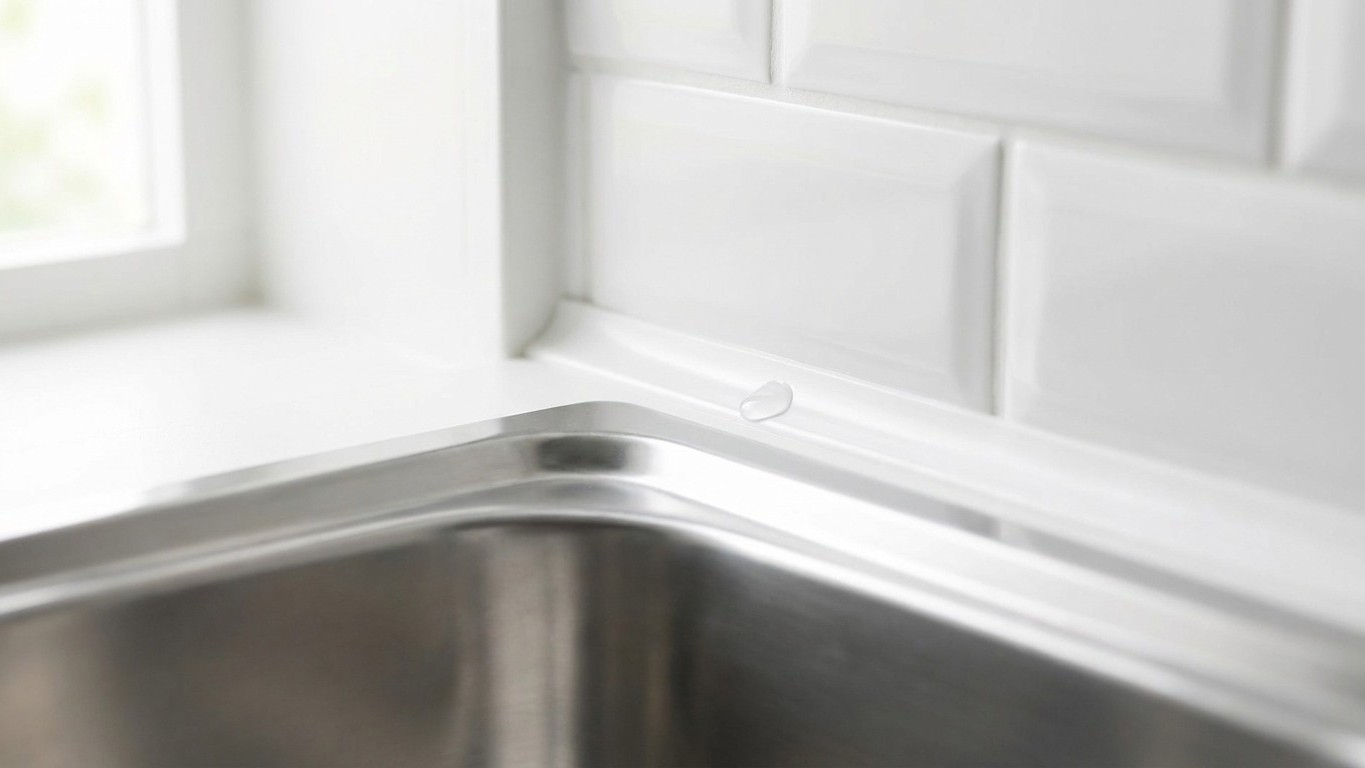
That satisfying swipe of a wet fingertip along a fresh bead of silicone sealant, most of us have done it, and most of us have been told it’s the right way to finish the job. The silicone looks smooth, the line looks professional, and you stand back feeling rather pleased with yourself. The problem is that this well-meaning technique is almost certainly creating a hidden groove along your sink or bath that quietly collects water, soap scum, and mould spores for months before you notice anything is wrong.
Key takeaways
- The wet finger trick creates a concave groove that acts like a tiny water reservoir
- Mold colonizes these hidden channels within weeks and can’t be cleaned away permanently
- A convex profile is the secret—and it requires a different finishing technique than most people use
Why the wet finger trick goes wrong
Fresh silicone is sticky, and water acts as a lubricant that stops your skin from dragging and tearing the bead as you smooth it. That part is sound logic. The trouble lies in what happens to the silicone’s surface once you’ve finished. A fingertip, however gently pressed, naturally creates a slightly concave profile, a shallow channel running the full length of your seal. Water from the tap, the washing-up bowl, or even condensation dripping down a tiled wall finds that channel immediately. It sits there. It lingers. And because the edges of that concave groove press tightly against the sink rim and the tile, the water has nowhere to drain away to.
Silicone itself is waterproof, of course. But what grows in the water that pools in that little gutter is another matter entirely. Mould spores are present in every kitchen and bathroom, they travel through the air, settle on surfaces, and normally get wiped away in the course of daily cleaning. A concave silicone seal acts like a tiny reservoir that regular wiping can’t effectively reach. Within weeks you’ll see the first faint grey or black speckling. Within a few months, the discolouration has often penetrated the outer skin of the silicone and cleaning sprays alone will not shift it.
The shape of the seal is everything
A properly applied silicone seal should have a slightly convex profile, domed outward rather than scooped inward. Water hitting a convex surface runs off it the same way rain runs off a roof tile. Nothing pools, nothing lingers, and the mould has no wet habitat to colonise. Achieving that convex profile consistently is the real craft behind a good sealant finish, and it does require a slightly different approach than the instinctive wet-finger sweep.
The single most useful tool here costs almost nothing: a proper silicone finishing tool, available from any DIY shop for a pound or two, usually comes in a set with different profiles. The one you want for a sink joint is the concave-ended scraper, which (confusingly) produces a convex result on the silicone itself. You press it along the bead and the tool’s curved face pushes the material outward at the centre rather than scooping it in. Some people swear by a moistened plastic spoon pressed gently along the joint for the same effect, and honestly, that works rather well in a pinch.
If you truly prefer to use a finger, the technique needs adjusting. Rather than a simple pull along the bead, press with the side of your fingertip and keep the angle high, almost perpendicular to the surface, so you’re pushing the silicone outward rather than scooping backward. The wet skin still prevents sticking, but the angle changes the resulting profile entirely. It takes a little practice, but once you’ve felt the difference you won’t go back to the old method.
Sorting out what’s already there
If you’re reading this and glancing nervously at your kitchen sink, you’re probably wondering whether to tackle the existing sealant. A discoloured concave bead is honestly worth replacing rather than cleaning, because once mould has worked its way into the body of silicone it cannot be bleached out permanently, it returns within weeks. The good news is that re-sealing a sink is a genuine Saturday morning job that costs very little.
Start by scoring along both edges of the old sealant with a craft knife, then peel away the bulk of it as cleanly as you can. The stubborn residue responds well to a silicone remover gel (left on for the time stated on the packaging), followed by a firm scrub with a plastic scraper. Once the surface is bare, wipe it down with a little white spirit on a cloth and leave it to dry completely, even a trace of moisture under new silicone can compromise the bond from day one.
Apply your fresh bead in one smooth, steady pass rather than stopping and starting. Gun speed matters more than people realise: moving too slowly deposits too much material, which makes finishing harder and increases the chance of that concave dip forming. A moderate, consistent pace gives you a neat bead that’s much easier to profile correctly. Then use your finishing tool or your angled fingertip, wipe away the excess with a damp cloth, and leave the whole thing to cure undisturbed for at least twenty-four hours before running water near it.
One last thought worth carrying away: the colour of the silicone you choose matters less than the quality. Own-brand sealants from budget ranges can be perfectly fine for a dry area, but for a kitchen sink or a bath that sees daily use, a product with an anti-mould additive built in (you’ll see this stated clearly on the packaging) genuinely does extend the life of your seal. The extra penny or two per tube is money rather well spent.
There’s something quietly satisfying about a joint done properly, one that stays pristine for years rather than becoming a creeping grey eyesore. The wet finger trick feels right in the moment, but the shape it leaves behind is working against you from the very first splash. Next time the sealant gun comes out, a little awareness of that curve might change everything/”>Everything about how long the result lasts.