
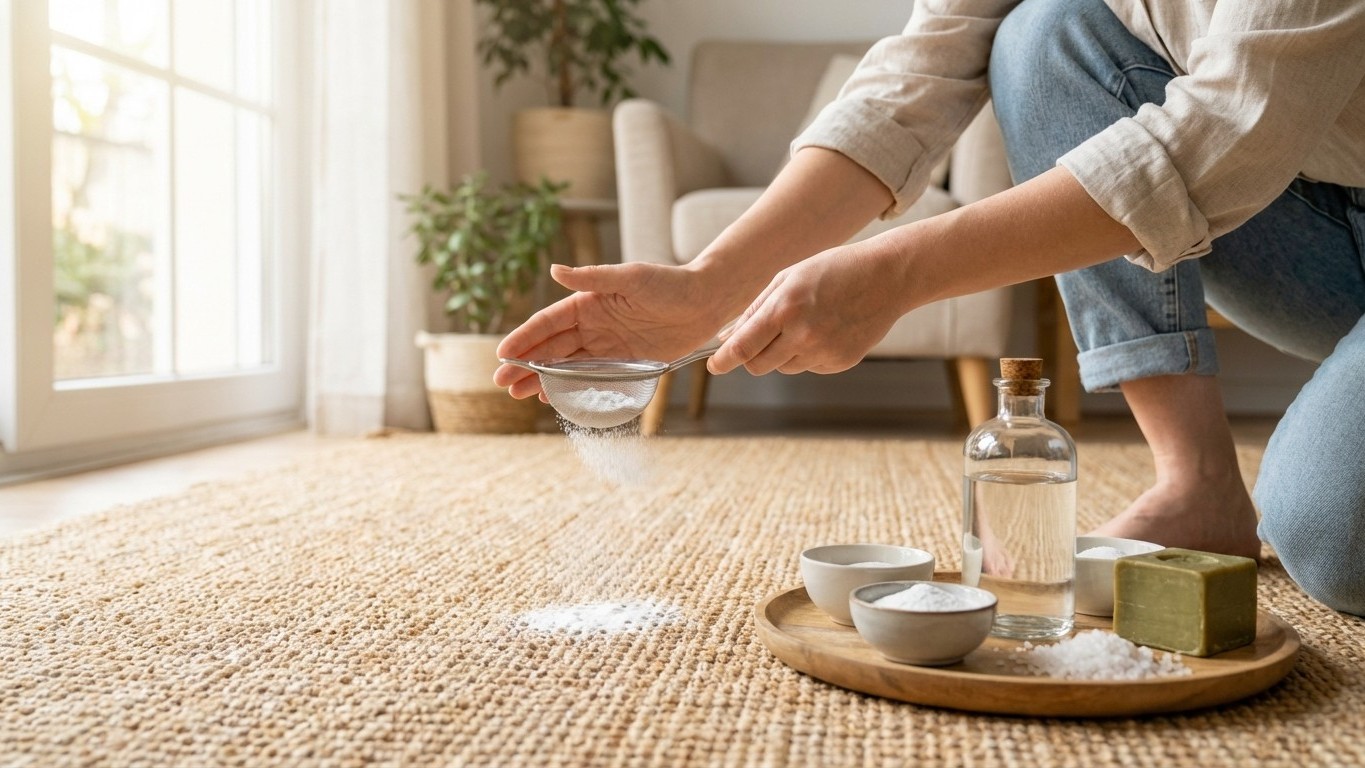
Natural carpet cleaning, the kind you will actually keep up with
Carpets have a talent for looking fine from the doorway, then showing every crumb, paw print, and mystery mark the moment company arrives. The good news is that natural carpet cleaning hacks can be genuinely effective when you treat carpet care like a simple routine, not a heroic once-a-year scrub. A little prevention, the right ingredient for the right stain, and sensible drying will get you very far, even on a tight household budget.
This guide is written for February 2026 homes, where we are often trying to cut down on harsh cleaners, keep indoor air comfortable, and avoid lingering damp smells. You will find step-by-step methods with measurements, safety notes for wool and natural fibres, and a practical table to choose the best approach by stain type. If you want the bigger hub on floors and rugs, pop over to natural carpet cleaning hacks for a broader view.
Why choose natural carpet cleaning hacks?
Natural methods vs conventional products: what you gain
Natural carpet cleaning tends to rely on a few humble things, bicarbonate of soda, white vinegar, salt, gentle soap, and warm water. Used properly, they can:
- Reduce residue that attracts new dirt. Many foamy carpet shampoos leave a sticky film if not thoroughly rinsed, and that film can make a cleaned area look grubby again sooner.
- Lower fragrance overload in living spaces. Some households find strong perfumes irritating, especially in rooms where children play close to the floor.
- Keep costs predictable. A box of bicarbonate of soda, a bottle of white vinegar, and a bar of plain soap go a long way.
- Make spot-cleaning quicker, because you are not waiting for a special product to arrive, you can act while the stain is fresh, which is half the battle.
My own view is simple: the best cleaner is the one you will use calmly and often. Natural ingredients help because they are familiar, easy to store, and you can mix only what you need.
Precautions and limits of natural cleaning
Natural does not mean harmless to every carpet. Fibre, dye, backing, and underlay matter. Keep these boundaries in mind:
- Always patch-test in an inconspicuous corner: mix your chosen solution, dab, wait 10 minutes, blot, then let it dry fully before judging any colour change.
- Wool and other protein fibres dislike high alkalinity and prolonged soaking. Bicarbonate can be used lightly for deodorising, but avoid leaving a wet bicarbonate paste sitting on wool for hours.
- Avoid vinegar on wool, silk, and some natural dyes. Mild acidity can affect dyes and the fibre surface. Use a gentle soap solution instead.
- Never soak the backing. Over-wetting invites odour, mould risk, and staining that creeps back as it dries.
- Do not mix vinegar and bicarbonate for cleaning. They fizz, which looks busy, but they largely neutralise each other. Use them in separate steps when needed.
A natural carpet care routine: daily and weekly habits
Airing, dust removal, and vacuuming that actually works
Routine care is the quiet secret behind carpets that stay fresh. Aim for small, repeatable habits:
- Daily (or every other day in busy rooms): quick vacuum of high-traffic lanes and under the dining table. Use slow passes, two directions if you can manage it.
- Weekly: full vacuum, edges included. If your vacuum has a height setting, match it to the pile so you lift grit Without chewing the fibres.
- Fortnightly: lift and shake small rugs outdoors if practical. For larger rugs, a brisk brush with a clean, stiff but not sharp brush can help loosen surface dust before vacuuming.
- Whenever weather allows: air the room for 10 to 15 minutes. Drier indoor air helps prevent that “closed room” smell clinging to textiles.
Grit is the real enemy. It behaves like tiny sandpaper in the pile, dulling the look and shortening the life of the carpet. Vacuuming is not glamorous, but it is cheaper than replacing a rug, and far kinder to natural fibres.
When and why to use natural cleaners
Think of natural cleaning in three lanes:
- Deodorise when the carpet smells slightly stale but does not look stained.
- Spot-clean immediately when a spill happens. Blot first, then treat.
- Freshen occasionally with a light, low-moisture clean in traffic areas, especially if you have pets or a busy hallway.
If your carpet is very valuable, antique, or made from delicate natural fibres, professional cleaning can still be the safest route for deep work. Natural methods are wonderful for routine and most household mishaps, but they are not a cure for every disaster.
Stain removal: the most effective natural hacks by stain type
Your small “carpet first aid” kit (budget-friendly)
- Bicarbonate of soda
- White vinegar (for synthetic carpets and many colourfast rugs)
- Table salt
- Plain soap or soap flakes (traditional Marseille-style soap is fine if it is simple and unscented)
- Clean spray bottle
- White cotton cloths or kitchen roll
- Soft brush (old nail brush is ideal)
- Two bowls: one for solution, one for clean rinse water
Golden rules before any stain treatment
- Blot, do not rub. Press down with a cloth, lift, move to a clean area, repeat.
- Work from outside in to avoid spreading the mark.
- Use little moisture, especially on thick pile or rugs with heavy backing.
- Rinse lightly when you use soap, then blot dry. Soap left behind can attract dirt.
Quick reference table: choose the right method
- Tea, coffee (no milk): mild vinegar solution on synthetics, soap solution on wool.
- Wine, berries: salt to draw liquid, then soap solution; avoid vinegar on wool.
- Grease, butter, oily food: bicarbonate of soda as an absorbent, then soap solution.
- Mud: let dry fully, vacuum, then spot-clean with soap solution.
- Pet accidents: blot, cool water rinse, bicarbonate deodorise after drying; vinegar only if carpet is synthetic and colourfast.
- Chocolate: lift solids, cool water dab, then soap solution.
Bicarbonate, vinegar, salt, and soap: concrete use cases
1) Fresh spills (most drinks and food): the “blot and lift” method
Best for: juice, tea, coffee, squash, sauce splashes.
- Step 1: Blot with a dry cloth for 30 to 60 seconds, changing to a clean section as it wets.
- Step 2: Mix a gentle soap solution: 250 ml warm water plus 1/4 teaspoon soap flakes or a few rubs of soap into the water until just slightly cloudy.
- Step 3: Dampen (do not soak) a cloth in the solution. Dab the stain, then blot with a dry cloth.
- Step 4: Rinse by dabbing with a cloth dipped in plain cool water, then blot dry again.
If the carpet is synthetic and colourfast, you can swap Step 2 for a mild vinegar mix, 250 ml water plus 1 tablespoon white vinegar. For wool, I stick to the soap solution.
2) Greasy marks: bicarbonate as an absorbent first
Best for: butter, oily takeaway, makeup smudges, oily paw marks.
- Step 1: If there are solids, lift gently with a spoon. Avoid pushing grease deeper.
- Step 2: Sprinkle bicarbonate of soda over the area, enough to cover it in a thin layer, roughly 1 to 2 tablespoons for a small patch (about the size of your palm).
- Step 3: Leave 30 minutes for fresh grease, up to 2 hours for heavier marks. Keep pets away while it sits.
- Step 4: Vacuum thoroughly.
- Step 5: If a shadow remains, use the gentle soap solution (250 ml warm water plus 1/4 teaspoon soap flakes), dab and blot, then rinse lightly and dry.
For a deeper bicarbonate-led method, see remove carpet stains naturally baking soda.
3) Red wine and berry stains: salt first, then gentle cleaning
Best for: wine, blackcurrant, cranberry, fruit cordial.
- Step 1: Blot quickly to remove as much liquid as possible.
- Step 2: Cover with table salt (about 1 to 2 tablespoons for a small spill). Salt helps draw moisture up.
- Step 3: Wait 10 to 20 minutes, then vacuum the salt once it looks damp or pinked.
- Step 4: Dab with the gentle soap solution, then rinse lightly and blot dry.
Avoid hot water here. Heat can set certain natural pigments.
4) Mud and outdoor marks: let it dry, then remove
Best for: muddy footprints, garden soil, dried grit.
- Step 1: Leave it until fully dry. This is one of those times patience saves the pile.
- Step 2: Vacuum slowly, then use a soft brush to lift remaining dried particles and vacuum again.
- Step 3: Spot-clean with the gentle soap solution if a brown stain remains, then rinse lightly and dry.
How to tackle old or stubborn stains (without over-wetting)
Older stains are usually a mix of pigment plus residue. You want to soften and lift gradually.
- Step 1: Vacuum well. Surface dust turns into muddy streaks if you add moisture.
- Step 2: Pre-soften with a warm, damp cloth held on the stain for 60 seconds, then blot. Keep it damp, not dripping.
- Step 3: Apply the gentle soap solution with a cloth. Dab for 2 to 3 minutes, then blot dry.
- Step 4: Rinse lightly and blot again.
- Step 5: If there is still a visible mark on synthetic carpet only, try a mild vinegar rinse (250 ml water plus 1 tablespoon vinegar), dab briefly, then blot dry.
When a stain “comes back” after drying, it is often wicking from deeper down. That is a moisture management issue as much as a cleaning issue, which brings us neatly to drying.
Fast drying and preventing odours or mildew
Natural ways to speed drying
Fast drying is where most DIY carpet cleaning falls apart. The carpet looks clean, then smells musty the next day. Keep drying brisk and simple:
- Press-dry with towels: after cleaning, place a dry towel over the damp patch and stand on it for 20 to 30 seconds. Repeat with a fresh towel. This pulls water out of the pile and underlay far better than waving a cloth about.
- Use airflow: open a window and door for cross-ventilation for 20 to 40 minutes, weather permitting. In cold, wet British weather, a fan pointed across the area (not directly down) still helps.
- Low heat, not high heat: if you use a hairdryer, keep it on a low or cool setting and keep it moving. High heat can affect some synthetic fibres and can set certain stains.
- Lift the pile: once nearly dry, gently brush the fibres in one direction to help it dry evenly and avoid a crunchy patch.
Preventing bad smells and reappearing stains
Odour control is mostly about removing residue and avoiding damp. After spot-cleaning:
- Deodorise only when dry: sprinkle bicarbonate lightly (1 to 2 tablespoons per square metre), leave 30 to 60 minutes, then vacuum. On wool, keep the layer very light and avoid leaving it overnight if your home is humid.
- Skip heavy perfume cover-ups: they mingle with damp smells rather than solving them.
- Do not over-soap: too much soap leaves a film. Stick to a barely cloudy solution, then rinse lightly.
- Deal with the source: pet accidents, spilled milk, and damp underlay need prompt blotting and quick drying. If the underlay is soaked, sometimes the kindest thing is to lift the carpet edge and dry underneath, or call for help.
For a focused guide on smells from pets, humidity, or cooking, see natural way to deodorise carpet.
Common mistakes to avoid with natural carpet cleaning
- Mixing vinegar and bicarbonate in the same bowl: you mostly get salty water and bubbles. Use them in separate steps for separate jobs.
- Pouring solution straight onto the carpet: always apply to a cloth first, unless you are using a very controlled mist for a synthetic carpet and you have tested it.
- Scrubbing hard: it roughens fibres and can spread stains. Dabbing and blotting are gentler and usually more effective.
- Using very hot water on protein-based stains: blood, egg, and some dairy can set with heat. Cool water first.
- Leaving salt or bicarbonate in the pile for days: they can cake in humid homes. Vacuum them out promptly.
- Ignoring the carpet type: wool, jute, sisal, and some natural rugs need a lighter hand with moisture and acidity.
FAQ: natural carpet cleaning questions people ask
How do I clean a carpet effectively with natural ingredients?
Start with dry removal, vacuum thoroughly. For marks, blot first, then use a small amount of gentle soap solution, 250 ml warm water plus 1/4 teaspoon soap flakes, dab and blot, then rinse lightly and dry quickly with towels and airflow. Deodorise with a light sprinkle of bicarbonate only once the area is dry.
Which natural products remove stains without damaging the carpet?
Bicarbonate of soda (for odours and greasy absorption), plain soap (for general spot cleaning), and salt (for drawing moisture from fresh red spills) are generally safe when used with little water. White vinegar can help on many synthetic, colourfast carpets, but I avoid it on wool and delicate natural fibres unless you are certain it is safe for that rug.
How can I dry a carpet quickly after natural cleaning?
Press-dry with towels, then use airflow. Stand on a folded towel for 20 to 30 seconds, repeat with a fresh towel, then ventilate the room and, if needed, run a fan across the area. Keeping moisture low during cleaning makes drying far faster.
Do vinegar or bicarbonate damage carpets?
Used sensibly, they are usually fine on many household carpets, but there are limits. Vinegar can affect wool and some dyes, so patch-testing is wise and soap solution is safer for natural fibres. Bicarbonate is mildly alkaline and can be drying to certain fibres if used in wet pastes or left too long, so use it mainly as a dry deodoriser or grease absorbent and vacuum well.
What is a good natural maintenance routine for a living room carpet?
Vacuum traffic lanes several times a week, full vacuum weekly including edges, tackle spills immediately with blotting and a mild soap solution, then dry thoroughly. Freshen occasionally by deodorising dry carpet with a light sprinkle of bicarbonate for an hour, then vacuum.
A practical check-list you can print and keep in the cupboard
For day-to-day life, this is the little list I would keep on the inside of the cleaning cupboard door:
- Vacuum often, especially walkways
- Blot spills straight away, no rubbing
- Use soap solution for most stains, 250 ml warm water plus 1/4 teaspoon soap flakes
- Use bicarbonate dry for odour or grease absorption, then vacuum
- Use vinegar only on synthetic, colourfast carpets, and never on wool unless you have tested carefully
- Rinse lightly after soap, then press-dry with towels
- Speed drying with airflow or a fan
Want a broader eco-cleaning toolkit?
If you are building a whole-house approach, you will find plenty of budget-friendly recipes and routines in natural cleaning hacks. Carpets and rugs are only one chapter of the story, and once you have a few dependable mixtures and a calm routine, the rest of the house starts to feel much more manageable. Which room would you like to tackle next, the hallway that catches every muddy shoe, or the living room where the smells seem to linger?