
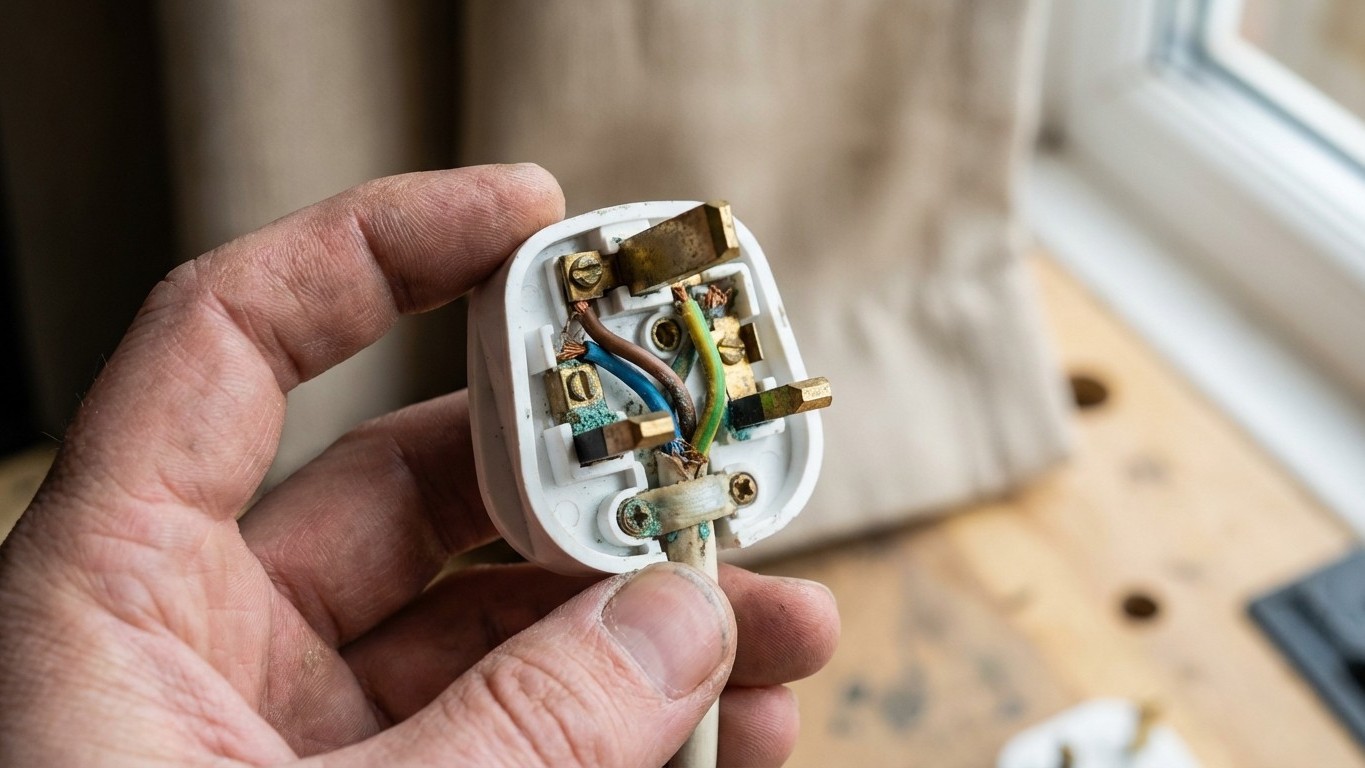
For years, I told myself the slightly discoloured plug on the lamp in the back bedroom was “just cosmetic.” The screws inside hadn’t been tightened since the appliance was bought, the wire strands had gradually loosened in their terminals, and the whole connection was quietly generating heat, and wasting electricity, every single time the lamp was switched on. One Saturday afternoon with a screwdriver and a 20p replacement fuse fixed the problem in under ten minutes. My bills dropped noticeably the following month. If this sounds familiar, read on, because this particular culprit is almost certainly hiding somewhere in your home right now.
Key takeaways
- A tiny, almost invisible fault inside an old plug has been silently costing thousands of households money every single month
- The physics behind why loose connections waste electricity is simple, but the financial impact compounds over years without you noticing
- You can find and fix this yourself in under ten minutes with tools you already own—but ignore it long enough and the real danger emerges
The Physics Behind the Pennies (It’s Simpler Than You Think)
Electricity behaves like water flowing through a pipe. A perfectly tight connection offers almost no resistance, the current glides through cleanly, powers your appliance, and nothing is wasted. But electrical connections need to be mechanically tight to ensure that the resistance across that connection is as low as possible. When a connection becomes either loose or corroded, it develops resistance, and this resistance dissipates power in the form of heat when current flows through it. That heat is energy you’ve already paid for. It’s gone, warming a lump of copper inside your plug rather than doing anything useful.
The effect compounds over time. Loose or corroded connections can create resistance, which may cause appliances to draw more power than necessary. Think about a lamp, a kettle, or a Washing machine that runs for hours every week. Each time the current struggles past that faulty terminal, a small fraction of the electricity your meter has measured (and billed you for) simply evaporates as waste heat. Old wiring can be a major culprit when it comes to rising electricity bills. Electrical wires that have been in use for many years can eventually become weaker and less able to transfer electricity safely and efficiently. Over time, the Insulation that protects your wiring from the elements may break down and insulation can degrade, leading to shorts or loose connections in your home’s electrical system. This makes your home vulnerable to significant energy losses, and that means larger electricity bills.
The maths is worth pausing on. If you are on a standard variable tariff and pay for your electricity by Direct Debit, you will pay on average 24.67 pence per kilowatt hour (kWh) from April 2026 onwards, according to Ofgem. That sounds trivially small, until you realise that a high-resistance fault on a frequently used appliance can waste several watts continuously, and several watts over thousands of hours of use quickly becomes a meaningful chunk of your bill.
Where These Faults Like to Hide
Many resources give the impression that you will find soot, burn marks, or melted wires at the site of a fault. Actually, it is much more common to see very little obvious difference between a good connection and a bad one. That’s what makes this so insidious. You won’t necessarily smell anything. The lights won’t flicker (at least not at first). The appliance will seem to work perfectly well. You simply pay slightly more each month, and you put it down to the price cap going up again.
The most common offenders in a British home are the three-pin plugs on older appliances, floor lamps, extension leads, kitchen gadgets and televisions that have been plugged in, dragged about, and never opened since they left the shop. Loose connections are a leading cause of electrical fires. When a wire is not securely fastened in a terminal, it creates a high-resistance point. This leads to “arcing,” where electricity jumps across small gaps. Most people only ever open a plug to replace the fuse, and even then, they often snap it shut without checking whether the little terminal screws are still properly tightened.
Extension leads deserve particular attention. Daisy-chaining extension leads increases electrical resistance and puts immense strain on the first lead in the chain. These leads are often tucked behind sofas or under carpets, where the heat cannot escape. This is a common cause of house fires that start unnoticed. The energy waste from a loose terminal inside an extension lead is one thing; the fire risk is another matter entirely, and both begin with exactly the same 20p problem.
There’s a subtler culprit too: the fuse itself. The fuse should fit snugly and not rattle, rattles mean loose connections and loose connections can cause overheating or fires. A fuse that wobbles slightly in its carrier may seem harmless, but it introduces the same resistance problem at another point in the circuit.
How to Check and Fix It Yourself
The good news is that rewiring a British three-pin plug is one of the few electrical jobs a householder can legally and safely tackle themselves, and it costs almost nothing. Switch off and unplug the appliance first, always. Then unscrew the plug cover, and have a proper look inside. You’re checking for three things: are the coloured wires (brown for live, blue for neutral, green-and-yellow for earth) properly seated under their terminal screws with no stray strands poking out? Are those screws actually tight? And is the outer cable sheath gripped firmly by the cord clamp at the base of the plug?
If the wires look chewed, frayed at the ends, or if the copper strands are spread out rather than twisted neatly together, it’s worth re-doing the whole termination. Once the cable is stripped, the strands can be twisted and then folded back on themselves to create a thicker mass of copper, which ensures a solid grip under the terminal screw rather than a few rogue strands making poor contact. Approximately 5–7mm of bare copper is the right amount, enough to grip, not so much that bare wire is left exposed. Not stripping enough wire can lead to the “screw-on-insulation” error, where the terminal grips the plastic instead of the copper, creating a poor connection. This is far more common than people realise, and it’s impossible to spot from the outside.
Once everything is neatly seated, tighten each terminal screw firmly, check the fuse is the correct rating for the appliance (3 amp for lamps and small gadgets, 13 amp for high-wattage appliances like kettles), confirm it sits snugly in the carrier, and reassemble the plug. The whole job takes perhaps eight minutes once you’ve done it once.
When to Call a Professional
Plug-top wiring is squarely within the DIY zone. Everything inside the walls, however, is a different matter. Call an electrician to check the wiring to identify deterioration so that you can do the required maintenance. It’s important to get damaged electrical wiring checked out as soon as you suspect that’s what’s causing the issue. There’s a chance faulty wiring can become dangerous and lead to home emergencies like house fires or electrocution.
If your wiring is 25 years old or more, or you notice flickering lights, frequent fuse trips, or evident faulty wiring, a full rewire is safer and more economical long-term. Signs worth taking seriously include a faint burning smell near sockets, outlets that feel warm to the touch, or flickering lights, warm outlets or switches, intermittent power, buzzing sounds, or slight burning odours. These are your home trying to tell you something. Get several quotes from NICEIC- or NAPIT-registered electricians, these are the schemes that certify electrical contractors to carry out and sign off work to Part P building regulations in England and Wales.
The irony of ignoring a loose connection for years is not just the money quietly trickling away on every bill, it’s that the eventual repair bill, if arcing causes a fault or starts a fire, will make that 20p replacement fuse seem almost comically cheap. Start with the oldest plugs in the house this weekend. You might be surprised what you find lurking inside them.