
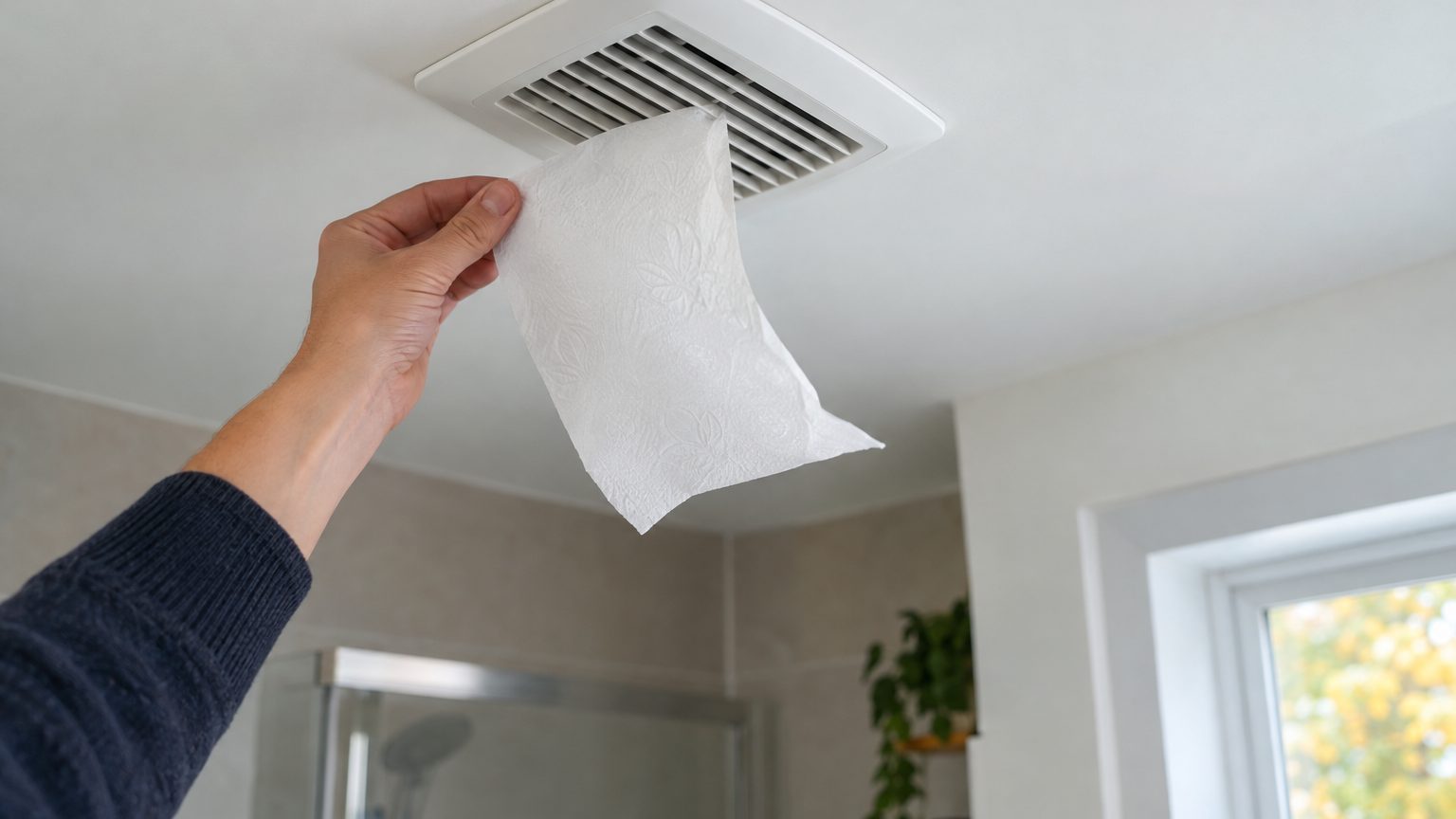
Hold a single sheet of toilet tissue near the fan grille while it’s running. If the tissue is pulled towards the grille and held there, the fan is extracting air. If it flutters or drops, you have a problem worth ten minutes of your time.
Ten seconds, no tools, no cost.
- Hold tissue against the fan grille while running; if it stays pulled in, extraction is working properly.
- Dust buildup on the grille and blades significantly reduces airflow and often improves after cleaning.
- Blocked ducting, kinked hoses, or seized external vent caps prevent air from exhausting outside despite the motor running.
What the tissue test tells you (and what it doesn’t)
Switch the fan on first. If it’s connected to the light, turn the light on. Hold the tissue flat against the front of the grille and don’t push it inside. A clear tug that keeps the sheet in place is a good sign, while a flap or a fall means weak extraction.
A fan can sound perfectly healthy while shifting hardly any air, which is why many of us put up with a weak one for months. A fan that’s not working because of poor airflow may still make a normal noise, so it can be missed. The giveaways are mirrors that stay fogged, a damp smell that lingers and, eventually, mould speckling the ceiling or paint starting to peel. The test is a rough guide rather than a measurement, but it’s remarkably good at settling arguments in a household.
A completely silent fan is a different problem.
Five things to check, in order
Safety comes before any screwdriver. Bathrooms are the highest-risk room for electric shock, so switch the fan off at its isolator and switch off the lighting circuit at the consumer unit. Check it’s dead with a voltage detector before touching anything inside.
First, the grille and blades. Dust build-up on the grille can noticeably reduce airflow, so cleaning is a quick win before you replace anything. Most grilles simply clip off. Wash yours in warm soapy water, dry it thoroughly, and wipe any fluff from the blades with a barely damp cloth while the power is off. Then repeat the tissue test, because plenty of fans come back to life at this stage.
Second, go outside and look at the vent cap. Blockages, bird nests and debris are the things to look for. Seized flaps count too.
Third, the ducting. Confirm the fan is actually exhausting to the outside, not into a void or blocked ductwork. Flexible ducting that has been squashed under loft insulation, kinked at a corner or left to sag is like sipping a milkshake through a bent straw: the motor works, but nothing arrives. If the duct runs through the loft, a quick torch-lit look from the hatch often shows the culprit.
Fourth, the backdraught shutter, a small flap that stops cold air blowing back in. The flowchart from one UK guide lists it alongside the grille, ducting and outside vent for a fan that runs but is weak. Grease and dust can leave it stuck partly shut.
Fifth, the settings and supply. A timer set to zero, or a humidistat set too high, effectively means the fan isn’t working as intended. If the fan is dead rather than weak, check the isolator switch, the 3 amp fuse in its fused spur, and the lighting circuit breaker in your consumer unit. Both isolators can be accidentally knocked off, and FCU fuses do blow.
Work through all five before you spend a penny.
When cleaning won’t cure it
Some fans are simply tired. Signs it’s time to replace include a fan more than 7 to 10 years old, grinding or rattling from the motor, and a tissue test showing minimal airflow despite the fan running. A unit without a timer or humidistat is also worth upgrading, and the same source says a replacement should meet the 15 l/s minimum required by UK Part F regulations. Check the rating on the box rather than trusting the marketing.
Call an electrician if there’s no sound at all after you’ve checked the isolator and consumer unit. A burning smell or a tripping circuit points to a possible electrical fault and needs an electrician urgently. Wiring in bathrooms varies, and fans may be wired to the lighting circuit, have a permanent live supply for the timer or use a separate switched live, so the fault isn’t always obvious from the outside.
One last thing costs nothing to check. A fan needs replacement air to draw from, so a bathroom door that sits tight against thick carpet or a draught excluder can starve an otherwise healthy fan. If the tissue test improves when you prop the door open an inch, you’ve found your culprit without buying a thing.
Sources : tlwglobal.com | moretips.co.uk