
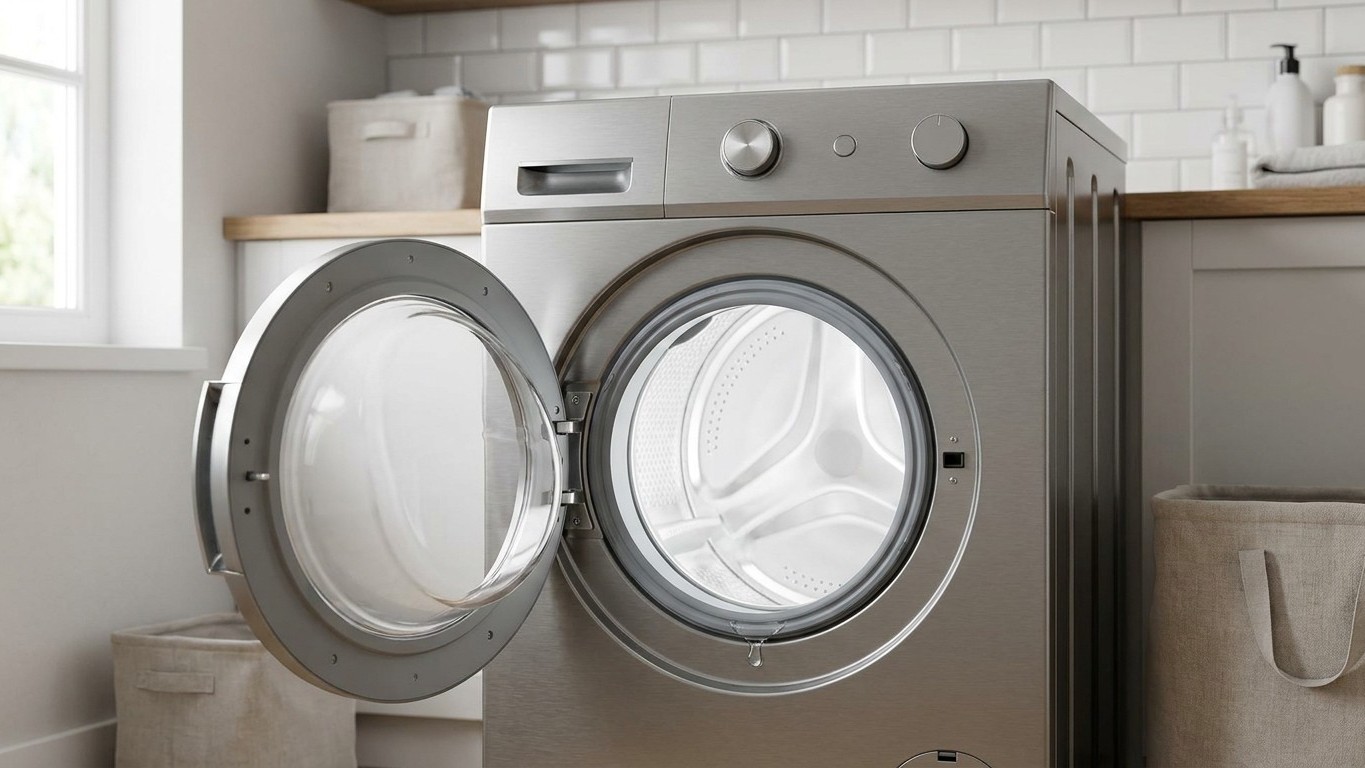
She’s not being wasteful. When your neighbour switches her washing machine to a hot, empty cycle every few weeks, she’s carrying out one of the most useful bits of appliance care nobody ever tells you about at the shop: a maintenance wash. It has nothing to do with getting stains out of her clothes and everything to do with keeping the machine itself from turning into a breeding ground for mould, bacteria and that musty smell that somehow ends up on freshly laundered towels.
Most of us now wash at 30°C or 40°C to save energy, and quite rightly, since heating water is by far the biggest cost in any laundry cycle. But cold cycles do not break down detergent residue or kill bacteria as effectively as hot cycles, and a monthly hot maintenance wash offsets the mould risk that builds up from frequent cold-water washing. Every low-temperature wash leaves a faint film of detergent, fabric softener and fibres clinging to the drum, the rubber seal and the pipework. Over weeks and months that film becomes a lovely, damp, warm little home for mould spores and bacteria, which is precisely why a machine can smell worse than the socks you put in it.
Key takeaways
- Cold-water washing leaves detergent residue and moisture that create the perfect breeding ground for mould and bacteria
- One empty 60°C cycle monthly flushes out what regular washes leave behind—manufacturers are now building this into new machines
- Simple habits like leaving the door ajar and wiping the seal dry work alongside the hot wash to keep your machine pristine
Why an empty hot wash actually works
The logic is simple once you think about it: detergent is designed to work on fabric, not on the machine’s own inner workings. Run it with a full load and the drum, drawer and door seal never get properly rinsed of the leftover gunk from the last dozen cool washes. An empty cycle at 60°C, with nothing to soak up the heat and no clothes to protect, lets the water get properly hot right into the crevices where mould loves to gather. A damp washing machine is a breeding ground for mould, and that black ring around the door seal and the musty smell clinging to clean clothes are early signs that something is growing inside your appliance.
It isn’t only about smell, either. Mould grows in washing machines because the drum stays warm and damp after a cycle ends, and residual moisture, detergent build-up, and a lack of airflow create the right conditions for mould spores to settle and multiply. Left unchecked, that build-up can clog the door seal, the drain filter and the drum itself, which is when you start noticing your “clean” laundry coming out with a faint sourness that no amount of extra fabric conditioner will fix. Manufacturers know this well enough that plenty of new machines now come with their own dedicated cleaning programme built in. Washing machine manufacturers now offer models with built-in maintenance features to support these habits, and some brands include drum-clean programmes as part of their standard cycle options. If your machine has one, use it. If not, your own manual 60°C empty cycle does exactly the same job.
How often, and what to add (if anything)
Once a month tends to be the sweet spot for most households, though it’s worth adjusting depending on how the machine is used. Running an empty cycle at 60°C or 90°C with no laundry or detergent, once a month, is the basic routine, with 250 ml of white vinegar added to the drum before a maintenance wash for extra odour control. Vinegar isn’t essential every single time, but it’s a cheap, storecupboard way to cut through limescale and neutralise lingering smells, particularly useful if you’re in a hard water part of the country where scale builds up on the heating element faster than you’d think.
There’s a genuine debate among the more houseproud about whether to add anything at all. Some households swear by soda crystals in the drum, others by a splash of vinegar in the drawer, and a fair few simply run the cycle bone dry and let the heat do the work. What everyone seems to agree on is that ordinary washing powder isn’t necessary and can actually cause a foaming mess with no laundry to soak it up. A monthly hot rinse, with or without a natural cleaning agent, is really about flushing out what regular washing leaves behind, not adding anything new.
Beyond the monthly wash: the small habits that matter just as much
The empty 60°C cycle is the headline trick, but it works best alongside a couple of thirty-second habits that cost nothing. Leaving the door slightly ajar between washes lets air circulate and stops the drum staying damp for hours, which is when spores really get going. Wiping the rubber door seal dry after a wash, especially on front-loaders where water tends to pool in the fold, removes the exact spot where mould shows up first as that tell-tale black speckling. And it’s worth pulling out the detergent drawer every so often, since drawers for detergent and fabric softener may gather muck and mildew, and if at all feasible, pulling out the drawer and soaking it in hot, soapy water, scrubbing carefully with a small brush, works well.
None of this takes more than a few minutes, and unlike most appliance advice, it doesn’t cost a penny beyond the electricity for one hot cycle, which at current prices amounts to a matter of pence. So next time you spot your neighbour’s washing machine churning away with nothing but hot water inside, she isn’t wasting a wash. She’s simply doing the one bit of housekeeping that keeps machines lasting years longer and stops your towels smelling faintly of damp school changing rooms, which, once you’ve smelled it, you really don’t want to smell again.
Sources : trulyfreehome.com | hotpoint.co.uk