
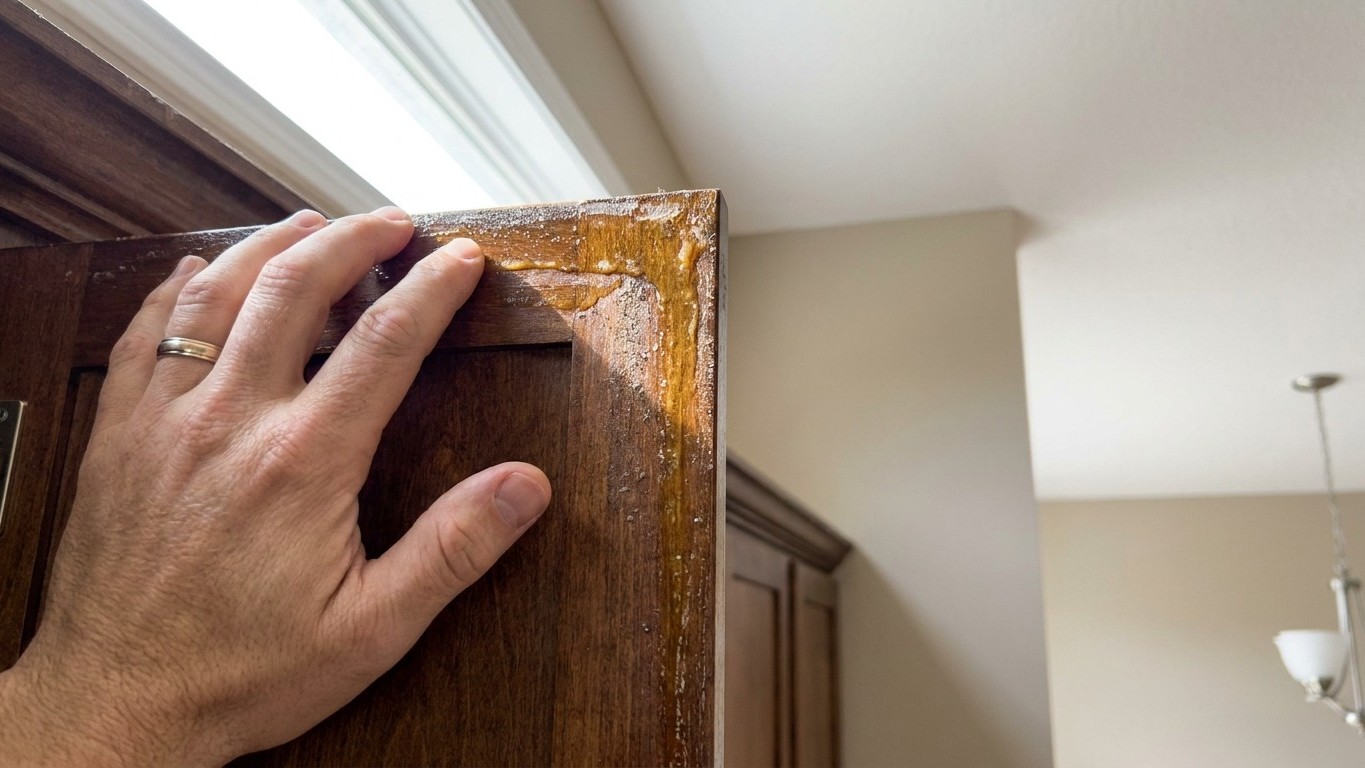
Two years is roughly six to eight filter changes you skipped, and every single one of those months your hood was quietly doing the opposite of its job. Once a grease filter is saturated and a charcoal filter has stopped absorbing anything, the fan doesn’t purify the air rising from your pans. It just pushes it, greasy and all, straight back out into the room, where it lands on the nearest cold, flat surface it can find. That’s usually the tops of your wall cupboards.
The sticky film Margaret found under her hand that evening wasn’t dust. It was cooking oil in aerosol form, condensed and cooled, mixed with whatever airborne particles had drifted past in the meantime. Anyone who’s run a finger along the top of a kitchen cabinet after a couple of years of neglect knows the texture: half wax, half glue, and entirely unpleasant to shift once it’s set.
Key takeaways
- A saturated filter stops protecting and starts contaminating—actively working against your kitchen air quality
- That mysterious greasy film on top of cupboards isn’t dust; it’s aerosolized cooking oil your hood has been spraying back out
- Charcoal filters cost pennies compared to the cleaning, repainting, and potential fire hazard of long-term neglect
Why a saturated filter makes things worse, not just less effective
A recirculating hood works in two stages. First, a metal mesh or baffle filter catches the heavier grease particles thrown up from frying and roasting. Then, in ductless models, the air passes through an activated charcoal filter that’s supposed to mop up odours and finer particles before the air goes back into your kitchen. The recirculating cooker hood solves one of kitchen ventilation’s most persistent challenges: how to extract cooking odours and grease effectively when running a duct to the outside is impractical or impossible, operating in two stages, with a mesh grease filter capturing airborne fat particles first.
Charcoal doesn’t work like a sponge that simply gets fuller and fuller while doing a slightly worse job. Over time, activated charcoal particles saturate and stop blocking off odours, leaving your kitchen with strong smells. Worse, once that carbon layer is properly saturated, it can start releasing what it’s already trapped. Once saturated, it loses effectiveness and can even re-release previously captured odours when heated. So a two-year-old filter isn’t neutral. It’s actively working against you, and the grease filter sitting in front of it is in exactly the same state, clogged solid and unable to catch anything new.
That’s not just a smell problem, either. Grease buildup inside a filter can become a fire hazard if maintenance is neglected, and regular cleaning and replacement helps reduce this risk. I’m not one for scaremongering, but that’s a fact worth tucking away, especially if you’re the sort of household that fries regularly.
How often these filters actually need changing
Manufacturers vary a little, which is precisely why so many of us end up guessing and then quietly forgetting. As a rough rule for standard, non-washable charcoal filters, most makers land somewhere between three and six months. It is recommended to change charcoal filters every 4-6 months. Some newer hoods take the guesswork out of it entirely. Bosch ventilation hoods are designed to remind you to change your charcoal filters after they reach their maximum capacity. If your hood has no such indicator, a note in the diary every four months is the cheapest insurance you’ll ever buy for your kitchen.
Grease filters, if they’re the washable aluminium mesh type, are a different story entirely and this is where real money can be saved. Aluminium mesh filters are reusable and can, and should, be washed regularly, and are typically found in ducted range hoods, designed to trap grease particles. A monthly soak in hot water with a squeeze of washing-up liquid, or a stronger degreaser for anything really caked on, keeps them working almost like new. Charcoal, by contrast, is single-use in most standard hoods. Charcoal filters, usually found in ductless range hoods, help absorb odours, and the bad news is they cannot be cleaned; once they’re saturated, they need to be replaced. There are pricier “long-life” charcoal filters on the market designed to be washed and dried in the oven every couple of months, which can last considerably longer, but the standard type simply has to go in the bin once its capacity is used up.
Getting the grease off your cupboards without ruining the finish
The good news is that this film, however off-putting, responds well to things you almost certainly already have in the cupboard below. Start with a bowl of hot water, a good squirt of washing-up liquid, and, for anything truly stubborn, a spoonful of bicarbonate of soda stirred through. Use a mix of baking soda and water to clean stubborn, thick grease build-up. Wipe in sections rather than trying to tackle the whole run of cupboards at once, working from top to bottom so any drips land on surfaces you’re about to clean anyway.
Leave the paste to sit for a minute or two on the worst patches before wiping, and always finish with a dry cloth to stop streaking, particularly on painted or laminated cupboard doors that can mark if left damp. For the hood itself, don’t forget the fan blades and the intake, since that’s where the problem started. Clean the blades of the fan with a rag dipped in degreaser or hot water and dish soap, and wash the air intake assembly and the inside of the range hood. It’s genuinely satisfying work once you see the difference, a bit like finally descaling a kettle you’ve been ignoring for a year.
One thing worth remembering next time you’re tempted to stretch a filter’s life for the sake of a few pounds: a decent charcoal filter typically costs less than a couple of takeaway coffees, while the vinegar, elbow grease and repainting some people end up needing for badly stained cupboard tops costs a good deal more, in both money and Saturday afternoons.
Sources : elica.com | elicaparts.com