
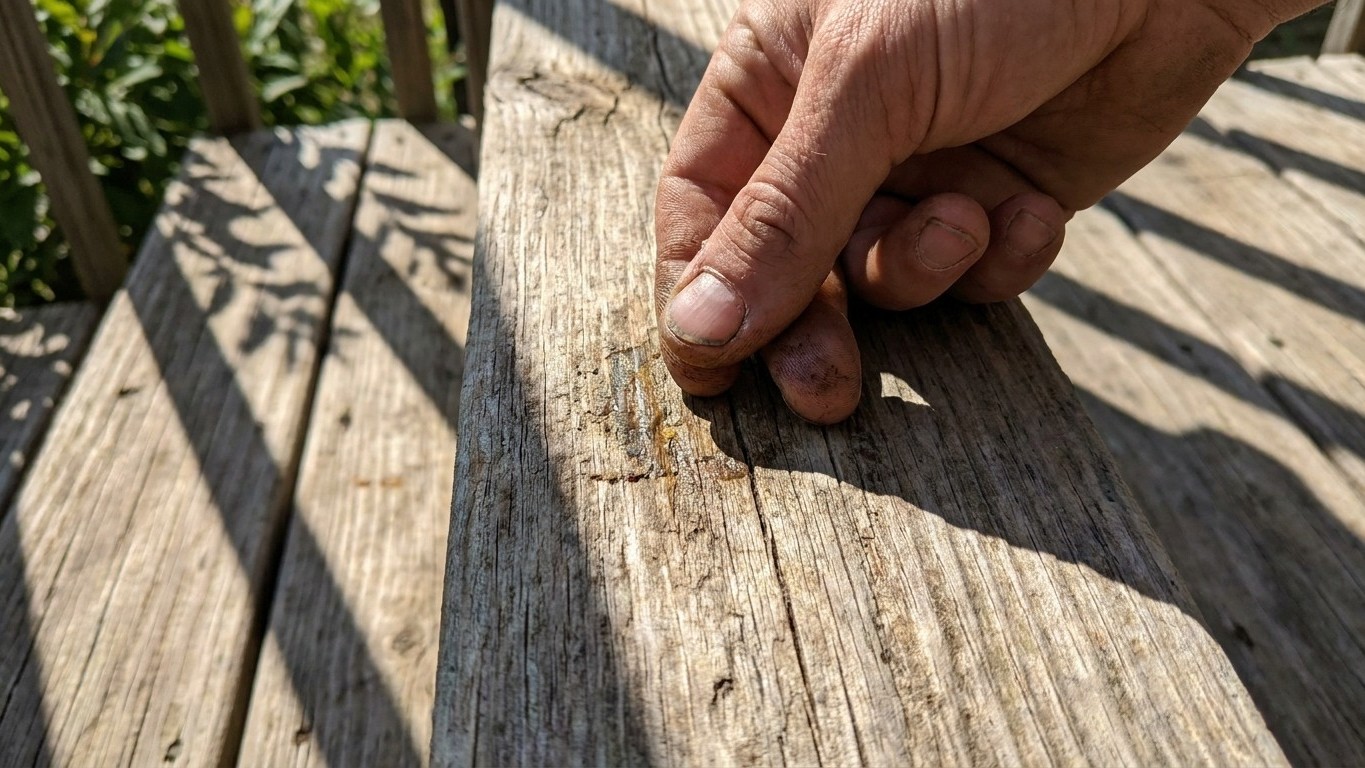
That tacky patch under your thumb, three weeks after oiling, is the wood telling you the truth: the oil never properly soaked in. It sat on top of the timber instead of sinking into it, and now it’s collecting dust, cat hairs and the odd fallen leaf like a fly trap. I know this because I did exactly what you’re describing, brush in hand at half past eleven on a scorcher of a Tuesday, determined to tick the job off before lunch. Big mistake, as it turns out, and a fairly well-documented one too.
The heart of the problem is surface temperature, not air temperature. You might glance at your phone, see 35°C, and think “well, that’s warm but manageable.” What you can’t see is how much hotter the actual decking boards are once the sun’s been baking them for a few hours. While the air temperature may be in the optimal range, the sun can drastically change the surface temperature of the wood. Timber in direct sun regularly runs many degrees above the ambient reading, sometimes hot enough that you’d think twice before sitting on it barefoot. Oil brushed onto that surface doesn’t get a fair chance to travel into the wood’s grain before the solvents flash off.
Key takeaways
- Wood surface temperature can be drastically hotter than the air temperature on a sunny day—hot enough to ruin your oil finish before it even soaks in
- Oil applied to overheated timber skins over instantly while remaining wet underneath, trapping solvents and creating that sticky, gritty finish that won’t cure properly
- The ‘magic window’ exists: early morning before the sun climbs or late afternoon as it drops—not the frantic pre-lunch sprint in full glare
Why Hot Wood Ruins the Finish
Most manufacturers are fairly specific about this, and for good reason. You should apply between 10°C and 30°C, and never in direct sunlight or to hot surfaces. Go above that range and high temperatures can cause the oil to dry too quickly, leading to uneven application and potentially reducing its effectiveness, not to mention it looks a mess when it dries patchy. That’s precisely the mottled, blotchy look I found on a couple of my boards where the sun had been fiercest.
It isn’t just about appearance, either. Too hot and oil can dry before it has a chance to soak in properly, which means the timber underneath is left with far less protection than you paid for. You’ve essentially wasted a good third of a tin creating a thin, brittle skin rather than a deep-soaking treatment. Given that a decent tin of decking oil isn’t cheap, that’s money quite literally evaporating off your patio in the midday sun.
What Was Actually Happening Under My Thumb
The tackiness itself has a specific cause. Decking oil is meant to penetrate the timber rather than form a film on the surface, and a sticky finish is almost always caused by process rather than product. When you rush the job in full heat, the top layer skins over almost instantly while the oil beneath stays wet and unable to escape or bond properly. Left too long without wiping, that trapped oil never fully cures. One of the most important steps is wiping off excess oil within a few minutes of applying it, since this is the step that, when forgotten, leaves you with a sticky deck. In my case, working in full sun meant the surface dried faster than I could keep pace with a cloth, so patches sat proud, gathering grit ever since.
There’s a second, quieter issue too, one that caught me out. Timber that’s already warm from the sun tends to be drier on the surface and can gulp down oil unevenly, soaking greedily in one board and barely at all in the next, which is exactly why my deck now has that faintly patchwork look, darker in some sections than others. Over-application happens when the timber is already ‘full’ and can’t absorb any more, and the fix is simply to stop and wipe off the excess with a lint-free cloth. Trouble is, by the time I’d worked that out, the deck had already gone tacky in the heat.
The Hour I Should Have Chosen
Here’s what I’d do differently, and what any decking oil label worth its salt will tell you if you actually read it properly (guilty as charged, I skimmed). Early morning, once the dew has burned off but before the sun climbs high, or early evening as the heat starts to drop, gives the timber a fighting chance. Best practice is to stain in shaded areas or later in the afternoon when the sun is less intense, and the deck surface should never feel hot to the touch before you start. Professionals echo the same advice. Avoid staining at noon or during the hottest part of the day, and try early morning or late afternoon instead.
For most British summers, that’s usually somewhere between seven and ten in the morning, when the air’s mild, the boards haven’t had time to heat up, and you’ve still got the whole afternoon free for lunch, a cuppa and admiring your handiwork properly rather than fretting over it. If cloud cover rolls in, even better; an overcast, dry day is close to ideal, since you get gentle, even drying without the sun forcing the oil to skin over. Oil manufacturers back this up plainly, noting you can only apply it in dry weather above a certain minimum temperature, while also trying to avoid direct sunlight and high temperatures.
If your deck’s already gone the way mine did, don’t panic and don’t reach for a full sand-down just yet. Go back over the tacky patches with a clean, lint-free cloth and gentle pressure to lift whatever oil never soaked in, working with the grain rather than against it. Give it another mild, dry day to finish curing properly before you judge the result. And next time, set an alarm for stupidly early rather than racing the clock before lunch. Your knees might grumble at getting down there before the coffee’s kicked in, but your decking, and your thumb dragging happily along a smooth, properly-cured board, will thank you for years afterwards.
Sources : deckstainhelp.com | deckstainhelp.com