
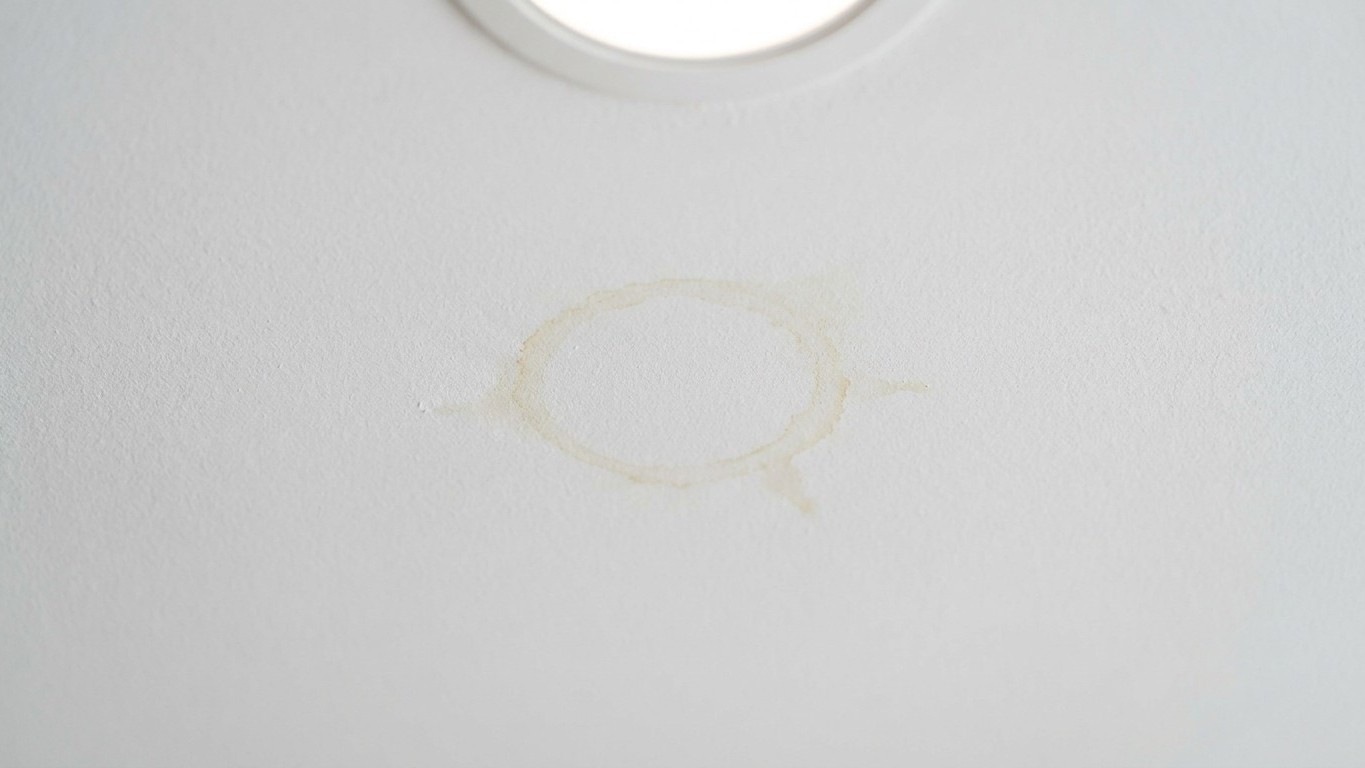
Four days. That’s all it took for the ghost of my old leak to reappear, right there under the bathroom light, as a faint yellowish halo through two coats of brand new matt white. I’d rollered over that water stain with such confidence, thinking a bit of decent emulsion would sort it out once and for all. It didn’t. What I’d actually done was paint over the problem and wait for it to come back, because I’d skipped the one step that actually matters: the stain-blocking primer.
Here’s what nobody tells you when you’re stood in the DIY aisle clutching a tin of matt white: ordinary emulsion isn’t designed to seal anything. It’s designed to give you colour and a nice flat finish. Ordinary emulsion paint is designed to provide colour and coverage, not block water staining. So when you roller it straight onto a dried water mark, you’re not covering the stain at all. You’re reactivating it.
Key takeaways
- A water stain mysteriously reappeared through fresh paint days after application—but why?
- Ordinary emulsion paint doesn’t seal stains; it actually reactivates them
- One forgotten step—the stain-blocking primer—could have prevented the entire mess
Why the stain always finds its way back
The mechanism is almost comically simple once you understand it, and slightly infuriating once you realise you could have avoided the whole mess. When a water stain comes into contact with latex paint, the stain dissolves into the wet paint layer as the paint dries, causing the discolored mineral contents of the stain to show through the paint to the ceiling surface once again. Your matt white is water-based. The stain on your ceiling, whether it’s from a slow roof leak, an old overflowing bath, or a dodgy pipe joint years ago, is made of water-soluble minerals and tannins that have been sitting there dried out and dormant. Add wet paint, and you’ve essentially given them a drink. Off they go, migrating straight back up through your lovely fresh coat.
What made my case particularly cruel is the timing. It doesn’t always show immediately, which is exactly why I thought I’d got away with it on day one. You finally paint away, feeling accomplished. But a few days later, you notice brown or yellow spots starting to appear through your paint job. Some tradespeople report it taking even longer than that. It can even take its time and show up weeks after you have painted the wood. So if you’ve recently painted over a stain and it looks fine right now, don’t get too comfortable. Give it a proper fortnight before you declare victory.
The coat I should have used first
What I needed, and what I now use religiously on every water mark I meet, is a proper stain-blocking primer applied before any topcoat goes anywhere near the ceiling. A water stain leaves pigments or tannins behind that’ll bleed through ordinary paint. A stain blocking primer or sealer is essential for stopping this problem. These primers work because they contain resins that physically trap the staining compounds rather than letting them dissolve and travel, which is precisely what your ordinary matt emulsion can’t do.
There are a few types worth knowing about, and this is where I’ll admit my own bias creeping in. Shellac-based primers, the classic being something like Zinsser’s B-I-N, have the strongest reputation among decorators for stopping stains dead. If you’re dealing with severe stains like water damage, smoke marks, or tannin bleed from wood, shellac-based primers are your go-to. A popular choice is BIN Shellac-Based Primer by Zinsser, which professionals love for its fast drying time (around 45 minutes) and powerful stain-blocking capabilities. The smell is a bit much (open the windows, trust me), but you can be back on with your topcoat within the hour, which is rather handy if you’re squeezing the job into a weekend.
If you’d rather avoid the solvent fumes, oil-based stain blockers are the next best thing and still widely favoured by professional decorators. Many professional decorators rely on shellac based or specialist stain blockers. Water-based stain-blocking primers do exist and have improved a great deal, but the general consensus among people who paint ceilings for a living is that plain water-based products alone often aren’t quite tough enough for a stubborn, established stain. Avoid water-based primers alone, as they often fail to block stubborn water stains effectively. One coat of a proper stain blocker, left to dry fully, then your usual two coats of matt white on top. That’s the order that actually works, not the shortcut I took.
Sort the cause before you touch the roller
None of this paint chemistry matters a jot if the original leak is still active, and I’d be doing you a disservice not to mention it. A fresh coat of anything, primer included, is a cosmetic fix if water is still finding its way in from above. Sometimes the hardest part isn’t painting over the stain. It’s working out why it’s there in the first place. Water stains often look like decorating problems, but they’re usually the final visible sign of something that’s happened behind the scenes. Have a poke about in the loft, check guttering, and if it’s a bathroom ceiling, make sure extraction is doing its job, because condensation staining behaves exactly the same way as a leak once it’s dried on the plaster.
If the stain has genuinely stopped growing and you’re confident the source is fixed, you don’t need to rip the ceiling apart. It’s not always necessary to replaster after water damage. Minor stains often only need cleaning, priming and repainting. Give the area a wipe with a mild bleach solution first if there’s any hint of mould, let it dry completely, then prime.
My little tin of stain blocker sat on the shelf gathering dust for years before I finally needed it, and it turned out to be the cheapest fifteen minutes of my entire redecorating weekend. One thin coat, a proper hour to dry, and the ceiling I’m looking at now, four months on, hasn’t so much as whispered about that old leak. Sometimes the smallest tin in the shed does the job the big roller couldn’t.
Sources : homepainterspro.ca | rawlinspaints.com