
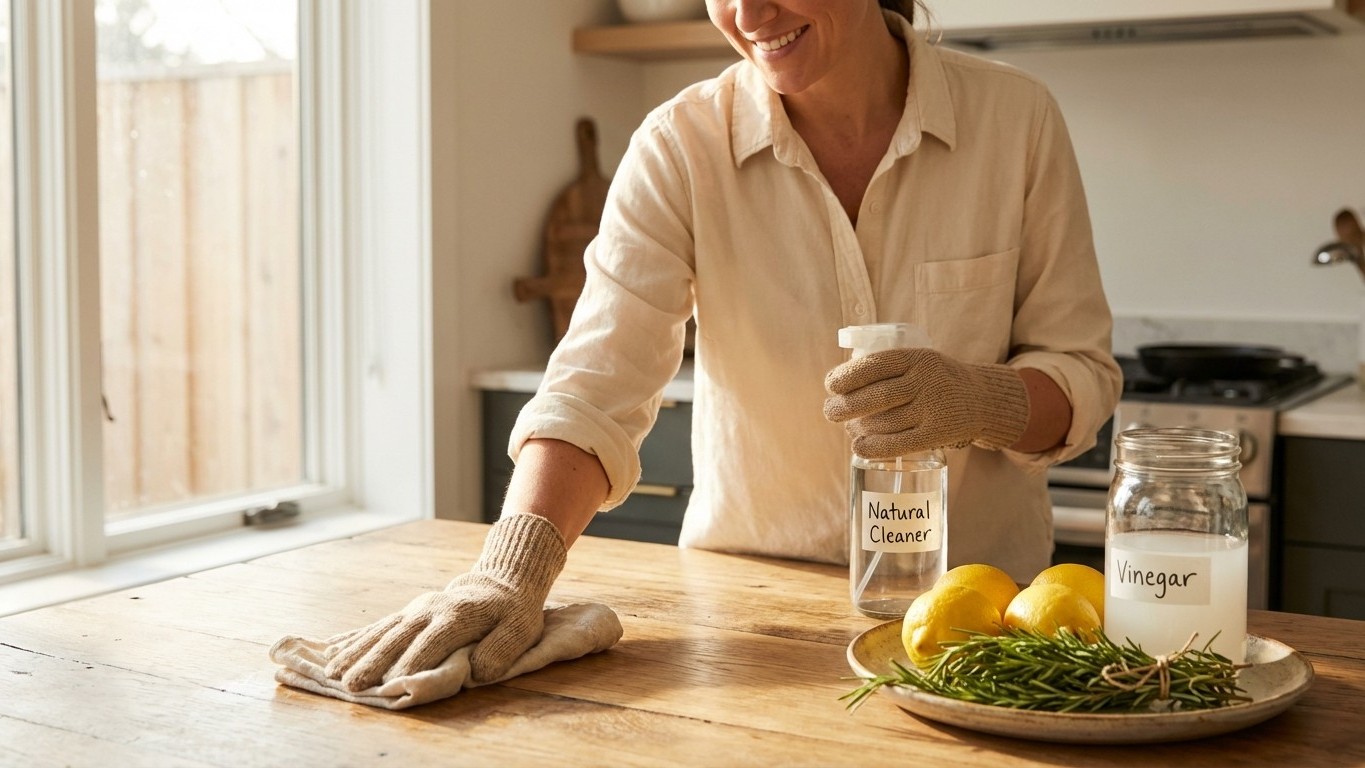
Keeping surfaces hygienic, Without turning your home into a chemical fog
Most of us want a clean home that feels safe, especially in kitchens and bathrooms where little hands, pets, raw food and damp corners all mingle. If you are searching for natural ways to disinfect surfaces at home, you deserve an honest answer: some natural options work well for everyday hygiene, some work only in very specific ways, and a few popular “folk recipes” are better at making things smell nice than making them hygienic.
I am fond of simple, budget-friendly routines that do not leave harsh residues, and modern research broadly agrees with what our grandmothers knew: good cleaning technique, the right contact time, and proper drying do a lot of the heavy lifting. Natural disinfecting is most dependable when you match the method to the job, and when you accept the limits instead of fighting them.
Why disinfect naturally at home?
Choosing gentler products is often about reducing irritation, indoor air pollution, and unnecessary plastic. It can also be about confidence: if you understand what a method can and cannot do, you can keep your home properly hygienic without reaching automatically for bleach.
Disinfecting vs cleaning: what is the difference?
Cleaning removes dirt, grease and a large share of microbes by lifting them off a surface. Think of it as breaking the “glue” that holds grime in place. Warm water, a little washing-up liquid, and friction from a cloth can dramatically reduce germs.
Disinfecting aims to inactivate or kill microbes left behind after cleaning. Disinfectants work best on a visibly clean surface because grease and food residues can shield microbes.
- Clean first for best results, especially in kitchens and bathrooms.
- Disinfect second when risk is higher, for example after handling raw chicken, when someone is unwell, or on high-touch points.
- Let the surface stay wet for the stated contact time. A quick wipe-on, wipe-off is mostly just cleaning.
Risks of conventional disinfectants (health and environment)
Many conventional disinfectants are useful tools, yet they can bring downsides when overused. Strong fragrances and certain active ingredients may irritate airways or skin, particularly for children, people with asthma, and anyone with eczema. Mixing products, even by accident, can create harmful fumes.
On the environmental side, routine “disinfect everything” habits often mean more packaging and more chemicals down the drain than is needed for ordinary home life. In February 2026, there is also more public awareness of antimicrobial resistance and the idea that we should disinfect with purpose, not panic.
Natural ingredients that can help disinfect (what they really do)
Let me be plain: “natural” does not automatically mean “safe” or “effective”. Dosage, contact time, surface type, and what you are trying to tackle all matter.
White vinegar: effectiveness, limits and precautions
White vinegar (typically around 5% acetic acid in the UK) is a popular staple for eco cleaning. It can help reduce some bacteria and mould on certain surfaces, and it is excellent at dissolving limescale and soap scum which can harbour grime.
- Where it shines: descaling taps, wiping down glass, tackling soap scum, deodorising some smells.
- Where it is limited: it is not a reliable “high-level” disinfectant, and it is not a dependable choice for situations like stomach bug clean-up or raw poultry contamination on its own.
- Precautions: avoid natural stone (marble, limestone, travertine), as acid can etch. Keep it off unsealed grout and some finishes where it can dull.
Budget tip: vinegar is cheap, but do not waste it by using it where plain washing-up liquid and hot water do the job just as well.
Bicarbonate of soda: its role and specific use
Bicarbonate of soda is a mild alkali. It is more of a cleaner and deodoriser than a true disinfectant. It helps lift grime, neutralise odours, and gently abrade without scratching most surfaces if you use it with a soft sponge.
- Best uses: scrubbing sinks, lifting fridge smells, cleaning bins, tackling greasy film.
- Limit: do not rely on it alone to disinfect after illness.
It pairs well with good mechanical cleaning: a proper scrub, then a rinse, then drying.
Lemon: antibacterial properties and practical uses
Lemon juice is acidic and can help with deodorising and some light antimicrobial action. In real kitchens, its biggest strength is cutting through odours and helping with light staining, for example on chopping boards that smell of onion or fish.
- Useful for: freshening boards (after cleaning), shifting mild stains, leaving a clean scent.
- Limit: like vinegar, it is not a dependable stand-alone disinfectant for high-risk contamination.
- Precautions: avoid natural stone for the same reason as vinegar, and watch for sunlight if you have sensitive surfaces, as acids can contribute to dulling over time.
Essential oils with disinfecting action (tea tree, lemongrass, etc.)
Some essential oils show antimicrobial activity in lab settings, and they can be pleasant in tiny amounts. At home, their results are less predictable because oils do not mix with water without a solubiliser, and the concentration needed for reliable disinfection can raise safety concerns.
- When I like them: for scenting a cleaner lightly, or adding a few drops to a rinse bucket for a “fresh” feel.
- Household cautions: essential oils can irritate skin, trigger headaches, and some are risky around pets, especially cats. Keep them away from babies and avoid using them in a spray that can be inhaled.
If you use essential oils, keep it simple and sparing. Hygiene should not depend on a fragrance.
Hydrogen peroxide (oxygenated water): safer use and limits
Hydrogen peroxide is one of the more practical “natural-leaning” options because it breaks down into water and oxygen, yet it can be effective against a wider range of microbes than vinegar when used correctly. In the UK, it is often sold as “hydrogen peroxide solution” in low concentrations for household use.
- Good for: certain high-touch hard surfaces, bathroom areas, and some kitchen tasks, once the surface is cleaned first.
- Limits: it can discolour some fabrics and may mark certain finishes. It is not for every material.
- Handling: store away from light and heat, keep out of reach of children, and do not mix it with vinegar in the same bottle.
For everyday households, hydrogen peroxide can be a sensible middle ground when you want stronger action without chlorine bleach, but it still deserves respect.
Recipes and methods: natural disinfecting by surface
Technique matters as much as ingredients. A “natural disinfectant spray” that is misted and immediately wiped away is mostly a scented wipe-down. Give your method time to work, and always start with cleaning.
Kitchen worktops and food-prep surfaces
Food areas deserve a careful approach. The safest, most budget-friendly routine is often warm water and washing-up liquid, followed by a targeted disinfecting step when needed.
Everyday clean (after meals)
- Fill a bowl with 1 litre of warm water.
- Add 1 teaspoon of washing-up liquid.
- Wipe with a clean cloth, then rinse the cloth, wipe again with plain water, and dry the surface.
After raw meat, fish, or visible spills (extra hygiene)
- Clean first as above.
- Apply hydrogen peroxide solution to the hard surface until it is evenly damp, do not flood.
- Leave for 5 minutes if the surface can stay wet safely, then wipe and rinse with clean water.
- Air-dry or dry with a fresh towel.
Wooden Chopping Boards are a special case. They are better cleaned with hot soapy water, a good scrub, and thorough drying upright. Occasional deep cleaning with bicarbonate paste can help remove odours, but disinfection is mainly about good washing and drying, not soaking the board in acids.
Door handles, light switches, and high-touch points
These are often forgotten, then cleaned in a rush. A regular, gentle routine is kinder to paint and plastic.
- Dust first with a dry cloth.
- Wipe with a cloth dipped in warm soapy water (500 ml warm water plus 1/2 teaspoon washing-up liquid), wrung well.
- For extra hygiene, use hydrogen peroxide on a cloth, not sprayed into the air, and wipe the surfaces so they stay lightly damp for a few minutes.
- Wipe again with plain water if the finish is delicate, then dry.
If someone in the home is unwell with vomiting or diarrhoea, this is one of the moments where I would not rely solely on natural methods. Use an appropriate disinfectant for the pathogen risk, and ventilate well.
Bathroom: basins, toilets, showers
Damp rooms encourage mould and biofilm. The trick is to break down soap scum and limescale, because microbes enjoy hiding in that gritty layer.
Basins and taps (shine plus hygiene)
- Sprinkle 1 tablespoon bicarbonate of soda onto a damp sponge.
- Scrub the basin and around the plughole.
- Rinse well.
- For limescale on taps, apply vinegar on a cloth for 10 minutes, then rinse and dry.
Toilet seat and exterior
- Clean with warm soapy water first.
- Wipe with hydrogen peroxide on a cloth, keeping the surface damp for 5 minutes if possible.
- Wipe with clean water and dry, especially on plastic seats to prevent dulling over time.
Showers and tiles
- For soap scum, spray vinegar diluted 1:1 with water (for non-stone surfaces), leave 10 minutes, then scrub and rinse.
- For mildew on grout, use a bicarbonate paste (2 tablespoons bicarbonate plus 1 tablespoon water), scrub with an old toothbrush, rinse, then dry.
If you are also tackling smells from drains or want a fuller routine, you may like clean drains naturally baking soda vinegar, just remember that drain freshening is different from disinfecting worktops.
Other materials: wood, stainless steel, stone
Different surfaces have different tolerances, and this is where natural cleaners can accidentally cause damage if you are not careful.
- Wood: avoid soaking. Use hot soapy water on a well-wrung cloth, then dry straight away. For odours, rub with a cut lemon after cleaning, then wipe with water and dry.
- Stainless steel: soapy water cleans beautifully. Vinegar can remove smears on some finishes, but rinse and buff dry to avoid streaks. Avoid abrasive bicarbonate on brushed finishes if you want to prevent scratching.
- Natural stone: avoid vinegar and lemon. Use pH-neutral soap and water. For disinfecting, choose a stone-safe product or method suitable for sealed stone, and test in a hidden area.
Limits of natural disinfection: what you should know
This is the part many articles skip, then you are left thinking you can “disinfect everything” with vinegar and a slice of lemon. Daily hygiene, yes. High-risk disinfection, not always.
Which bacteria and microbes are removed?
Mechanical cleaning removes large numbers of bacteria and viruses simply by lifting them away, especially when you use a clean cloth and change the water. Vinegar and lemon may reduce certain bacteria on hard surfaces, and hydrogen peroxide can inactivate a broader range when used correctly.
However, different microbes have different resistance. Some viruses and spores are hard to inactivate without properly formulated disinfectants and the correct contact time. Temperature, surface porosity, and the presence of organic matter all affect results.
Situations where natural disinfection is not enough
- Clean-up after vomiting or diarrhoea, where certain viruses can spread easily.
- Households with someone who is immunocompromised, where extra caution is sensible.
- After handling raw poultry when cross-contamination is likely, especially on porous surfaces.
- Mould problems that keep returning, suggesting a moisture issue rather than a surface issue.
In these cases, a targeted, properly labelled disinfectant can be the safer choice. Use it carefully, ventilate, and store it securely. Natural routines still help in the days between, because they keep grime from building up in the first place.
Common mistakes and precautions (safety, dosing, surfaces to avoid)
A few household habits cause more trouble than the germs.
- Skipping the clean step: disinfectants struggle through grease and food residue. Clean first.
- Too little contact time: leave the surface damp for a few minutes when using hydrogen peroxide, or your effort is mostly for show.
- Over-wetting wood: warping and smells can follow. Use a wrung cloth and dry promptly.
- Using acids on stone: vinegar and lemon can etch and dull natural stone.
- Assuming “natural” means non-irritant: essential oils and acids can irritate skin. Wear gloves if your hands are sensitive.
- Reusing dirty cloths: a smelly sponge is a germ delivery service. Wash cloths hot and let sponges dry fully, or swap to washable microfibre cloths.
Bonus tips to strengthen natural hygiene
These are the little habits that make natural cleaning more effective, and they cost pennies.
- Open a window while you clean. Fresh air helps surfaces dry, and dryness discourages microbial growth.
- Use two cloths: one for cleaning, one for drying. Drying is underrated.
- Keep a small “high-touch” routine: handles, phone screens (follow manufacturer guidance), remote controls, and taps once or twice a week.
- Wash tea towels and dishcloths at a hot wash regularly, and do not leave them in a damp heap by the sink.
- For bins and odours, treat the source. A clean bin smells like nothing at all, and this guide helps: how to clean bin naturally and remove smell.
If you enjoy building a whole-house routine, you may also like this wider collection of natural cleaning hacks, it is handy for every room when you want to keep things simple and low waste.
When (and how) to combine natural ingredients
Combining ingredients can be helpful when each one has a clear job. Pairing a degreaser with a gentle abrasive, for example, can make the cleaning step stronger, which indirectly improves hygiene.
Examples of multi-ingredient recipes
1) Daily kitchen degreasing spray (for cleaning, not high-level disinfecting)
- 500 ml warm water
- 1 teaspoon washing-up liquid
- Optional: a small squeeze of lemon for scent
Mix in a bottle, spray onto the cloth rather than into the air, wipe, then rinse-wipe and dry. Make small batches and refresh weekly to avoid stale smells.
2) Bicarbonate scrub paste (sink, hob surround, bath)
- 2 tablespoons bicarbonate of soda
- 1 tablespoon water
Apply with a sponge, scrub gently, rinse well, then dry. For stubborn grime, leave it on for 5 minutes before scrubbing.
3) Two-step “clean then disinfect” for higher-touch hard surfaces
- Step 1: warm soapy water (500 ml water plus 1/2 teaspoon washing-up liquid)
- Step 2: hydrogen peroxide applied after cleaning, kept damp for about 5 minutes
This approach is often more reliable than trying to make one magical bottle do everything.
Mixes you should never make
- Do not mix vinegar and hydrogen peroxide in the same container. Used one after the other on a surface is also best avoided, rinse in between if you choose to alternate.
- Do not mix vinegar with bleach, that can create dangerous fumes.
- Avoid making strong essential oil sprays that can be inhaled. If you use oils, keep them minimal and wipe on with a cloth.
For more ideas that cover surfaces, bins and even drains, the broader guide natural disinfecting cleaning hacks ties these household areas together in a practical way.
Choosing the best method for the job
For most homes, most days, the winning combination is plain: clean thoroughly, rinse, then dry. Add a disinfecting step when the situation calls for it, and choose the least harsh option that still does the job.
- Everyday wipe-downs: warm soapy water, good friction, clean cloths.
- Limescale and soap scum: vinegar for suitable surfaces, followed by a rinse.
- Deodorising and gentle scrubbing: bicarbonate paste.
- Higher hygiene moments: hydrogen peroxide on hard, non-porous surfaces after cleaning.
- Delicate materials: avoid acids on stone, avoid soaking wood, test in a hidden corner.
FAQ: natural disinfecting of household surfaces
What are the best natural ways to disinfect surfaces at home?
The most dependable “natural-leaning” routine is thorough cleaning with warm soapy water, followed by good drying. When you need more than routine hygiene, hydrogen peroxide can be a practical option on suitable hard surfaces. Vinegar and lemon are better viewed as cleaners and descalers with some antimicrobial effect, not as a universal disinfectant.
Is vinegar really effective as a natural disinfectant?
Vinegar can reduce some microbes and is brilliant for limescale, but it is not a guaranteed high-level disinfectant across all pathogens. It is excellent for routine maintenance, especially in bathrooms and on glass, and less suitable as your only step after raw meat spills or stomach bugs.
How can I disinfect without bleach and without risking my health?
Start with cleaning to remove grime, then choose a targeted approach. Hydrogen peroxide used with sensible contact time, good ventilation, and careful storage can work well for many households. Keep mixes simple, avoid combining chemicals, and prioritise rinsing and drying on food-prep areas.
Are there natural solutions as effective as chemical disinfectants?
For some everyday situations, good cleaning technique can achieve excellent hygiene, and you may not need anything stronger. For certain pathogens and higher-risk scenarios, properly formulated disinfectants are more reliable than vinegar, lemon, or bicarbonate. Natural methods have a place, but they are not a perfect swap in every circumstance.
A gentle next step for your routine
If you pick just one change this week, make it this: keep one “cleaning cloth” and one “drying cloth” by the sink, and treat drying as part of your disinfecting routine. Once that habit is in place, which area of your home would you like to feel more under control, the kitchen worktops, the bathroom taps, or those forever-grubby door handles?
If you would like a wider set of room-by-room ideas, bookmark natural cleaning hacks and build your routine gradually, your lungs, your surfaces, and your budget will all thank you.